












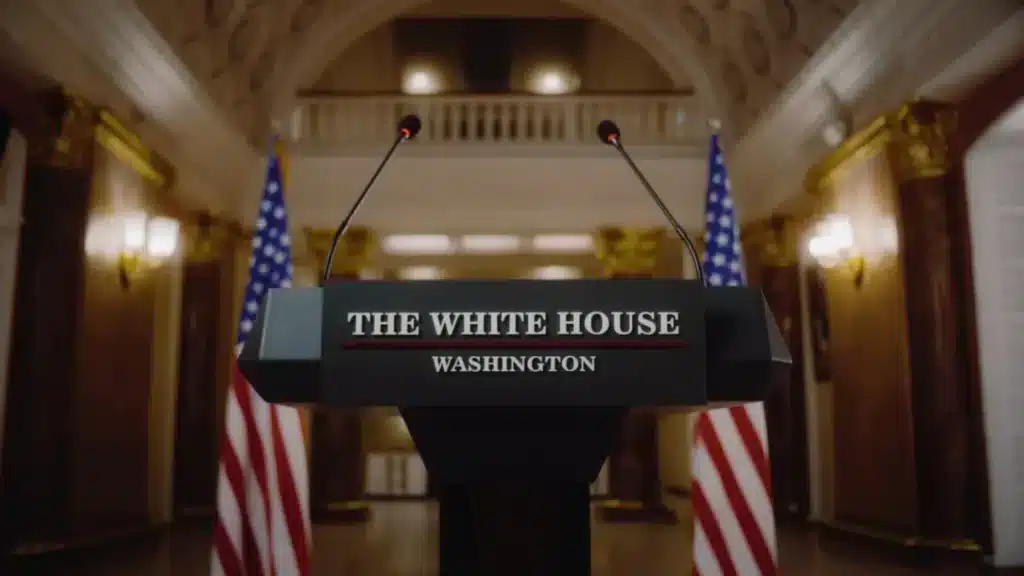
White House podium with U.S. flags in the background. Source: TechGaged / Shutterstock
President Trump Signs Order To Bring Crypto Into Mainstream Banking
In Brief
- • President Trump signed an order to review rules affecting crypto and fintech firms.
- • Regulators must identify barriers to digital asset integration within banking.
- • The order also calls for a review of crypto firms’ access to U.S. payment infrastructure.

President Donald Trump has signed a new executive order directing federal regulators to review rules that may be blocking digital assets from integrating with traditional banking and payment systems. The order gives agencies 90 days to identify regulations that hinder innovation and competition in financial services. It also asks the Federal Reserve to examine whether non-bank fintech and digital asset firms should receive wider access to key payment infrastructure.
White House Targets Regulatory Barriers For Crypto
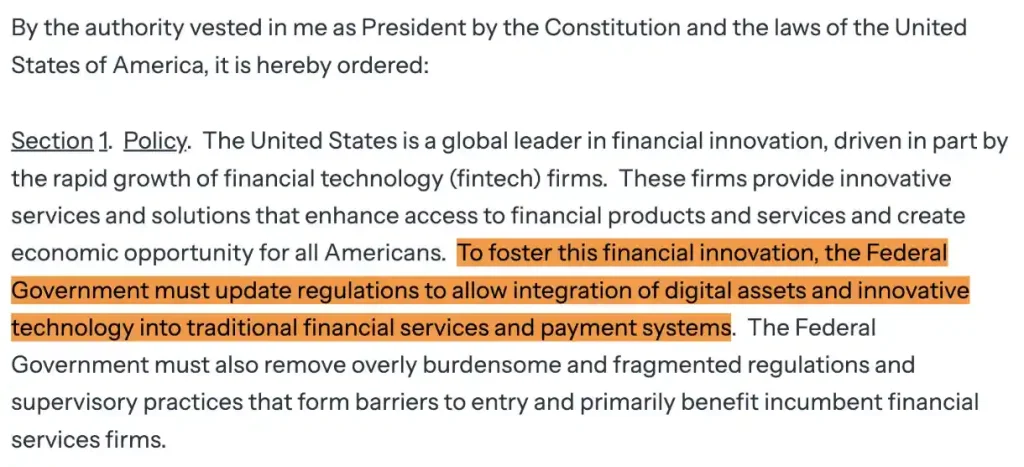
The executive order, signed on May 19, places digital assets at the center of a wider push to modernize financial regulation. In the policy section, the White House asks for updating federal regulations to allow the integration of digital assets and other emerging technologies into traditional financial services and payment networks.
Under the order, agencies including the Securities and Exchange Commission (SEC), Commodity Futures Trading Commission (CFTC), Federal Deposit Insurance Corporation (FDIC), Office of the Comptroller of the Currency (OCC), National Credit Union Administration (NCUA), and Consumer Financial Protection Bureau (CFPB) must review existing rules, guidance, supervisory practices, and licensing processes.
Latest Stories
Avalanche’s NYC Summit Hits Capacity — The Ecosystem Numbers Tell a Bigger Story

Grayscale Files to Rename Litecoin Trust as an ETF: LTC’s Next Phase Begins

Bitcoin’s Rally Has Reached a Decision Zone — The Next Break Could Be Huge
The review will focus on identifying policies that make it harder for fintech firms to partner with banks, obtain charters, secure licenses, or compete with established financial institutions. Regulators should them take steps within 180 days to encourage greater innovation and maintain consumer protections and financial stability.
Federal Reserve Asked To Review Payment Access
One of the most significant sections of the order involves access to Federal Reserve payment services. The White House requested that the Federal Reserve evaluate whether existing law allows broader access to payment accounts and payment services for uninsured depository institutions and non-bank financial companies, including firms involved with digital assets.
Additionally, the central bank has 120 days to deliver a report outlining legal authorities, potential expansion options, regulatory obstacles, and recommendations for future action.
Supporters argue that broader payment access could reduce dependence on traditional banking intermediaries and accelerate the use of blockchain-based financial services. Critics, however, are likely to raise concerns about risk management and oversight if non-bank firms gain a larger role inside the U.S. payments system.
The order doesn’t immediately change any regulations, but it signals that the administration wants digital assets and traditional financial institutions operating more closely together as part of the next phase of the U.S. financial system.
How do you rate this article?
Subscribe to our YouTube channel for crypto market insights and educational videos.






Join our Socials
Briefly, clearly and without noise – get the most important crypto news and market insights first.

Most Read Today
1
Bitcoin’s Rally Has Reached a Decision Zone — The Next Break Could Be Huge
2Ethereum’s Q3 Rally Just Hit a Major Milestone: Only One Year Was Stronger
3Avalanche’s NYC Summit Hits Capacity — The Ecosystem Numbers Tell a Bigger Story
4Grayscale Files to Rename Litecoin Trust as an ETF: LTC’s Next Phase Begins
5Clarity Act 2026: Everything You Should Know
Latest





8
Also read
Similar stories you might like.

Crypto News
Avalanche’s NYC Summit Hits Capacity — The Ecosystem Numbers Tell a Bigger Story
Azeez | 2026-09-13

Crypto News
Bitcoin’s Rally Has Reached a Decision Zone — The Next Break Could Be Huge
Azeez | 2026-09-13

Crypto News
Ethereum’s Q3 Rally Just Hit a Major Milestone: Only One Year Was Stronger
Azeez | 2026-09-13

Crypto News
SEC Chair Paul Atkins Joins Solana Summit — Crypto’s Next Regulatory Test Nears
Azeez | 2026-09-12

Crypto News
ETH Faces a New Test as Wintermute Sends Millions to Coinbase and Binance
Azeez | 2026-09-12
Crypto News
Morgan Stanley Adds Again as Its Bitcoin ETF Builds a $50M Accumulation Streak
Azeez | 2026-09-12

Crypto News
Bitwise Shuts Down Its DOGE ETF — What Went Wrong?
Azeez | 2026-09-11

Crypto News
Chainlink Keeps Building Its Strategic Reserve: The Bigger Move May Be Ahead
Azeez | 2026-09-11

Crypto News
Bitcoin Demand Is Starting to Stabilize — Is Stronger Accumulation Next?
Azeez | 2026-09-11

Crypto News
Solana Apps Just Outpaced the Next Network by 50% — A Bigger Trend Is Emerging
Azeez | 2026-09-10