















Crypto chart with Bitcoin and Ethereum coins. Source: TechGaged / Shutterstock
Fed Survey Exposes The Problem Behind Crypto’s Growth
In Brief
- • A new Fed survey showed crypto usage in the U.S. rose to 10% in 2025.
- • Most crypto activity remained focused on investing rather than payments.
- • Rising Treasury yields are creating a tougher environment for speculative assets.

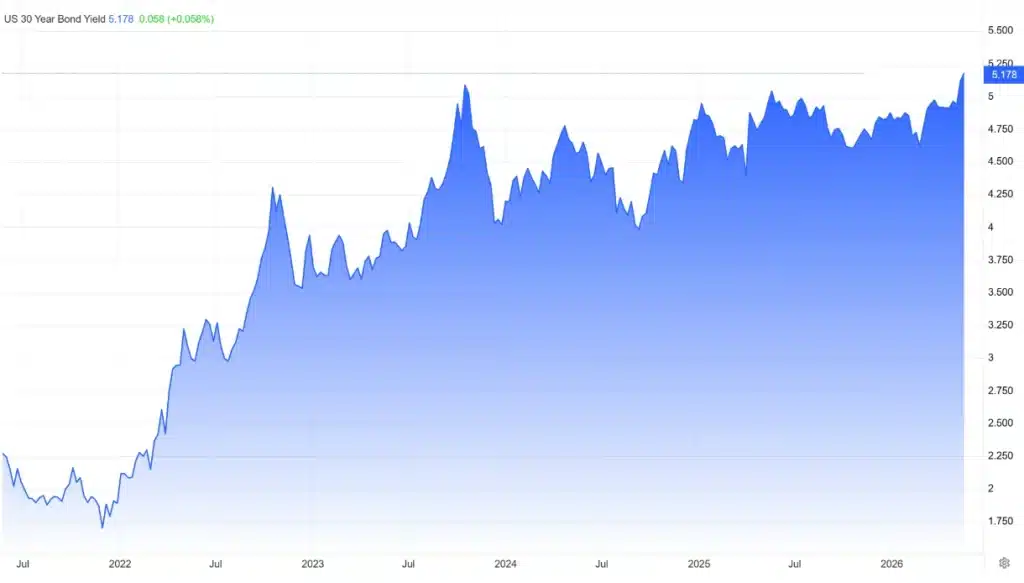
Ten percent of Americans used cryptocurrency in 2025, according to a new Federal Reserve survey, marking the highest level since the 2022 bear market. But nearly all of that growth came from investing and trading activity rather than payments or day-to-day usage, even as the broader crypto market closed the year lower. At the same time, U.S. Treasury yields pushed above 5%, creating a macro backdrop that looks increasingly hostile for speculative assets.
Americans Returned To Crypto, But Utility Still Looks Weak
At first glance, the numbers in the “Economic Well-Being of U.S. Households in 2025” report look bullish. Crypto participation recovered from 7% in 2023 to 10% in 2025, despite a difficult market environment and rising economic concerns across the United States.
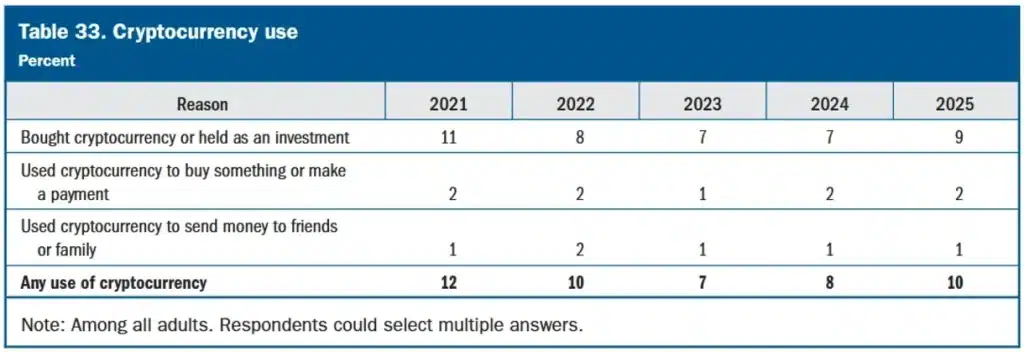
However, the issue is where the demand came from. The Federal Reserve’s data shows 9% of Americans bought or held cryptocurrency as an investment, whereas only 2% used crypto to purchase something or make a payment. Sending money to family or friends through crypto remained stuck at just 1%.
Latest Stories

Solana’s Inflation Curve Gets a Major Overhaul After Community Vote

Ethereum Faces One of Its Most Extreme Sell-Side Readings on Binance

Chainlink Is Expanding Again — Here’s Where It’s Moving Next
That undercuts one of the crypto market’s biggest narratives over the last two years. Stablecoins, decentralized finance (DeFi) infrastructure, and blockchain payment rails have dominated industry conversations, yet the Fed’s own survey suggests mainstream consumers still mostly see crypto as a speculative asset.
The report also found that crypto transaction usage was more common among unbanked Americans, where access to traditional financial services remains limited. In areas where banking infrastructure already exists, payment adoption barely moved.
Rising Treasury Yields Are Making the Macro Picture Worse
At the same time, the wider economic backdrop is becoming more difficult for risk assets.
The U.S. 30-year Treasury yield recently climbed above 5%, reaching levels not seen consistently since the years surrounding the 2008 financial crisis. Higher bond yields increase competition for speculative assets because investors can suddenly earn meaningful returns from traditional fixed-income markets without taking crypto-level volatility.
Meanwhile, the Fed’s report showed economic anxiety continuing to build across households. Forty-two percent of Americans said finding or keeping a job had become a financial concern, up from 37% the previous year.
This combination creates a very different setup from the liquidity-heavy crypto boom of 2021.
Back then, near-zero interest rates and stimulus pushed investors toward high-risk assets. Today, bond yields remain elevated, inflation concerns still dominate household sentiment, and the Federal Reserve’s own survey shows Americans remain worried about affordability and financial pressure.
So despite crypto ownership climbing again, the foundation underneath this growth still looks heavily investment-driven as opposed to utility-driven.
How do you rate this article?
Subscribe to our YouTube channel for crypto market insights and educational videos.






Join our Socials
Briefly, clearly and without noise – get the most important crypto news and market insights first.
Most Read Today
1
Protect Personal Savings: Hot and Cold Wallets, Watch Bluetooth Risks
2Chainlink Is Expanding Again — Here’s Where It’s Moving Next
3Ethereum Faces One of Its Most Extreme Sell-Side Readings on Binance
4Metaplanet Moves 3,000 BTC in 24 Hours — What Are They Planning?
5Solana’s Inflation Curve Gets a Major Overhaul After Community Vote
Latest





8
Also read
Similar stories you might like.

Crypto News
Strategy’s Bitcoin Bet Now Comes With Far Less Leverage
Azeez | 2026-08-28

Crypto News
A Rare Ethereum Trend Is Emerging as Long-Term Holders Keep Taking Losses
Azeez | 2026-08-28

Crypto News
Bitcoin’s Next Big Test Emerges As $5B In IBIT Options Near Expiry
Azeez | 2026-08-26

Crypto News
Bitwise’s SOL Buying Spree Nears A Major $1B Milestone
Azeez | 2026-08-26

Crypto News
Avalanche Records Strongest Tokenized Stock Growth In 24 Hours
Azeez | 2026-08-26

Crypto News
The ETH/BTC Ratio Has Printed A Golden Cross For The First Time In 14 Months
Azeez | 2026-08-25

Crypto News
XRP Is Up 51% This Week — Its Biggest Weekly Gain in 21 Months
Azeez | 2026-08-24
Crypto News
Fed Rate Hike Probability Climbs to 42% — What It Means for Markets
Azeez | 2026-08-24

Crypto News
Zcash Has Delivered A 121% Rally Since June — Social Interest Is Finally Returning
Azeez | 2026-08-23

Crypto News
Crypto Sentiment Flips — Another Major Market Shift May Be Underway
Azeez | 2026-08-22