















What Is Crypto API: The Engine Behind Crypto’s Growing Ecosystem. Source: TechGaged / Shutterstock
What Is Crypto API: The Engine Behind Crypto’s Growing Ecosystem
In Brief
- • Crypto APIs translate complex hexadecimal blockchain data into readable formats.
- • These tools allow small teams to bypass months of infrastructure "plumbing" and launch products in days.
- • Advanced solutions now offer native compatibility with AI models and specialized tracking for DeFi.

The best way to describe crypto-native ecosystems is by using the word clockwork. From trading bots to portfolio trackers and such, all the data is updated in real time across thousands of exchanges.
The integral piece of the puzzle and the driver behind this data express train is the Crypto API or Application Programming Interface.
While the basic definition extrapolated from the acronym itself gives you a rough idea of how important APIs are, their true “clockwork” ability serves as a bridge between blockchain data and user applications.
Latest Stories
Crypto Open Interest Is Surging — Ethereum Stands Out

Something Is Changing on Avalanche: Network Fees Just Hit a Weekly High

Solana Is Becoming a Key AI Payment Network: A Bigger Shift Is Unfolding
Naturally, this makes APIs the prime tool for fast development, allowing developers to focus on UI/UX without needing a team of protocol engineers on demand for basic node infrastructure.
Not two things are created the same, though. And not every crypto API is as straightforward as advertised. The data is fragmented across countless tokens, thousands of CEXs, and DeFi protocols, which often gets in the way of smooth development.
How Do Crypto APIs Work?
The deeper you dive into the underlying tech, the more you’ll appreciate it. Think of the sheer volume of data surging on-chain: it’s very tricky to quantify. With each trade on Coinbase or Binance, or liquidity being added to a DEX, millions of new data points get generated per second.
This is great if you’re looking to get mindblown by insane stats, but for those developing crypto apps, this becomes one of the biggest hurdles they’ll face on their way to greatness. Nodes communicate in hexadecimal codes, which, as the name suggests, isn’t all that readable.
Thus, developers can talk to an API that serves as an interpretative layer that transforms the convoluted code into more digestible JSON.
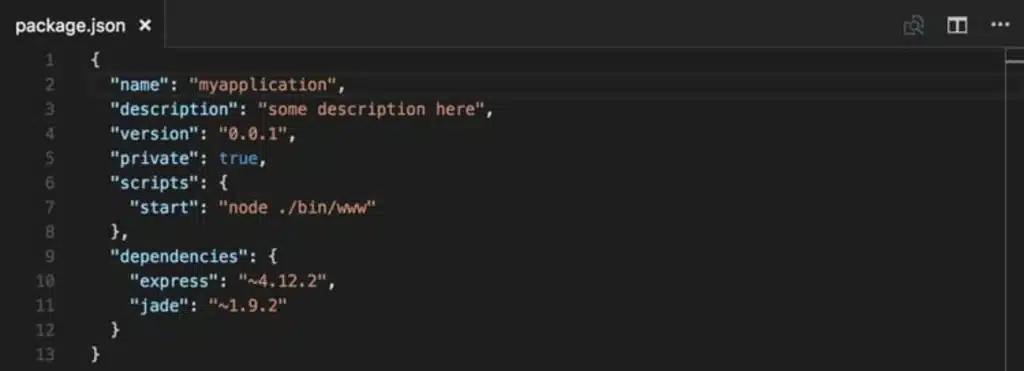
Technical mambo aside, if you’re a crypto participant that relies on apps, you’re likely already benefiting from APIs: any time you see a balance or a final price, a little API that could work behind the scenes to bring you a clear number in a matter of milliseconds.
How Big a Problem Is Data Fragmentation?
Go into your analytics platform of choice and look up Bitcoin. You’ll probably see it listed as BTC or BTC/USD, but you’ll also be able to find some pretty niche BTC-stablecoin pairings. All of this data needs to be normalized, as the last thing devs want is to spend the rest of their lives tracking down each pairing in existence.
Aside from millions of tickers, the DeFi protocols themselves muddy the waters. Call it a DeFi “Black Hole” (appropriate because it sucks the joy out of life) because each time users stake a coin, say ETH, in a protocol like Aave, it turns into a derivative.
To climb out of the pull of this particular black hole, the API needs to sift through various DeFi protocols all at once, as a basic API will only flash a huge neon sign showing “zero balance”.
Devs in the modern era also need to contend with more than just Ethereum, Solana, and Bitcoin. There are over a thousand live blockchains, making integration a real challenge for most smaller devs who will have to account for this in their product.
CoinStats Crypto API Provides the Easiest Way Out
Devs are a prideful bunch, and it’s not uncommon for tiny teams (or Tiny Tims for short, plural) to go DIY, thinking they’ll simply need to ping a few exchanges. Guess what, though?
That’s an easy way for a Tiny Tim to end up with maintenance debts up to their throats.
CoinsStats API not only changes the math, but it turns it on its head. With this API, you’re not plugging holes in a legacy “plumbing” system. A small team can easily build its own grid that works by plugging straight into the source.

Look at it this way – you’re outsourcing the most challenging part of the process to a “team” that specializes in data normalization.
Here’s why this approach works so perfectly:
1. DeFi Problem Solved
CoinStats started life as a portfolio tracker. While other APIs merely adopted DeFi, CoinStats API was born in the DeFi trenches (and some may even go as far as to say molded by them).
The Bane reference isn’t just a funny quip, though. It actually explains accurately how this API operates – it’s 100% native in the world of pure “skinners”.
The core features include:
- Automatic detection: CoinStats API covers over a thousand DeFi protocols and can find a minute yield-farming position on a niche L2, accurately calculate the value, and show it to users in a clean and readable format.
- No manual mapping required: Instead of writing custom logic for each “staked-derivative” token that pops up, CoinsTats identifies and maps everything on your behalf.
The end result?
A small team can gain full control of the “Black Hole” and make the entire DeFi space their ally – the same way Bane became besties with the darkness.
2. Across-the-Board Standardization
Since data can get pretty overwhelming and turn development into a game of telephone, CoinStats API steps in as the “Master Translator” of sorts. It takes all those different data points and pushes them out in a single JSON schema.

No more messy data: the information is squeaky clean, accurately mapped, and verified.
The tour de force here is the fact that even a small organization can realistically get the same level of multi-chain coverage as a huge crypto conglomerate, which is truly beautiful.
Plus, the multitude of widgets and dashboards in CoinStats API make it super simple to embed crypto data into existing applications. These include trending news, chain-specific analytics, live price tickers, and displaying portfolio summaries through a single API key.
3. AI-Ready Infrastructure
The problem with anything is that it gets overtly complex the moment you add AI into the mix. CoinStats API, on the other hand, takes a look at the AI problem and asks, “What AI problem, boss?”
With CoinStats MCP (Model Context Protocol) server, developers can easily link all the data directly to AI models. As a result, both AI agents and LLMs can query crypto data directly. At the moment, the feature is compatible with Claude, Claude Code, VS Code, Cursor, and other MCP clients.
We live in an AI era in which CoinStats API is a godsend, providing companies with the instant AI edge they’re so desperately looking for without much hassle, if any.
4. Read-Only Access
Traders are notoriously paranoid as they’re susceptible to all sorts of crypto scams and cybersecurity risks. As a specialized API, CoinStats operates on Read-Only access, meaning developers can deploy all the analytics tools and tracking features imaginable without even touching the users’ private keys.
Taking it a step further, since there’s also no permission to move funds, the app’s “attack surface” is drastically reduced.
Considering that in the crypto world, trust is a bona fide currency, Read-only security builds trust with users who rightfully prioritize their portfolios’ safety.
What About Fast Integration?
The modern era is where traditional approaches go to die. Say a team decides to reject modernity and embrace tradition. In that case, they’re basically stuck building their own plumbing from scratch, as we previously mentioned.
While a commendable endeavor, this only results in more code and bumps up the hidden costs, which quickly add up when the top talent is losing time reading exchange documentation updates instead of actually getting things done.
| Feature | The “DIY” Approach | The CoinStats API |
| Market Coverage | Parsing unique data formats from 200+ venues | 200+ CEXs & DEXs (Binance, Coinbase, Hyperliquid, etc.) normalized |
| Multi-Chain Reach | Manually integrating 120+ separate RPC nodes | 120+ Blockchains (EVM, Solana, BTC, Cosmos, etc.) via one endpoint |
| Asset Intelligence | Manually mapping tickers and decimals | 100,000+ Coins with real-time prices, market caps, and 10-year history |
| The DeFi “Black Hole” | Seeing “Zero Balance” for staked/LP positions | 10,000+ Protocols auto-detected (Staking, Lending, Yield Farming) |
| AI Compatibility | Teaching an LLM to read hexadecimal “mambo” | Native MCP Server for Claude, Cursor, and VS Code integration |
| Security Model | Managing high-risk “Write” permissions | Read-Only Access (Zero-trust architecture, no private keys needed) |
| Integration Speed | 3-6 months of “plumbing” and maintenance | 48-Hour MVP using a single RESTful JSON schema |
This is why CoinStats API and similar all-in-one solutions are considered such a silver bullet in modern crypto development. Developers get clean and normalized data instead of just adding extra overhead to what is probably already a pricey operation.
Likewise, it’s also one of the best ways to deliver results quickly. Time certainly isn’t on the developers’ side in the crypto market. By the time a small dev team figures out how to escape the gravity of the DeFi black hole, the narratives have already moved on, leaving them playing catch-up.
CoinStats API consolidates all the tools into a unified interface. The secret sauce is clear – within a weekend, a Tiny Tim can go from an idea, or an MVP, to a production-ready product in as little as 48 hours. Just sign up, receive the API key, and you can basically go toe-to-toe with a Tier-1 exchange with a 20-person team.
Crypto APIs Put the Clock in Clockwork
The crypto ecosystem is a beautiful mess running on pure chaos, and crypto APIs are the underlying cablework that helps put some of that blistering speed under control.
It all starts with data. Raw blockchain information points are pure gibberish. Crypto APIs clean it up significantly and transfer all the unreadable “mambo” into JSON. CoinStats API and other similar solutions also turn a CEX and DeFi labyrinth into a tried-and-true data express train.
Sprinkle some AI-ready infrastructure on top, and you’ve got a direct ticket to the future by using something that’s already built and often ready to deploy in under a week.
The clockwork will continue ticking – only this time, developers will have their hands on the wheel.
In short
- Crypto APIs act as an essential interpretive layer that translates complex hexadecimal blockchain data into readable formats for developers and users.
- By consolidating data from hundreds of exchanges and blockchains, these tools allow small teams to bypass months of infrastructure “plumbing” and launch products in days.
- Advanced solutions now offer native compatibility with AI models and specialized tracking for decentralized finance, all while maintaining a high security standard through read-only access.
Frequently Asked Questions
What exactly is the “DeFi Black Hole” mentioned in the article?
It refers to the difficulty of tracking assets once they are staked or deposited into decentralized protocols. A standard API might show a “zero balance” because the original coin has been converted into a derivative; a specialized crypto API sifts through these protocols to find and accurately value those hidden positions.
Why is “Read-Only” access such a big deal for security?
Read-only access means the API can “see” the data and portfolio balances but has zero permission to move funds or execute trades. This drastically reduces the “attack surface” for hackers, ensuring that even if an app’s front end is compromised, the users’ private keys and assets remain untouched.
How do APIs help with AI integration?
Modern APIs use protocols like MCP (Model Context Protocol) to create a direct link between real-time market data and Large Language Models (LLMs) like Claude. This allows AI agents to query live crypto prices and chain-specific analytics without the developer having to manually teach the AI how to read raw blockchain code.
How does the CoinStats API solve the problem of “maintenance debt”?
Building a DIY data system requires a small dev team to manually track updates for hundreds of exchanges and over 120 blockchains. By plugging into the CoinStats API, developers outsource this “plumbing” to a dedicated team, avoiding the trap of spending months reading legacy documentation instead of building new features.
Can AI agents and LLMs directly interact with the CoinStats API?
Yes. Through its Model Context Protocol (MCP) server, the CoinStats API allows AI models like Claude or tools like Cursor to query real-time crypto data directly. This removes the need for developers to teach AI how to interpret “hexadecimal mambo,” providing an instant AI edge for modern applications.
How do you rate this article?
Subscribe to our YouTube channel for crypto market insights and educational videos.






Join our Socials
Briefly, clearly and without noise – get the most important crypto news and market insights first.

Most Read Today
1
Crypto Open Interest Is Surging — Ethereum Stands Out
2One of Bitcoin’s Oldest Wallets Wakes Up — What Could Be Behind the Move?
3Something Is Changing on Avalanche: Network Fees Just Hit a Weekly High
4Solana Is Becoming a Key AI Payment Network: A Bigger Shift Is Unfolding
5Bitcoin Traders Went From Euphoria to Fear in Days — The Shift Is Clear
Latest





8
Also read
Similar stories you might like.

Crypto News
Solana Is Becoming a Key AI Payment Network: A Bigger Shift Is Unfolding
Azeez | 2026-09-22

Crypto News
Bitcoin Passes a Major Historical Test — A New Phase May Be Emerging
Azeez | 2026-09-21

Crypto News
Hyperliquid Opens Native Lending: HYPE and BTC Can Now Unlock More Liquidity
Azeez | 2026-09-19

Crypto News
Ethereum Removes One of Its Biggest Barriers as Fees Approach Record Lows
Azeez | 2026-09-18

Crypto News
Bitcoin Loses the True Market Mean — The Next Move Could Be Crucial
Azeez | 2026-09-17

Crypto News
Over $16 Trillion in Payments Could Reach Onchain Rails — Chainlink Is Behind the Connection
Azeez | 2026-09-17

Crypto News
Nearly $100M of Bitcoin Just Moved Into MARA: The Timing Matters
Azeez | 2026-09-16

Crypto News
Stablecoin Activity on Solana Is Accelerating — The Next Phase Could Be Bigger
Azeez | 2026-09-16

Crypto News
Avalanche’s NYC Summit Hits Capacity — The Ecosystem Numbers Tell a Bigger Story
Azeez | 2026-09-13

Crypto News
Chainlink Keeps Building Its Strategic Reserve: The Bigger Move May Be Ahead
Azeez | 2026-09-11