














Mastercard logo on a payment card. Source: TechGaged / iStock
Ripple’s RLUSD Scores Major Win in Mastercard Rollout
In Brief
- • Mastercard has added RLUSD to its stablecoin settlement framework.
- • Ripple’s stablecoin will be available alongside several major competitors.
- • The move expands RLUSD’s reach within institutional payment infrastructure.

Global payments network giant Mastercard is expanding its settlement infrastructure to support regulated stablecoins, and Ripple’s RLUSD is among the select digital assets included in the rollout. The move places Ripple’s stablecoin alongside major competitors such as USDC, PYUSD, USDG, USDP, and SoFiUSD as Mastercard pushes deeper into blockchain-powered payments. For Ripple, the announcement represents another step toward positioning RLUSD as an institutional-grade stablecoin for real-world financial applications.
Mastercard Brings RLUSD Into Global Settlement Network
According to Mastercard’s June 3 press release, the company plans to expand settlement capabilities across its global payments network by introducing stablecoin settlement alongside traditional fiat options.
The initiative will support intraday, weekend, and holiday settlement and allow financial institutions greater flexibility in how they move and settle funds.
Latest Stories
XRP Joins Bitcoin, Ethereum and Solana in a Major U.S. Listing Framework

Solana Apps Just Outpaced the Next Network by 50% — A Bigger Trend Is Emerging

Bitcoin Is Closing In on Institutional Break-Even — The Next Resistance Could Decide
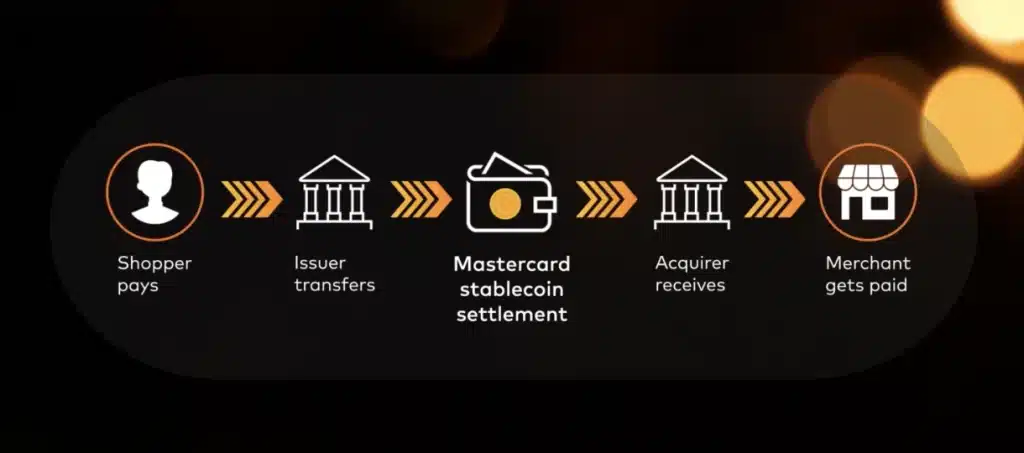
RLUSD will be available as one of the regulated stablecoins supported by Mastercard’s infrastructure. The company said settlement functionality will operate across multiple blockchain networks, including the XRP Ledger (XRP), Ethereum (ETH), Solana (SOL), Polygon (POL), Base (BASE), Arbitrum (ARB), Canton (CC), and Tempo.
Mastercard described stablecoin settlement as a new option that can operate alongside existing payment processes. The goal is to improve liquidity management and support financial processes that require fast access to funds.
As Raj Dhamodharan, the executive vice president of Blockchain & Digital Assets at Mastercard, explained:
“The next phase of stablecoin adoption is about real-world utility, especially in settlement, where timing and liquidity matter most. (…) By introducing intraday and weekend on settlement options across our global network, we’re expanding how partners manage liquidity and operate in an always-on digital economy while maintaining the trust, resilience and safeguards they expect from Mastercard.”
Ripple welcomed the development. Jack McDonald, Ripple’s Senior Vice President of Stablecoins, called Mastercard’s move into on-chain settlement a “landmark validation” of blockchain technology and said RLUSD’s inclusion reflects growing demand for regulated stablecoins designed for real-world financial use. As he added:
“RLUSD’s inclusion in Mastercard’s global settlement network reflects growing demand for trusted, regulated stablecoins built for real-world financial use cases on public blockchains like the XRP Ledger. We’re excited to support the next evolution of faster, more flexible, always-on settlement.”
The Importance of RLUSD Integration
The significance extends beyond another partnership announcement. Mastercard is one of the world’s largest payment companies, processing billions of transactions annually across more than 200 countries and territories.
By adding RLUSD to its settlement framework, Mastercard is effectively recognizing Ripple’s stablecoin as suitable for institutional payment infrastructure. Though Mastercard isn’t exclusively backing RLUSD, its decision places Ripple’s stablecoin alongside some of the most established names in the sector.
Then there’s the timing. Stablecoins have increasingly become one of the fastest-growing areas of digital assets, with companies across the financial industry exploring their use for faster and cheaper settlement. Mastercard’s latest expansion suggests the company sees regulated stablecoins moving beyond experimentation and into practical financial infrastructure.
Meanwhile, RLUSD’s integration could strengthen Ripple’s wider strategy of serving institutional payments markets. The firm has long focused on cross-border settlement through XRP and the XRP Ledger. The addition of RLUSD to Mastercard’s settlement ecosystem gives it another avenue to participate in the growing market for blockchain-based financial services.
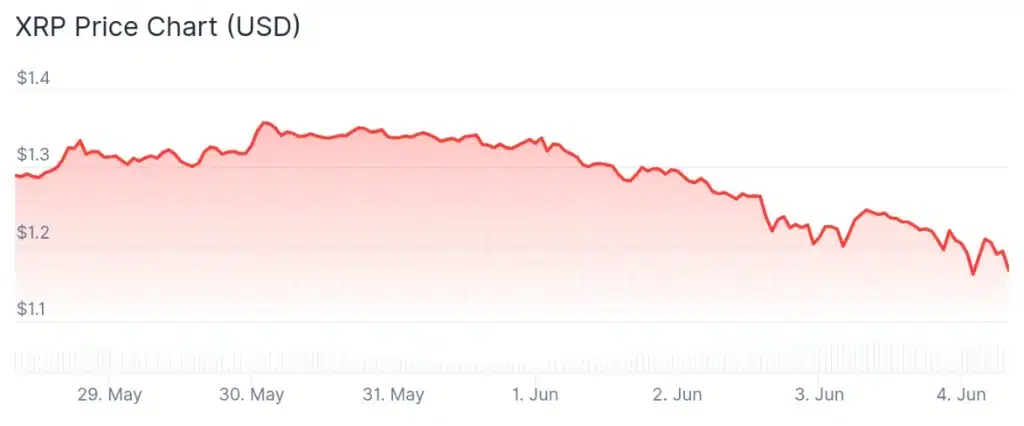
The Ripple-issued XRP token was at press time on June 4 changing hands at the price of $1.17, down 6.2% on the day, losing 9.6% across the past week, and accumulating a decline of 17.1% over the month, per the most recent chart information.
Although Mastercard’s rollout includes several stablecoins and blockchain networks, RLUSD’s inclusion represents another sign that major financial institutions are becoming increasingly comfortable integrating Ripple’s technology into mainstream payment infrastructure.
How do you rate this article?
Subscribe to our YouTube channel for crypto market insights and educational videos.






Join our Socials
Briefly, clearly and without noise – get the most important crypto news and market insights first.
Most Read Today
1
One HYPE Whale Has Been Selling for 2 Weeks — What Could Be Behind It?
2Clarity Act 2026: Everything You Should Know
3From Nearly Nothing to $4B: RWA Perps Are Reshaping Onchain Trading
4Bitcoin ETF Momentum Takes a Hit — The Next Sessions Could Matter
5Crypto Oracles: 3 Roles Developers Must Secure to Prevent Exploits
Latest





8
Also read
Similar stories you might like.

Crypto News
XRP Joins Bitcoin, Ethereum and Solana in a Major U.S. Listing Framework
Azeez | 2026-09-10

Crypto News
Solana Apps Just Outpaced the Next Network by 50% — A Bigger Trend Is Emerging
Azeez | 2026-09-10

Crypto News
Bitcoin Is Closing In on Institutional Break-Even — The Next Resistance Could Decide
Azeez | 2026-09-10

Crypto News
New Chainlink Wallets Are Surging — But One Metric Matters More Now
Azeez | 2026-09-10

Crypto News
Bitcoin ETF Momentum Takes a Hit — The Next Sessions Could Matter
Azeez | 2026-09-09

Crypto News
Chainlink Hits $34T in Enabled Transactions — The Infrastructure Race Is Heating Up
Azeez | 2026-09-08

Crypto News
Abraxas Makes Another ETH Move — Its Massive Hyperliquid Short Holds the Key
Azeez | 2026-09-08

Crypto News
This Is the Only Crypto Sector Still Above Bitcoin’s Peak
Azeez | 2026-09-08

Crypto News
This AI Token Is Building Momentum as Attention Shifts Back to AI Sector
Azeez | 2026-09-07

Crypto News
Bitcoin Clears Its Biggest Leverage Test Since 2023
Azeez | 2026-09-07