












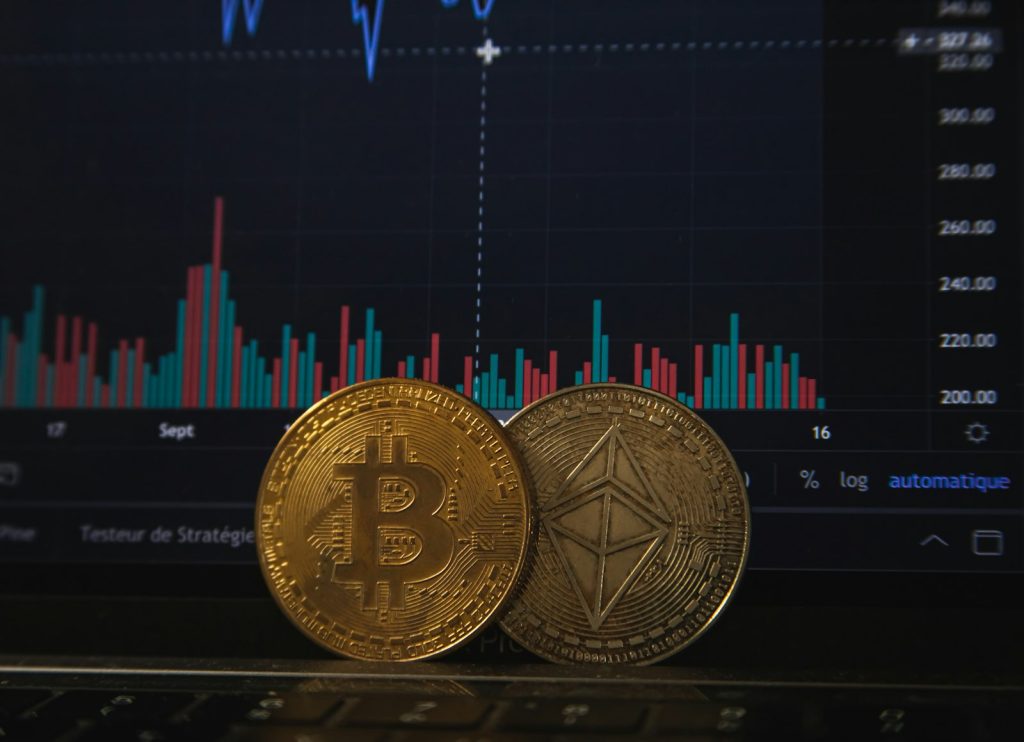
Gold Bitcoin and silver Ethereum coins resting on a laptop keyboard before a trading chart
Coinbase and Deribit Complete Their Exchange Migration — API Users Have More to Check

Coinbase says the transition bringing its International Exchange together with Deribit completed on October 1. The integration combines derivatives infrastructure while leaving different groups of customers with different account and operational requirements.
The company’s official migration guide, updated October 2, says Coinbase app and website users continue using their familiar interfaces. International Exchange institutional clients, however, must verify access to the combined platform and update API endpoints.
Coinbase also distinguishes the completed migration from upcoming options access. Its guide places U.S. institutional options access on a separate timeline and says retail availability will be announced separately. A completed infrastructure merger should not be mistaken for universal access to every product.
Latest Stories

Chainlink Demonstrates Cross-Chain Dividends — Tokenized Shares Need More Than Transfers

Ethereum’s zkAPI Separates AI Billing From Identity — Prompt Privacy Still Has Limits

Ethereum Researchers Explore Rules That Could Reject a Bad Transaction Outcome
A familiar screen can hide a meaningful operational change
For a manual trader, an unchanged interface may make the transition largely invisible. For a business running automated execution, risk reporting or reconciliation, the exchange underneath the interface matters. Endpoint changes can affect far more than the ability to submit a trade.
An institutional system typically needs market data, balances, positions, fills and historical records to remain consistent. If one of those feeds changes while another retains the old format, internal dashboards can show misleading exposure even when the exchange itself is functioning correctly.
The useful check is therefore end-to-end. An order should be submitted, acknowledged, matched and reflected in the same risk and accounting systems used in production. Testing only whether a connection opens is weaker evidence than verifying a complete lifecycle.
Historical continuity deserves particular attention. A migration can introduce settlement records and new identifiers that look like fresh trading activity. Firms need to distinguish infrastructure events from genuine discretionary trades when calculating performance or reconciling balances.
Coinbase’s guide explicitly warns that historical International Exchange trading data will not appear on the combined platform and that the previous APIs remain available for a limited period. That makes a controlled export and reconciliation process more important than assuming history will always remain accessible through the same interface.
Integration benefits still need to be measured
TechGaged’s assessment is that the main commercial promise is a more unified trading environment. Whether a particular client benefits depends on actual spreads, execution quality, margin treatment, product eligibility and the reliability of the new connection.
A broader product menu does not automatically create a better hedge. Traders still need to understand contract settlement, collateral requirements and how positions interact under the selected margin mode. The mechanics of perpetual futures remain important even when venues are consolidated.
For API users, the immediate priority is confirming that balances and exposure reconcile after migration and that monitoring no longer depends on retiring endpoints. For app users, the relevant distinction is which products are actually available to their account and jurisdiction.
The migration is complete according to Coinbase. Product expansion and the operational work surrounding that migration remain separate stories, with separate evidence needed for each.
How do you rate this article?
Subscribe to our YouTube channel for crypto market insights and educational videos.






Join our Socials
Briefly, clearly and without noise – get the most important crypto news and market insights first.
Most Read Today
1
XRP Ledger RWA Transfer Volume Hits $7.03B — Up 1,469% in 30 Days
2Cardano DEX Volume Jumps 143% in a Week as DeFi TVL Rebounds
3Fidelity Treasury Exposure Goes Onchain Through Singapore-Licensed DigiFT
4Rain Files for a U.S. National Trust Bank Focused on Stablecoin Infrastructure
5XRPL Stablecoin Supply Hits $1.31B as RLUSD Captures 93% of the Market
Latest






8
Also read
Similar stories you might like.

Crypto Guides
What Happens If a Layer 2 Sequencer Stops? Check the Exit Before Depositing
TechGaged | 2026-10-07

Crypto Guides
Before You Bridge Crypto: A Checklist for the Asset, Route and Exit
TechGaged | 2026-10-07

Crypto Guides
Tokenized Treasury Funds vs. Stablecoins: What You Own and How You Exit
TechGaged | 2026-10-07
Crypto Guides
A Whale Sent Crypto to an Exchange: How to Check Whether It Signals Selling
TechGaged | 2026-10-07

Crypto Guides
Rising DeFi TVL Does Not Always Mean New Money: How to Read the Data
TechGaged | 2026-10-07

Crypto Guides
Slippage vs. Price Impact: Why a Crypto Swap Can Cost More Than the Fee
TechGaged | 2026-10-07

Crypto Guides
DeFi Health Factor Explained: How to Calculate Your Liquidation Buffer
TechGaged | 2026-10-07

Crypto Guides
Disconnecting a Crypto Wallet Does Not Revoke Token Approvals: What to Check
TechGaged | 2026-10-07

Crypto Guides
Native vs. Bridged USDC: The Same Ticker Can Hide a Different Asset
TechGaged | 2026-10-07

Crypto Guides
How to Read a Stablecoin Reserve Report: Seven Checks Beyond ‘Fully Backed’
TechGaged | 2026-10-07