












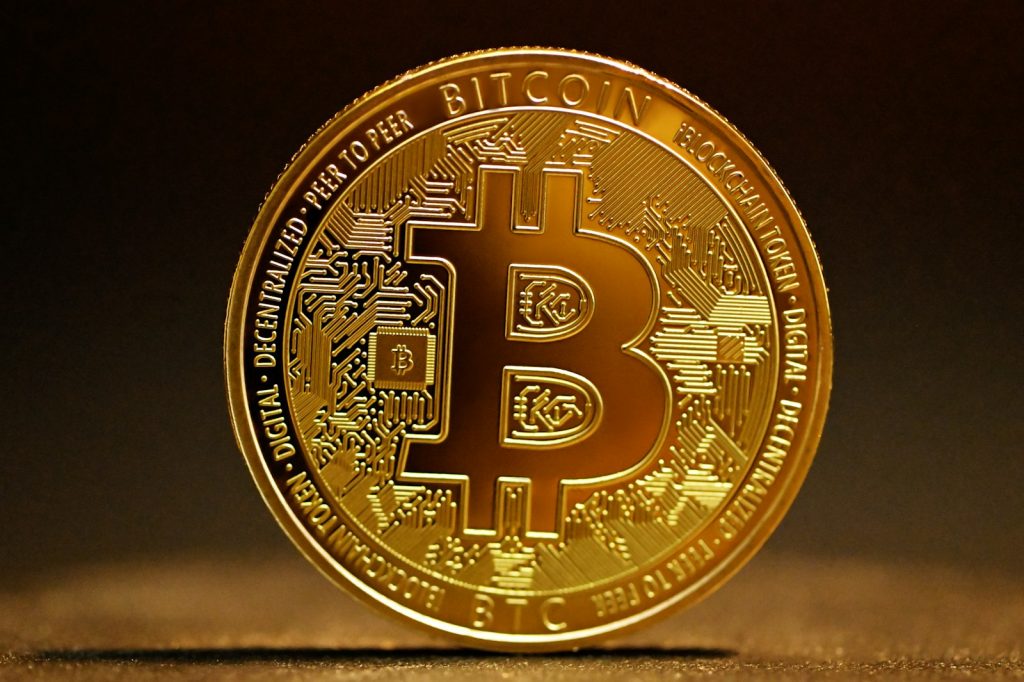
a golden bitcoin sitting on top of a table
A Whale Sent Crypto to an Exchange: How to Check Whether It Signals Selling

A large crypto transfer to an exchange can be important, but the transaction alone does not prove that the owner sold. It establishes that assets moved between addresses. Identifying the parties, their purpose and any resulting trade requires additional evidence.
The most useful on-chain analysis begins with a narrow factual statement and expands only as the evidence improves. A dramatic transfer amount is not a substitute for knowing what happened.
In its explanation of tracing through services, Chainalysis notes that exchanges move funds internally and that on-chain analysis cannot follow a customer’s account activity as if the customer controls every subsequent service-wallet transfer.
Latest Stories

Chainlink Demonstrates Cross-Chain Dividends — Tokenized Shares Need More Than Transfers

Ethereum’s zkAPI Separates AI Billing From Identity — Prompt Privacy Still Has Limits

Ethereum Researchers Explore Rules That Could Reject a Bad Transaction Outcome
Establish what the blockchain actually shows
Start with the transaction hash and correct blockchain explorer. Confirm the asset, token contract, amount, timestamp and status. A pending transaction, a failed call and a completed transfer are different observations.
If quoting a dollar amount, state the valuation time. Ten thousand coins valued at the transfer-time price may have a different dollar value when you write the story. Do not mix those values without explanation.
For Bitcoin, inspect outputs rather than reading every output as a new payment. Change outputs and transactions involving several inputs can complicate a simple sender-to-recipient narrative. For token transfers, inspect the contract and relevant transfer events rather than assuming a familiar ticker proves the asset’s identity.
Next, evaluate labels. Is the destination confirmed by the exchange, identified by a data provider or merely labeled by an unknown account? Record the source of the identification. Multiple dashboards repeating the same upstream label are not necessarily independent confirmation.
Look for a relationship between the sending and receiving clusters. A transfer between an exchange’s hot and cold wallets can appear large without representing new customer supply. A custody migration can produce a similar movement.
Separate a deposit from a trade
If the destination is a confirmed exchange deposit route, a defensible conclusion is that the assets entered that service. They might be sold, used as collateral, transferred to another account or held. The blockchain generally does not expose the customer’s complete internal order history.
Chainalysis discusses the same boundary in its analysis of service-wallet movements. Once a service receives funds, subsequent internal transfers should not automatically be attributed to the depositing customer.
Consider a hypothetical wallet sending 5,000 ETH to a known exchange address. A post claiming “the whale sold 5,000 ETH” adds an unobserved trade. A post stating “the wallet deposited 5,000 ETH; the purpose is unconfirmed” accurately preserves the distinction.
Aggregate flow data can provide context, but it introduces its own methodology. Ask whether the provider excludes internal movements, how addresses are labeled and whether historical labels are revised. A change in attribution can alter a chart without a new blockchain transaction.
Market data may show heavy selling near the transfer time. That strengthens the case that the market experienced selling, but it does not automatically identify the depositor as the seller. Correlated timing is not account-level proof.
Useful corroboration includes a credible owner statement, a disclosed transaction purpose or other evidence connecting the deposit to a trade. Without it, describe alternative explanations and keep the conclusion conditional.
A repeatable evidence note can have three fields: directly observed transfer, confidence in ownership labels and what remains unobserved. This structure makes it harder to turn a dashboard alert into an unsupported price prediction.
Privacy also complicates ownership assumptions. TechGaged’s wallet-address guide explains why an address can reveal activity without necessarily identifying a person.
Whale transfers are useful signals for further investigation. Their value comes from careful attribution and context, not from treating every exchange deposit as a completed sale.
How do you rate this article?
Subscribe to our YouTube channel for crypto market insights and educational videos.






Join our Socials
Briefly, clearly and without noise – get the most important crypto news and market insights first.
Most Read Today
1
XRP Ledger RWA Transfer Volume Hits $7.03B — Up 1,469% in 30 Days
2Cardano DEX Volume Jumps 143% in a Week as DeFi TVL Rebounds
3Fidelity Treasury Exposure Goes Onchain Through Singapore-Licensed DigiFT
4Rain Files for a U.S. National Trust Bank Focused on Stablecoin Infrastructure
5XRPL Stablecoin Supply Hits $1.31B as RLUSD Captures 93% of the Market
Latest






8
Also read
Similar stories you might like.
Crypto Guides
What Happens If a Layer 2 Sequencer Stops? Check the Exit Before Depositing
TechGaged | 2026-10-07

Crypto Guides
Before You Bridge Crypto: A Checklist for the Asset, Route and Exit
TechGaged | 2026-10-07
Crypto Guides
Tokenized Treasury Funds vs. Stablecoins: What You Own and How You Exit
TechGaged | 2026-10-07
Crypto Guides
Rising DeFi TVL Does Not Always Mean New Money: How to Read the Data
TechGaged | 2026-10-07
Crypto Guides
Slippage vs. Price Impact: Why a Crypto Swap Can Cost More Than the Fee
TechGaged | 2026-10-07
Crypto Guides
DeFi Health Factor Explained: How to Calculate Your Liquidation Buffer
TechGaged | 2026-10-07

Crypto Guides
Disconnecting a Crypto Wallet Does Not Revoke Token Approvals: What to Check
TechGaged | 2026-10-07

Crypto Guides
Native vs. Bridged USDC: The Same Ticker Can Hide a Different Asset
TechGaged | 2026-10-07
Crypto Guides
How to Read a Stablecoin Reserve Report: Seven Checks Beyond ‘Fully Backed’
TechGaged | 2026-10-07

Blockchain
Chainlink Demonstrates Cross-Chain Dividends — Tokenized Shares Need More Than Transfers
TechGaged | 2026-10-07