











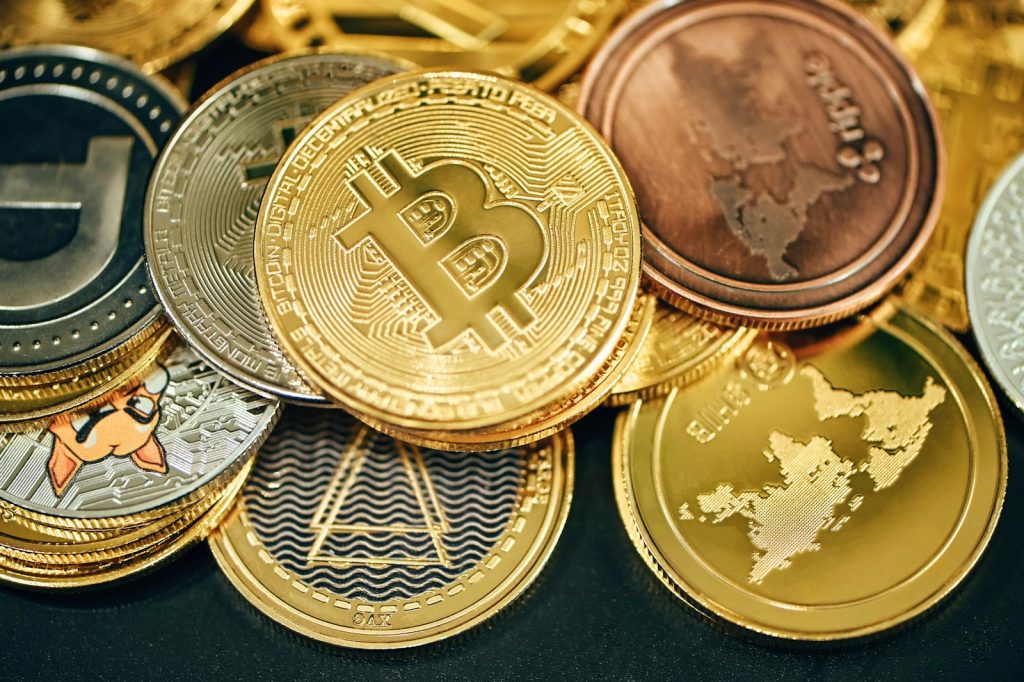
a pile of gold and silver bitcoins

Total value locked, or TVL, is a valuation of assets counted within a defined protocol, chain or category. It can help describe scale, but a rise in the dollar total does not automatically establish that new money entered the system.
A chart combines quantities, prices and a measurement method. To interpret it well, separate those elements before deciding whether a protocol is growing or a market narrative is gaining support.
Data providers also revise history. In an official methodology discussion, DefiLlama explains that corrections and reclassification can change historical figures. A saved number and a later dashboard reading can differ even for the same date.
Latest Stories

Chainlink Demonstrates Cross-Chain Dividends — Tokenized Shares Need More Than Transfers

Ethereum’s zkAPI Separates AI Billing From Identity — Prompt Privacy Still Has Limits

Ethereum Researchers Explore Rules That Could Reject a Bad Transaction Outcome
Separate price changes from asset flows
Imagine a protocol holding 10,000 ETH and no other assets. At an illustrative price of $2,000 per ETH, its TVL is $20 million. If ETH rises to $2,400 while the token quantity remains unchanged, TVL becomes $24 million. The dollar value has increased 20% without one additional ETH being deposited.
Now suppose the protocol holds 11,000 ETH at $2,400. TVL is $26.4 million. The 32% increase from the original dollar value combines a 10% rise in token quantity with a 20% price increase. Simply calling the full $6.4 million change “new deposits” would be wrong.
For a multi-asset protocol, the same principle applies to each asset. Look for token quantities or price-adjusted series, and inspect which holdings contributed most to the change. A stablecoin-heavy market and a volatile-token-heavy market can produce very different dollar movements.
Quantities still require interpretation. Assets may have moved from another protocol rather than arriving from outside crypto. A chain can gain TVL while the broader system’s total changes little. Identify whether the claim is about a single application, a chain or the entire market.
Borrowed funds and receipt tokens add complexity. One underlying asset can support several visible positions. Check whether the provider includes borrowed amounts, staking categories and assets that may be counted elsewhere. DefiLlama’s chain-TVL discussion illustrates why double-counting policies matter.
Use a consistent comparison
Choose the same provider, category settings and timestamps for both ends of a comparison. A daily closing figure is not directly equivalent to an intraday peak. Record the timezone and retrieve dates so the analysis can be repeated.
Check for product migrations. Moving assets from an old vault to a new one can make one chart collapse and another surge without changing the combined business. A new adapter or reclassification can create a similar visual break.
Then examine whether activity supports the capital story. Fees, borrowing demand, transaction activity and retention can help explain how assets are being used. TVL alone does not establish revenue, profitability or the number of independent customers.
Large concentrations deserve attention. A protocol can have a substantial balance supplied by a small number of wallets. That may be legitimate, but it is a different adoption pattern from broad recurring use. Wallet counts also require care because one person can control several addresses.
A useful research note has four lines: reported TVL change, estimated price contribution, changes in asset quantities and known methodology or migration effects. Leave an item unresolved when the data does not support a confident explanation.
If the available chart only provides a dollar total, say precisely that the reported value rose. Avoid upgrading that observation into a claim that investors deposited the same amount or that token buying pressure must follow.
For context on how assets circulate between applications, see TechGaged’s DeFi guide.
TVL is useful when its boundaries are clear. The strongest analysis explains what changed inside the number instead of treating the number as a complete story.
How do you rate this article?
Subscribe to our YouTube channel for crypto market insights and educational videos.






Join our Socials
Briefly, clearly and without noise – get the most important crypto news and market insights first.
Most Read Today
1
XRP Ledger RWA Transfer Volume Hits $7.03B — Up 1,469% in 30 Days
2Cardano DEX Volume Jumps 143% in a Week as DeFi TVL Rebounds
3Fidelity Treasury Exposure Goes Onchain Through Singapore-Licensed DigiFT
4Rain Files for a U.S. National Trust Bank Focused on Stablecoin Infrastructure
5XRPL Stablecoin Supply Hits $1.31B as RLUSD Captures 93% of the Market
Latest






8
Also read
Similar stories you might like.
Crypto Guides
What Happens If a Layer 2 Sequencer Stops? Check the Exit Before Depositing
TechGaged | 2026-10-07

Crypto Guides
Before You Bridge Crypto: A Checklist for the Asset, Route and Exit
TechGaged | 2026-10-07
Crypto Guides
Tokenized Treasury Funds vs. Stablecoins: What You Own and How You Exit
TechGaged | 2026-10-07
Crypto Guides
A Whale Sent Crypto to an Exchange: How to Check Whether It Signals Selling
TechGaged | 2026-10-07
Crypto Guides
Slippage vs. Price Impact: Why a Crypto Swap Can Cost More Than the Fee
TechGaged | 2026-10-07
Crypto Guides
DeFi Health Factor Explained: How to Calculate Your Liquidation Buffer
TechGaged | 2026-10-07
Crypto Guides
Disconnecting a Crypto Wallet Does Not Revoke Token Approvals: What to Check
TechGaged | 2026-10-07

Crypto Guides
Native vs. Bridged USDC: The Same Ticker Can Hide a Different Asset
TechGaged | 2026-10-07
Crypto Guides
How to Read a Stablecoin Reserve Report: Seven Checks Beyond ‘Fully Backed’
TechGaged | 2026-10-07

Blockchain
Chainlink Demonstrates Cross-Chain Dividends — Tokenized Shares Need More Than Transfers
TechGaged | 2026-10-07