















Hooded figure standing on railway tracks. Source: TechGaged / Shutterstock
Bridge Exploit Forces Emergency Response From Taiko, Users Told to Exit
In Brief
- • Taiko urged users to exit all bridges after a reported exploit.
- • The project halted block production and asked exchanges to pause TAIKO deposits.
- • Investigators believe a bridge proof validation flaw enabled the attack.

Taiko, a decentralized Ethereum-equivalent ZK-EVM and general-purpose ZK-Rollup, has warned users to withdraw funds from every bridge deployed on its network after confirming a compromise of its chain state verification mechanism. The incident followed a reported exploit of the project’s ERC20 Vault on Ethereum (ETH) that blockchain security firm Blockaid estimated had already exceeded $1 million in losses. As the investigation continues, Taiko has temporarily stopped block production and asked centralized exchanges to suspend TAIKO deposits.
Taiko Confirms Bridge Security Compromise
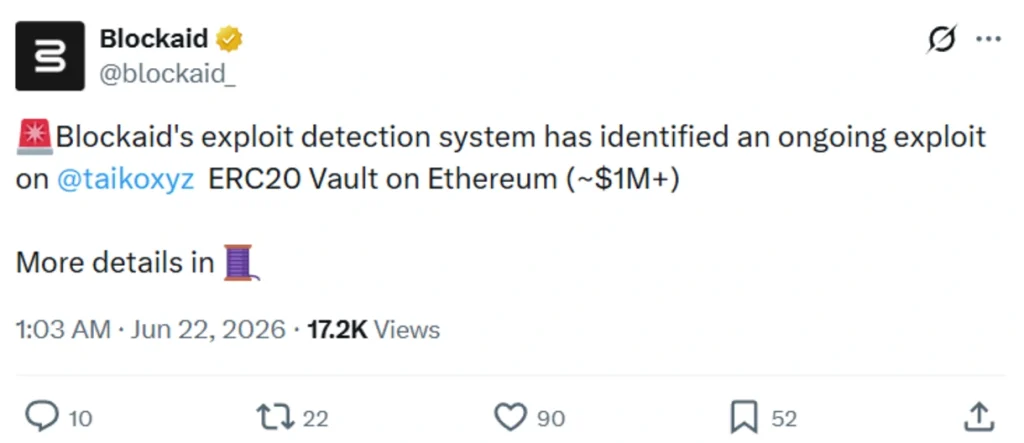
Specifically, in an X post on June 22, blockchain security company Blockaid first reported an ongoing exploit affecting Taiko’s ERC20 Vault on Ethereum, and estimated losses of more than $1 million. The firm published the affected contract, attacker address, and exploit transactions as it continued to monitor the incident.
According to Blockaid’s preliminary analysis, the exploit appears to stem from a flaw in Taiko’s bridge source-signal proof validation. Indeed, the firm said crafted message proofs were accepted on Ethereum without corresponding legitimate MessageSent events on the Taiko source chain.
Latest Stories
Bitcoin’s Demand Is Holding Strong — One On-Chain Level Could Decide What Comes Next

Chainlink Keeps Stacking LINK — The Reserve Has Crossed $70M

Ethereum Stakers Are Sending a Powerful Signal
That allegedly allowed the attacker to register fraudulent bridge messages and later redeem them, which resulted in unauthorized releases of assets from the ERC20 vault.
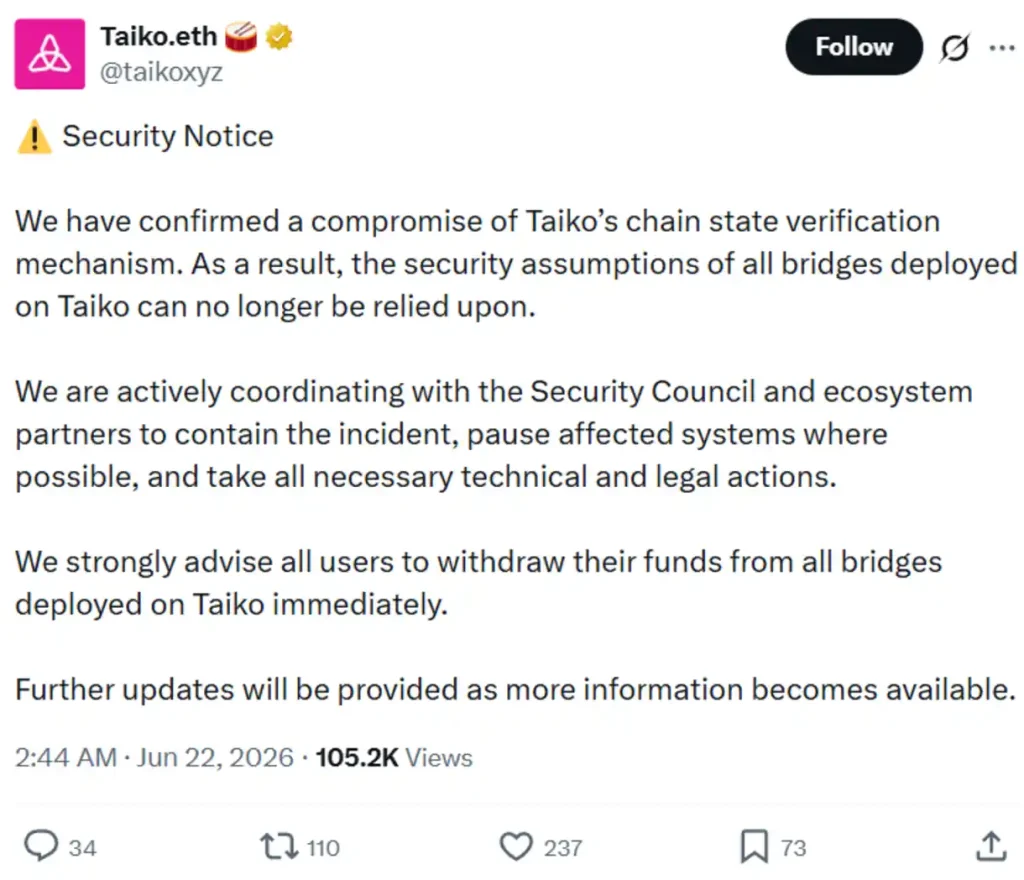
Shortly afterward, Taiko confirmed that its chain state verification mechanism had been compromised, and warned that the security assumptions behind every bridge deployed on the network could no longer be trusted.
The project said it is coordinating with its Security Council and ecosystem partners to contain the incident, pause affected systems where possible, and pursue both technical and legal responses.
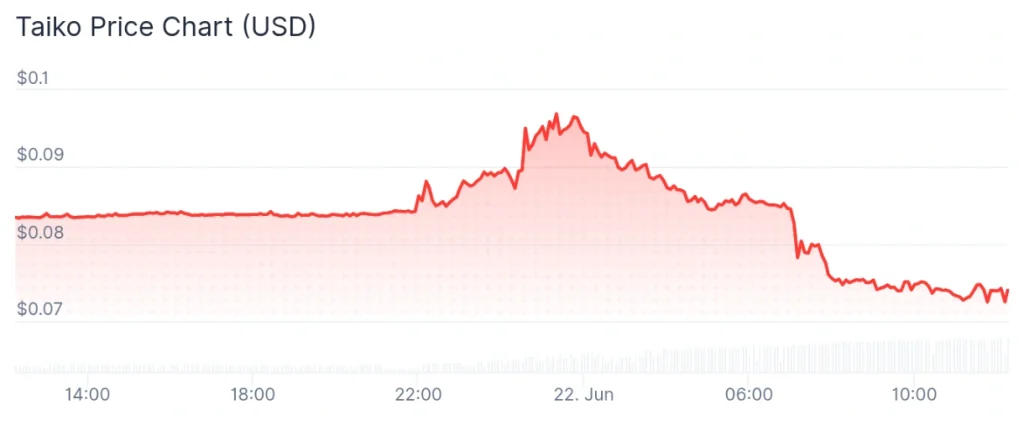
At press time on June 22, the price of Taiko’s native token amounted to $0.074, down 11.3% on the day, 15.4% across the past week, and 30.6% over the month, according to the most recent chart information.
Users Told to Withdraw Funds as Block Production Stops
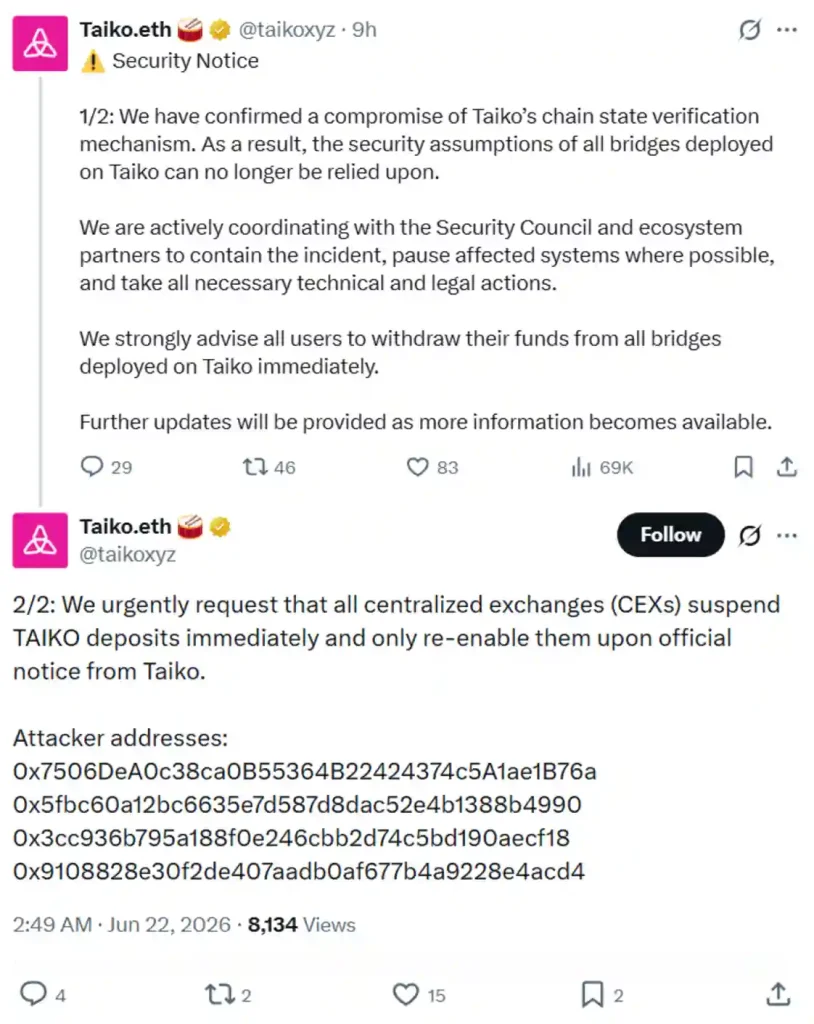
Taiko urged all users to withdraw funds from every bridge deployed on the network immediately as the issue remains unresolved.
The team also requested that centralized exchanges suspend TAIKO deposits until an official notice confirms the network is secure again. As part of its public update, Taiko released several attacker wallet addresses to help exchanges and ecosystem partners monitor suspicious activity.
In a separate announcement, the project said all Taiko proposers have temporarily stopped producing new blocks as engineers investigate and resolve the security issue.
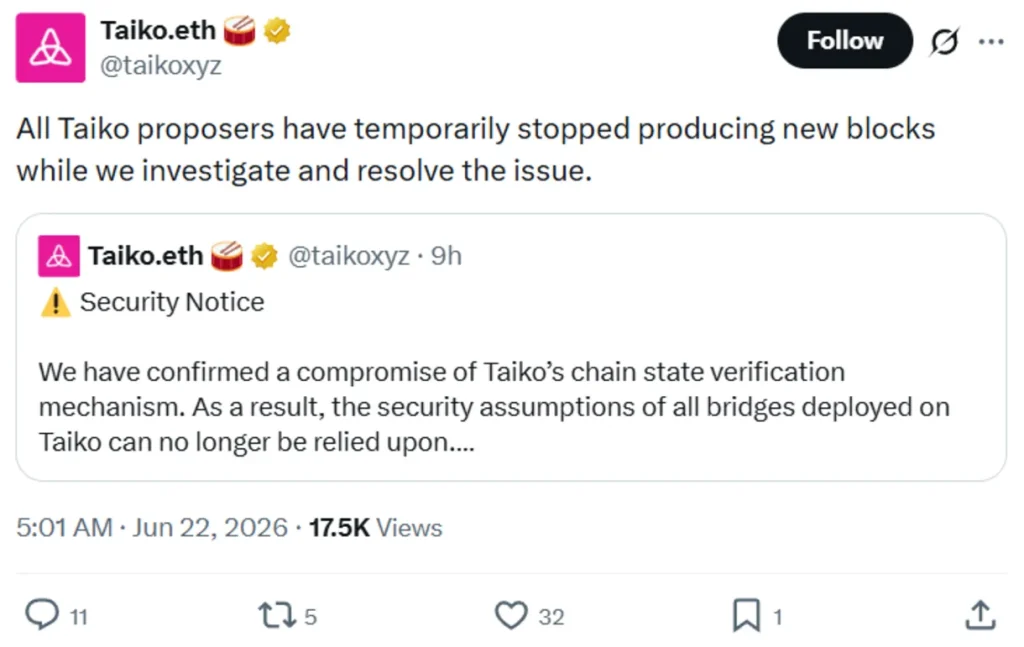
Meanwhile, Blockaid said the suspected vulnerability allowed the acceptance of fraudulent bridge messages despite lacking valid source-chain events, and pointed to a flaw in proof validation as opposed to the bridge contracts themselves. Taiko has not yet disclosed the total amount lost or provided a timeline for restoring bridge operations and resuming block production.
How do you rate this article?
Join our Socials
Briefly, clearly and without noise – get the most important crypto news and market insights first.

Most Read Today
1
Ethereum Stakers Are Sending a Powerful Signal
2Sui’s Lending Powerhouse Gets a Glow-Up: The RWA Shift Is Underway
3Bitcoin’s Demand Is Holding Strong — One On-Chain Level Could Decide What Comes Next
4Chainlink Keeps Stacking LINK — The Reserve Has Crossed $70M
5ZEC Keeps Setting New Highs — Even With Its Biggest Concern Still Alive
Latest





8
Also read
Similar stories you might like.

Crypto News
Chainlink Keeps Stacking LINK — The Reserve Has Crossed $70M
Azeez | 2026-09-20

Crypto News
Sui’s Lending Powerhouse Gets a Glow-Up: The RWA Shift Is Underway
Azeez | 2026-09-20

Crypto News
Ethereum Breaks Its January High: Whales Are Waking Up
Azeez | 2026-09-19

Crypto News
Bitcoin Trades Above $80K as Altcoins Explode — Is Risk Appetite Back?
Azeez | 2026-09-19

Crypto News
Solana Could Be Building Toward a Parabolic Move
Azeez | 2026-09-18

Crypto News
Bitcoin Loses the True Market Mean — The Next Move Could Be Crucial
Azeez | 2026-09-17

Crypto News
Nearly $100M of Bitcoin Just Moved Into MARA: The Timing Matters
Azeez | 2026-09-16

Crypto News
This New Discovery Shows That Ethereum Market May Be Entering a New Territory
Azeez | 2026-09-15

Crypto News
Multicoin Capital Moves Millions More in HYPE — Is Selling Pressure Building?
Azeez | 2026-09-15

Crypto News
A National Digital Identity System Is Now Using Avalanche — The Scale Is Huge
Azeez | 2026-09-15