













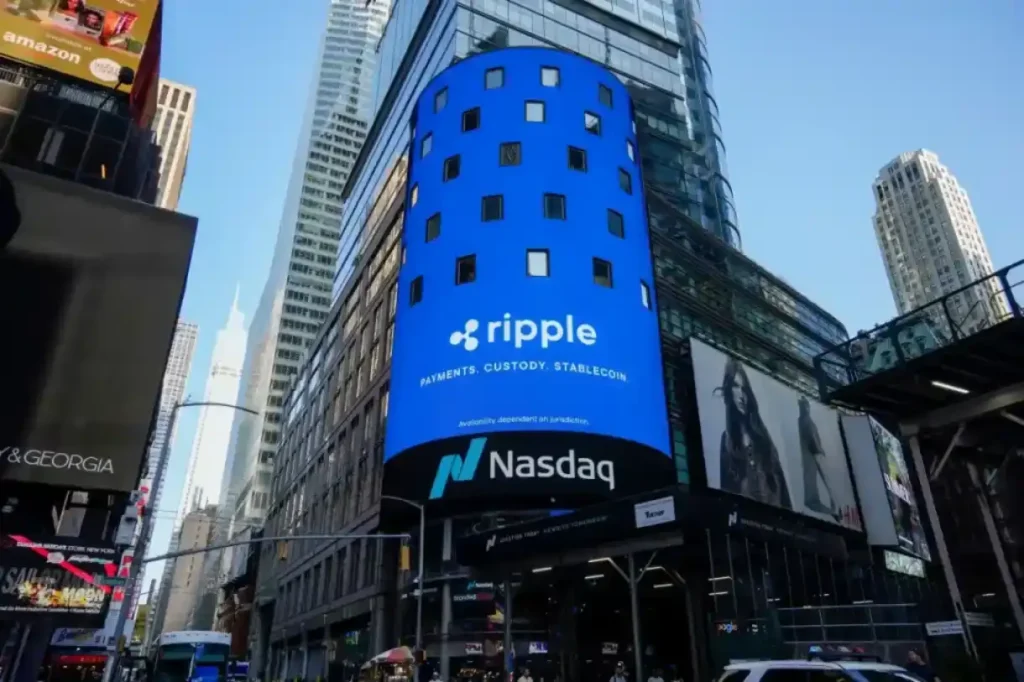
Ripple advertisement displayed on Nasdaq building in New York. Source: TechGaged / Shutterstock

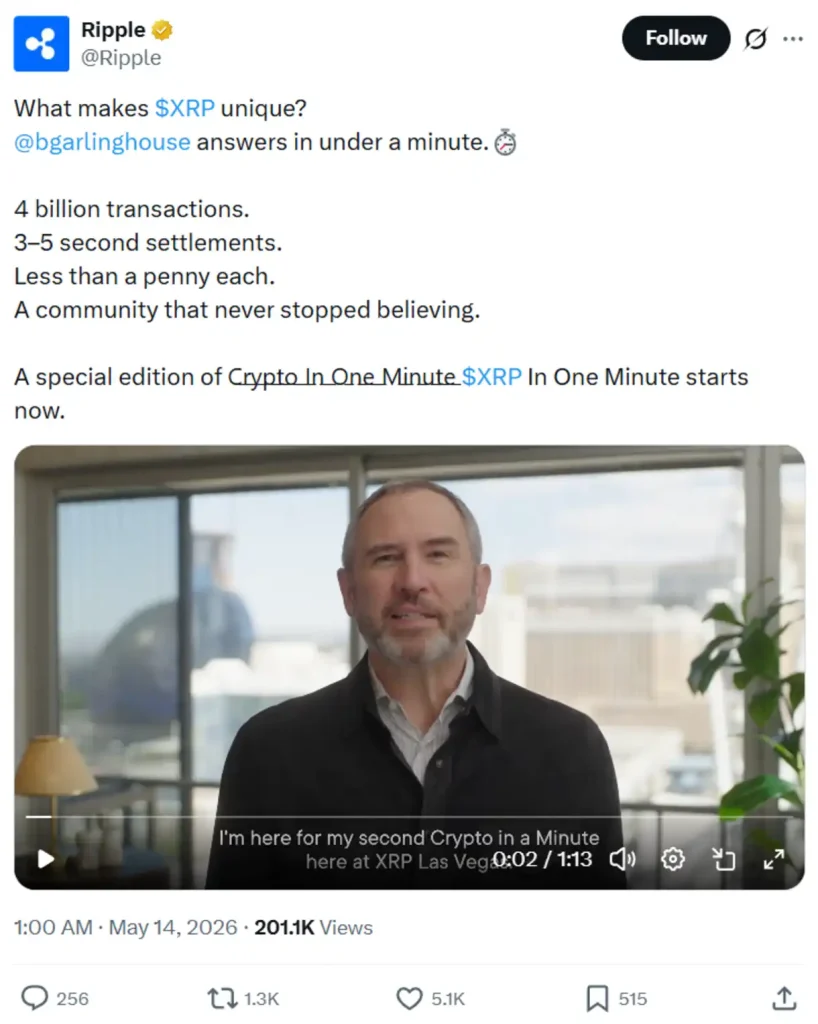
Ripple CEO Brad Garlinghouse released a new video explaining why he believes XRP still stands apart from other cryptocurrencies despite growing competition across the payments sector. Garlinghouse pointed to XRP’s transaction speed, low costs, scalability, and long-running community support as the network’s biggest advantages. The comments arrive as Ripple continues pushing XRP deeper into cross-border payments and as regulatory clarity around crypto market structure gains momentum in Washington.
Garlinghouse Says XRP Was Built To Solve Payments
In the video shared on May 14, Garlinghouse said XRP Ledger’s earliest developers originally came from Bitcoin-related projects but wanted to build something optimized specifically for payments. As Garlinghouse said:
“They saw in that an opportunity to build something specialized and specific and unique to really solve a payments problem.”
According to Ripple’s CEO, XRP’s biggest strengths remain transaction speed and cost efficiency. As he explained:
“What makes XRP so unique is its speed. Settling transactions in 3 to 5 seconds.”
Garlinghouse also highlighted XRP’s low transaction fees and network activity.
“It’s cost, extremely low cost, fractions of a penny per transaction. And its scalability, now having completed over 4 billion transactions.”
The video continues Ripple’s recent effort to reinforce XRP’s utility narrative at a time when stablecoins, tokenized payments, and institutional blockchain infrastructure are becoming major themes across the crypto industry.
Ripple Keeps Leaning Into XRP Utility
Ripple has increasingly moved away from speculative trading alone and tied XRP’s identity to payments infrastructure. The company recently expanded partnerships tied to remittances and tokenized finance, and executives continue pushing the idea that XRP can operate as settlement infrastructure for global value transfer.
Garlinghouse also emphasized the role of the XRP community in keeping the network relevant through multiple market cycles.
“You add in that with a special dash of an incredible community around XRP, what I like to call the XRP family. Sometimes we’re going to be the XRP army depending what’s going on.”
The renewed messaging push also comes as lawmakers debate the CLARITY Act and crypto market structure legislation in the United States. XRP supporters have increasingly argued that clearer rules could improve institutional adoption and strengthen the case for XRP-related financial products, including exchange-traded funds (ETFs).
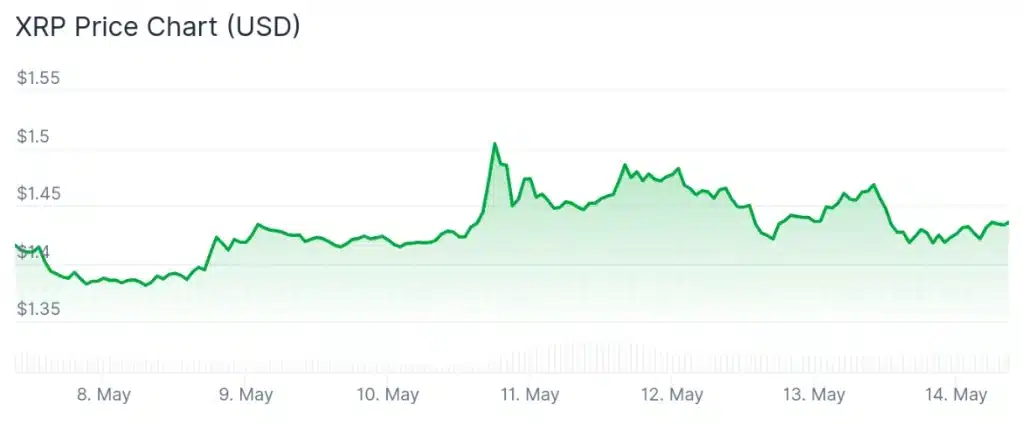
Meanwhile, XRP was at press time on May 14 changing hands at the price of $1.43, down 2% on the day, but gaining 1.1% across the week, and accumulating an advance of 4.6% over the past month, according to the most recent chart information.
Though XRP still faces intense competition from stablecoins and newer blockchain payment systems, Ripple appears focused on reinforcing the same core pitch it has used for years, and which includes fast settlement, low fees, and infrastructure designed specifically for moving value globally.
How do you rate this article?
Subscribe to our YouTube channel for crypto market insights and educational videos.






Join our Socials
Briefly, clearly and without noise – get the most important crypto news and market insights first.

Most Read Today
1
Coinbase and Deribit Complete Their Exchange Migration — API Users Have More to Check
2Noah Closes a $38M Seed Round as Stablecoin Payments Move Beyond the Wallet
3Tether and Kazakhstan’s Central Bank Explore a Tenge Stablecoin — A Pilot, Not a Launch
4AI Traces $387M Bitget Heist to North Korea as 2026 Losses Cross $1B
5Bitcoin ETF Inflows Collapse 88% — But On-Chain Activity Is Heating Up
Latest





8
Also read
Similar stories you might like.
Altcoins
XRPL Stablecoin Supply Hits $1.31B as RLUSD Captures 93% of the Market
TechGaged | 2026-10-06
Altcoins
XRP Ledger RWA Transfer Volume Hits $7.03B — Up 1,469% in 30 Days
TechGaged | 2026-10-06

Blockchain
AI Traces $387M Bitget Heist to North Korea as 2026 Losses Cross $1B
Rokas | 2026-10-03
Crypto News
XRP Is Moving Beyond Crypto-Only Products as Traditional ETF Exposure Expands
Azeez | 2026-09-27
Crypto News
XRP Breaks a Seven-Month Barrier as Whale Activity Hits a Fresh High
Azeez | 2026-09-23
Crypto News
XRP Takes Center Stage in a Gold-and-Oil Sovereign Reset Scenario
Azeez | 2026-09-21
Crypto News
XRP Whale Activity Is Picking Up — The Next Price Move Could Be Significant
Azeez | 2026-09-16
Crypto News
Ali Martinez Spots an XRP Breakout Setup as Investors Watch
Azeez | 2026-09-14
Crypto News
XRP Joins Bitcoin, Ethereum and Solana in a Major U.S. Listing Framework
Azeez | 2026-09-10
Crypto News
XRP Trading Volume Surges to a February High — Something Is Changing
Azeez | 2026-09-07