











Digital blockchain symbolization. Source: Techgaged/Shutterstock.
Public Blockchains Are Quietly Winning The Institutional Tokenization Battle

The narrative around blockchain and institutional finance used to center on private, permissioned networks.
Banks wanted control. They built walled gardens. That story is changing faster than most people expected.
The Numbers That Show The Shift
The tokenized real-world asset market has crossed $32 billion in 2026, up more than 200% in a single year, according to RWA.xyz data.
Latest Stories
Traditional Finance Meets Tokenization As Franklin Templeton Clears Major Regulatory Hurdle

Major Multi-Market Trading Goes Live On Sui Mainnet

Ethereum Was At Peak Fear Just Before The Market Turned
Ethereum leads with roughly 56% of that total. Stellar holds around 13%, followed by Polygon and Solana. When stablecoins are included, the combined onchain figure crosses $300 billion.
These aren’t experimental pilot programs anymore. They’re live products processing real capital at institutional scale.
The IMF flagged the shift directly in a July 2026 report, noting that banks which historically built on private infrastructure are now issuing and transacting assets on public blockchains.
On the other hand,permissionless networks are increasingly handling connectivity and innovation rather than being avoided for compliance reasons.
What Changed The Calculation For Banks
Regulation cleared the runway. Techgaged reported in March that SEC Chair Paul Atkins signaled a long-awaited tokenization exemption could arrive within weeks.
It framed it as part of a broader shift away from enforcement-first policy. That confidence translated into action.
JPMorgan filed to launch a second tokenized Treasury fund on Ethereum specifically to serve stablecoin reserve infrastructure, Techgaged reported in May, a significant step for a bank that spent years building its own private blockchain rather than using public rails.
Private Chains Lost The Race They Thought They Were Winning
JPMorgan’s Kinexys, Citi’s Token Services, and similar institutional-grade private networks still exist.
But the capital is increasingly flowing through Ethereum, Solana, and Stellar rather than staying inside bank-controlled environments.
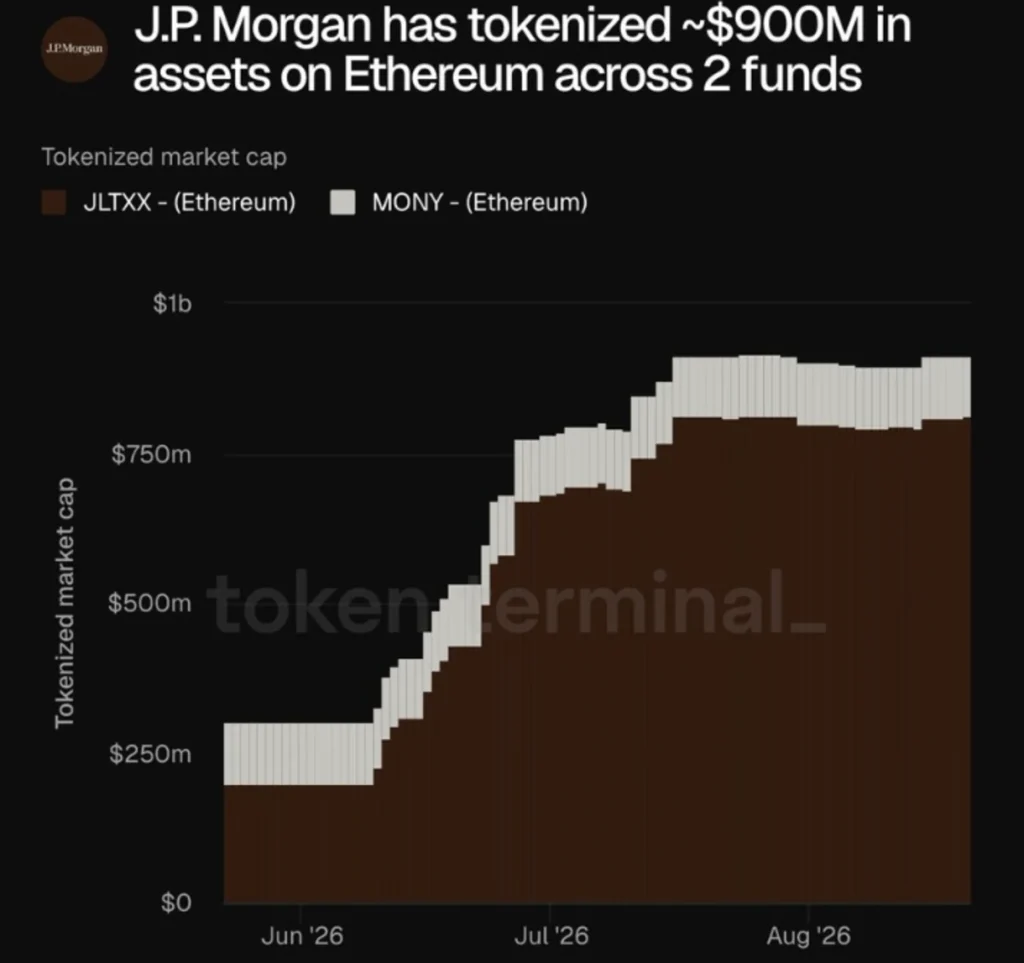
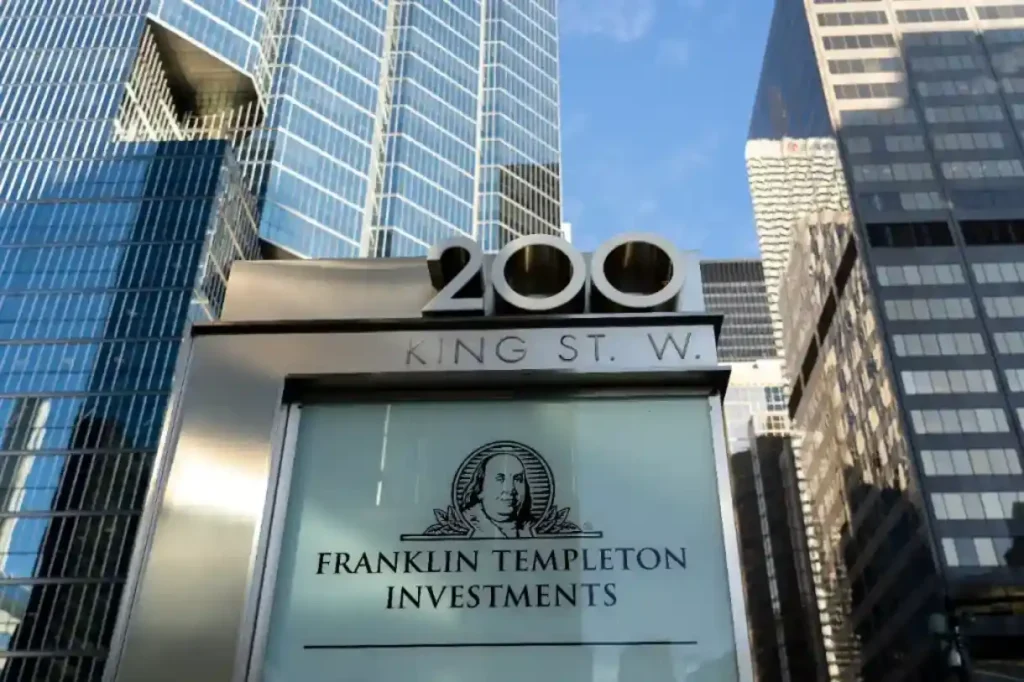
Franklin Templeton’s BENJI fund now runs across nine public blockchains including Ethereum, Solana, Polygon, Avalanche, and Base. BlackRock’s BUIDL fund chose Ethereum.
The pattern is consistent enough to call it a structural preference rather than a coincidence.
Watch total tokenized Treasury supply on public chains over the next quarter. A sustained climb above $20 billion would confirm the trend has moved well past the pilot stage and into something that’s genuinely hard to reverse.
Disclaimer:
This article is for informational purposes only and does not constitute financial, investment, or trading advice. The views expressed are based on publicly available data, market observations, and the author’s interpretation at the time of writing. Cryptocurrency markets are highly volatile and unpredictable, and past performance or current technical setups do not guarantee future results. Readers should conduct their own research and consult with a qualified financial advisor before making any investment decisions. TechGaged does not accept liability for any losses incurred based on the information presented.
How do you rate this article?
Subscribe to our YouTube channel for crypto market insights and educational videos.






Join our Socials
Briefly, clearly and without noise – get the most important crypto news and market insights first.
Most Read Today
1
One Bitcoin Trend Is Beginning To Look Strikingly Familiar
2What Is a Rug Pull in Crypto, and What Should You Do Right Now?
3Traditional Finance Meets Tokenization As Franklin Templeton Clears Major Regulatory Hurdle
4Ethereum Was At Peak Fear Just Before The Market Turned
5Major Multi-Market Trading Goes Live On Sui Mainnet
Latest





8
Also read
Similar stories you might like.
Crypto News
Traditional Finance Meets Tokenization As Franklin Templeton Clears Major Regulatory Hurdle
Azeez | 2026-08-21

Crypto News
Major Multi-Market Trading Goes Live On Sui Mainnet
Azeez | 2026-08-21

Crypto News
Ethereum’s Largest Client Moves To Chainlink — Investors Are Watching
Azeez | 2026-08-21

Crypto News
BNB Chain’s RWA Surge Raises a Bigger Question for the Market
Azeez | 2026-08-20

Crypto News
Solana Quietly Sets A New All-Time High In Equities — Bullish For SOL?
Azeez | 2026-08-21

Crypto News
Solana ETF Shares Could Soon Go On-Chain — Bitwise Is Exploring A Major Shift
Azeez | 2026-08-15

Crypto News
One Blockchain Is Pulling Away In Tokenized Credit — Solana Leads The Pack
Azeez | 2026-08-13
Crypto News
Is XRPL Giving Insiders an Edge? Ripple CTO Responds
Rokas | 2026-06-30

Crypto News
Which Blockchain Keeps Users Coming Back? The Data Reveals the Winner
Azeez | 2026-06-30

Crypto News
Stellar Reaches $3 Billion in Tokenized Real-World Assets
Rokas | 2026-06-26