













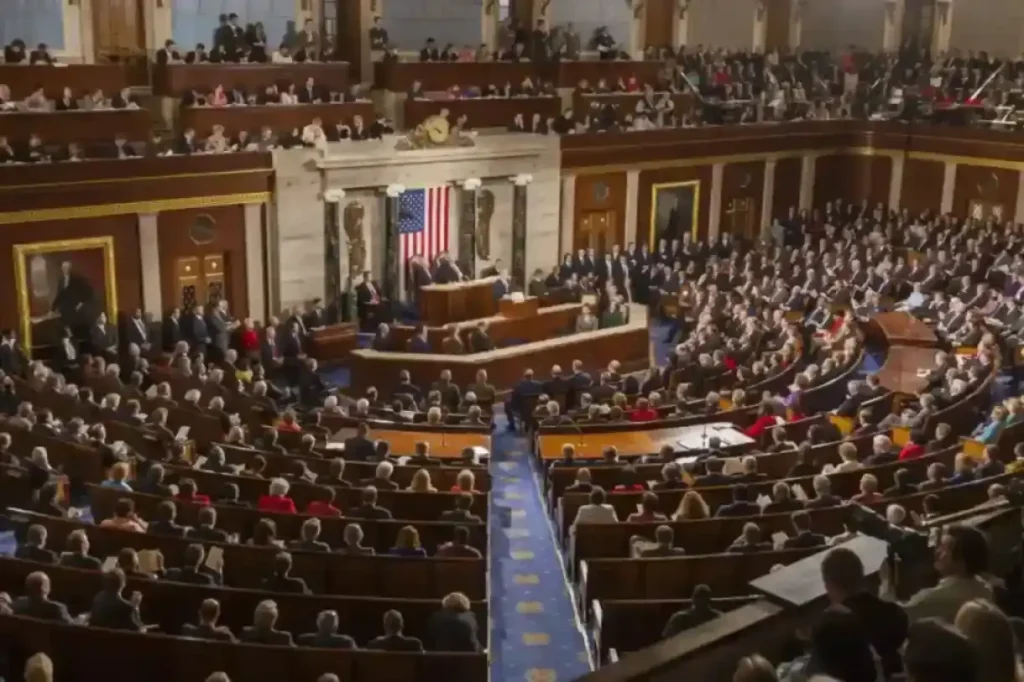
U.S. Senate chamber during a congressional session. Source: TechGaged / Shutterstock
Major U.S. Crypto Regulation Bill Moves Closer To Senate Approval
In Brief
- • The Senate Banking Committee advanced the CLARITY Act in a 15-9 vote.
- • The bill aims to establish clearer federal rules for digital assets.
- • Bipartisan support marks a major step forward for U.S. crypto regulation.

The Senate Banking Committee voted 15-9 to advance the CLARITY Act, pushing the long-debated crypto market structure bill closer to becoming law. The legislation would establish federal rules for digital assets and clarify whether cryptocurrencies fall under securities or commodities oversight. The vote marks the strongest bipartisan movement on crypto regulation in Washington after years of stalled negotiations and industry pressure.
Senate Vote Pushes Crypto Regulation Forward
As it happens, republican lawmakers on the committee unanimously backed the bill and were joined by Democratic senators Ruben Gallego and Angela Alsobrooks, according to a report from May 14.
The legislation now heads to the Senate floor, where negotiations are expected to continue around things like anti-money laundering provisions and decentralized finance (DeFi) protections.
Latest Stories
Binance’s Bitcoin Reserves Plunge — Are Late Buyers Finally Feeling FOMO?

Gold Falls to a Seven-Week Low as Markets React to Changing Rate Expectations

Crypto Keeps Outperforming Stocks and Commodities: The Numbers Tell the Story
Committee Chairman Tim Scott called the vote a major milestone for both the crypto industry and the broader US financial system, per a press release by the U.S. Senate Committee on Banking, Housing, and Urban Affairs published on May 14. As Scott said after the vote:
“Today, the Banking Committee showed the American people that Washington can still work together. We had a serious debate, worked through real differences, and came together around a shared goal: protecting consumers, supporting innovation, and keeping the future of finance in America.”
The CLARITY Act aims to create clearer oversight for digital assets by defining when tokens qualify as securities, commodities, or separate asset categories. Crypto firms have argued for years that unclear jurisdiction between the Securities and Exchange Commission (SEC) and the Commodity Futures Trading Commission (CFTC) has slowed innovation and pushed companies overseas.
The Senate markup came after months of negotiations and heavy lobbying from both the crypto and banking industries. Bank groups launched a last-minute effort to tighten stablecoin provisions in the bill, particularly around crypto firms offering rewards tied to stablecoin holdings.
Democrats Remain Divided On Crypto Bill
Despite the bipartisan vote, several Democrats warned they still have concerns about the legislation. Senator Elizabeth Warren argued the bill remains too favorable toward crypto companies and lacks stronger protections against financial crime and political conflicts of interest.
As she said during the hearing:
“Our job is not to advance a pro-industry crypto bill.”
At the center of negotiations were debates around ethics provisions regarding political officials profiting from crypto ventures, as well as the Blockchain Regulatory Certainty Act (BRCA), which would shield non-custodial developers from money transmitter rules.
The crypto industry has treated the CLARITY Act as one of its top legislative priorities after spending more than $119 million backing pro-crypto candidates during the 2024 election cycle.
Industry advocates say failure to pass the bill this year could significantly reduce its chances of becoming law if political control shifts after the midterm elections.
How do you rate this article?
Subscribe to our YouTube channel for crypto market insights and educational videos.






Join our Socials
Briefly, clearly and without noise – get the most important crypto news and market insights first.

Most Read Today
1
Binance’s Bitcoin Reserves Plunge — Are Late Buyers Finally Feeling FOMO?
2These US Data Releases Could Set Crypto’s Direction This Week
3Gold Falls to a Seven-Week Low as Markets React to Changing Rate Expectations
4Crypto Keeps Outperforming Stocks and Commodities: The Numbers Tell the Story
5Sui Is Preparing Something Big — Basecamp 2026 Could Reveal It All
Latest





8
Also read
Similar stories you might like.

Crypto News
Binance’s Bitcoin Reserves Plunge — Are Late Buyers Finally Feeling FOMO?
Azeez | 2026-09-28

Crypto News
Crypto Keeps Outperforming Stocks and Commodities: The Numbers Tell the Story
Azeez | 2026-09-28

Crypto News
Bitcoin Repeats a Rare Q3 Pattern — Could Q4 Bring Another Explosive Rally?
Azeez | 2026-09-27

Crypto News
Chainlink Reserve Crosses 6 Million LINK — What This Means for the Token
Azeez | 2026-09-26

Crypto News
Altcoin Season Indicators Jump as Bitcoin Dominance Stalls: What Changed?
Azeez | 2026-09-26

Crypto News
Bitcoin’s $18B Options Expiry Is Coming — A Major Market Move Could Follow
Azeez | 2026-09-24

Crypto News
Most Altcoin Holders Are Still Losing — Why This Cycle May Have Room to Run
Azeez | 2026-09-23

Crypto News
Crypto Open Interest Is Surging — Ethereum Stands Out
Azeez | 2026-09-22

Crypto News
Something Is Changing on Avalanche: Network Fees Just Hit a Weekly High
Azeez | 2026-09-22

Crypto News
One of Bitcoin’s Oldest Wallets Wakes Up — What Could Be Behind the Move?
Azeez | 2026-09-22