














Bitcoin coin resting on a frosted mining chip. Source: TechGaged / Shutterstock
Bitcoin’s Biggest Mining Reset in Months Is Here
In Brief
- • Bitcoin mining difficulty dropped 10.09%.
- • Lower BTC prices pushed miners offline.
- • The adjustment improves mining profitability.

Bitcoin (BTC) has completed one of its largest mining difficulty reductions on record after weeks of declining network hashrate and mounting pressure on miners. The network lowered mining difficulty by 10.09% at block 953,568, making it the 11th-largest downward adjustment in Bitcoin’s history and the second-biggest decline of 2026. This happened after lower BTC prices squeezed mining profitability, which caused some operators to temporarily or permanently disconnect machines.
Bitcoin Posts One of Its Largest Difficulty Cuts
According to blockchain data shared in an X post by Galaxy Research, Bitcoin’s mining difficulty dropped 10.09%, which means it fell from 138.96 trillion to 124.93 trillion at block 953,568.
The analysis from Galaxy highlighted that this ranks as the 11th-largest downward difficulty adjustment ever, behind February’s 11.16% decline, which followed severe winter storms in the United States.
Latest Stories
Avalanche’s NYC Summit Hits Capacity — The Ecosystem Numbers Tell a Bigger Story

Grayscale Files to Rename Litecoin Trust as an ETF: LTC’s Next Phase Begins

Bitcoin’s Rally Has Reached a Decision Zone — The Next Break Could Be Huge
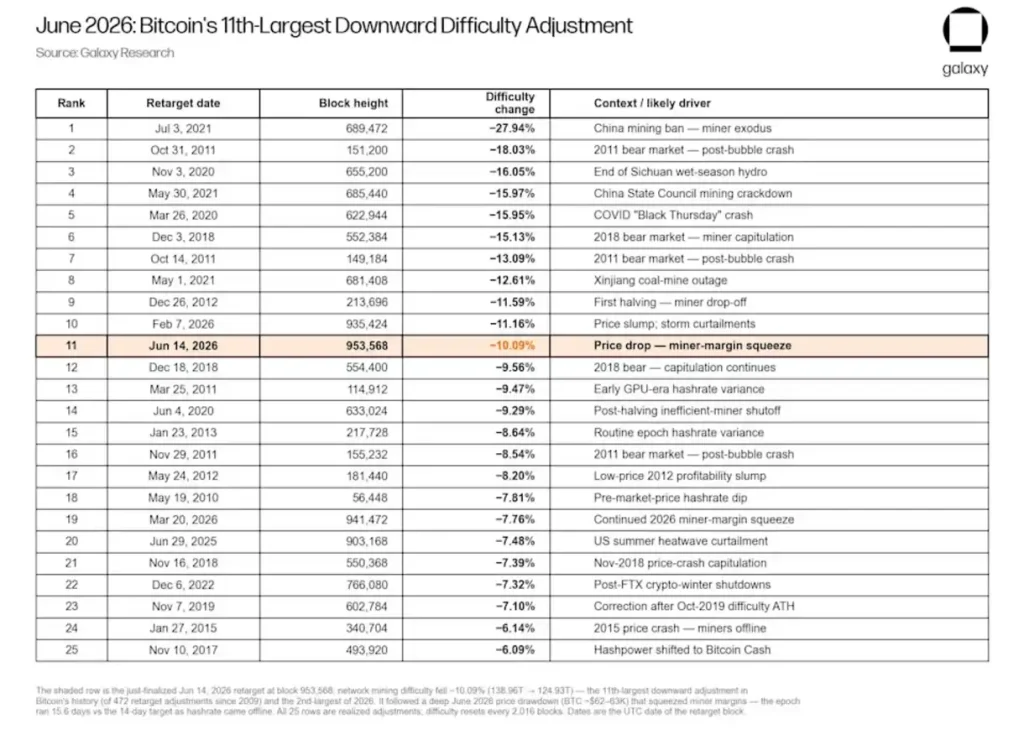
The adjustment followed an unusually long mining epoch that lasted 15.6 days, compared with Bitcoin’s target of about 14 days. Because blocks were being mined more slowly than expected, the protocol automatically reduced mining difficulty to restore the average 10-minute block interval.
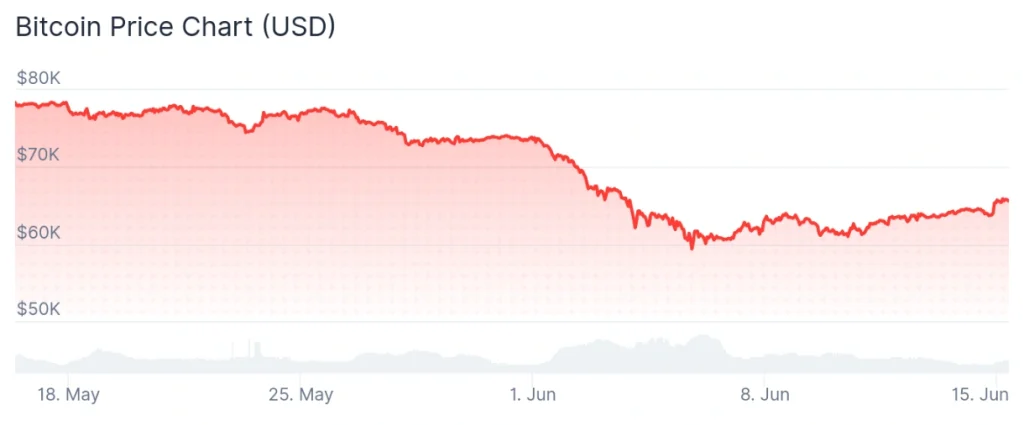
Galaxy Research attributed the latest decline primarily to Bitcoin’s nearly 15% price correction during June, which compressed mining margins and prompted hashrate to leave the network.
Indeed, the price of BTC at press time on June 15 stood at $65,647.47, which is an increase of 1.9% on the day and 3.7% across the week, but a 16.2% drop over the past month, according to the most recent chart information.
Falling Hashrate Reflects Pressure on Miners
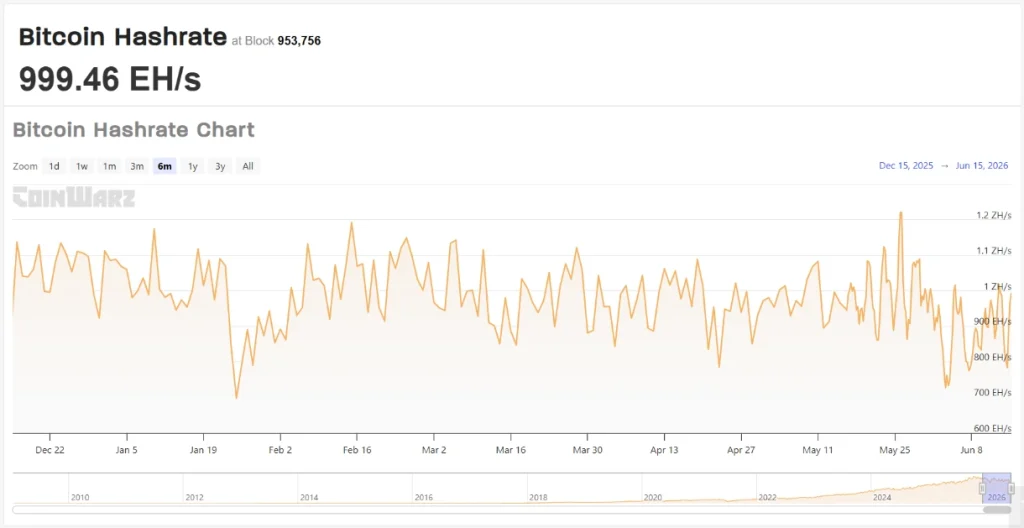
Network hashrate also weakened during the recent correction before showing signs of stabilization. CoinWarz data shows Bitcoin’s hashrate currently sits at roughly 999 EH/s, after previously falling well below the 1 zettahash-per-second mark during the selloff.
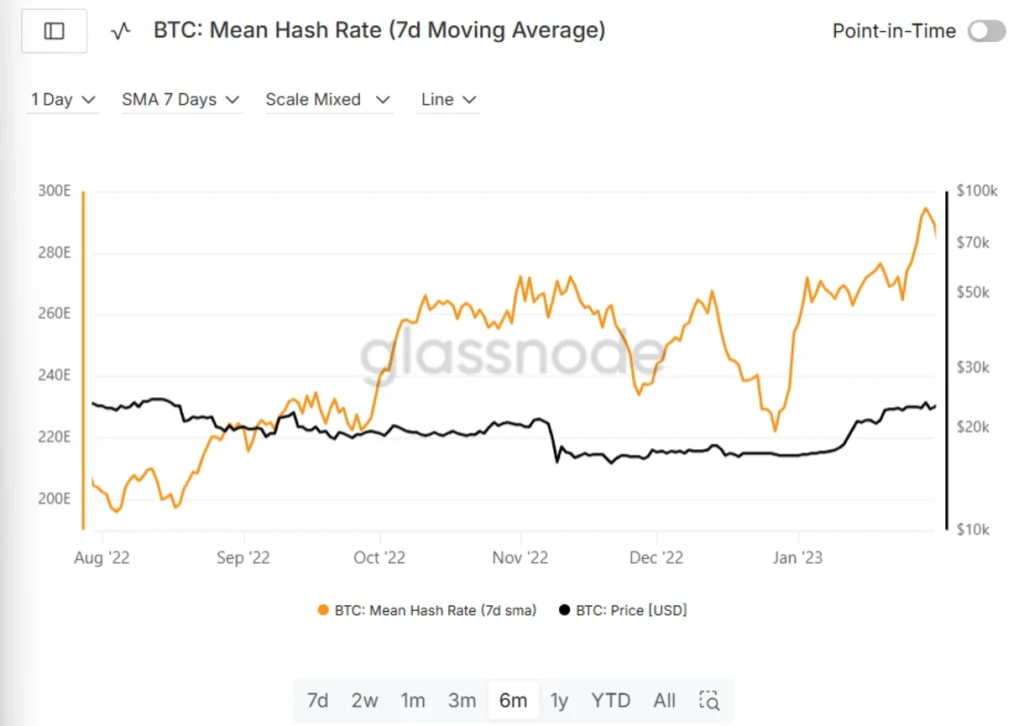
Meanwhile, Glassnode’s seven-day moving average indicates the network hashrate has begun recovering after declining throughout early June, suggesting some miners have already returned online as network conditions improved.
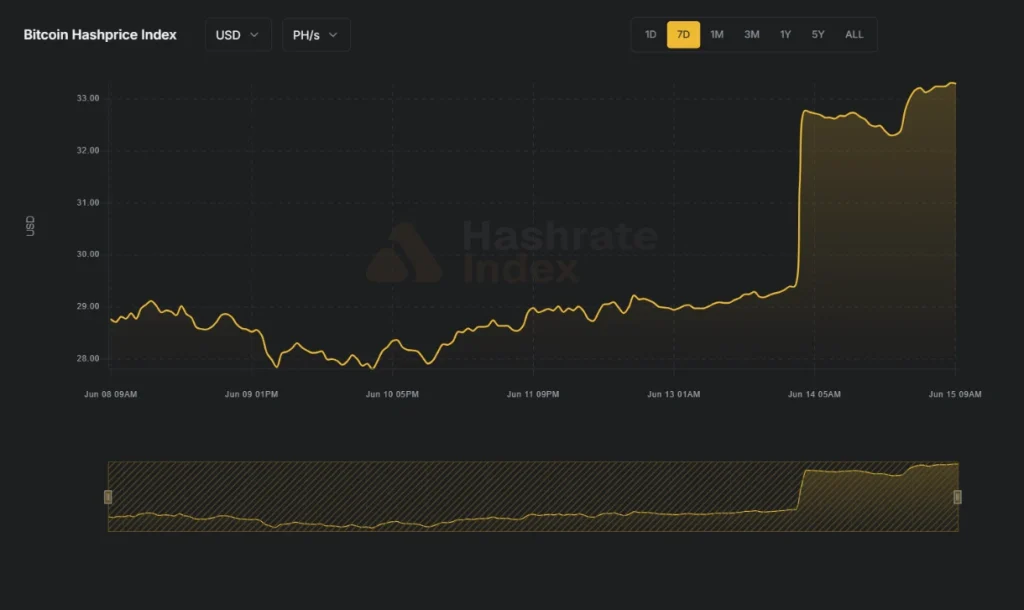
The lower difficulty should provide immediate relief for miners because each unit of computing power now earns a larger share of newly mined Bitcoin. According to Hashrate Index, mining profitability, commonly measured by hashprice, has also recovered after briefly falling below $30 per PH/s/day, helping improve economics for operators still connected to the network.
Several factors have led to the recent drop in hashrate beyond Bitcoin’s price weakness. Analysts have pointed to miners shifting infrastructure toward AI and high-performance computing tasks, whereas seasonal power curtailments in Texas under ERCOT’s 4CP program have also temporarily taken mining equipment offline.
Though the difficulty adjustment improves conditions for active miners, future network performance will largely depend on Bitcoin’s price, transaction fee revenue, electricity costs, and whether sidelined hashrate returns during the current mining epoch.
How do you rate this article?
Subscribe to our YouTube channel for crypto market insights and educational videos.






Join our Socials
Briefly, clearly and without noise – get the most important crypto news and market insights first.

Most Read Today
1
Bitcoin’s Rally Has Reached a Decision Zone — The Next Break Could Be Huge
2Ethereum’s Q3 Rally Just Hit a Major Milestone: Only One Year Was Stronger
3Avalanche’s NYC Summit Hits Capacity — The Ecosystem Numbers Tell a Bigger Story
4Grayscale Files to Rename Litecoin Trust as an ETF: LTC’s Next Phase Begins
5Clarity Act 2026: Everything You Should Know
Latest





8
Also read
Similar stories you might like.

Crypto News
Avalanche’s NYC Summit Hits Capacity — The Ecosystem Numbers Tell a Bigger Story
Azeez | 2026-09-13

Crypto News
Bitcoin’s Rally Has Reached a Decision Zone — The Next Break Could Be Huge
Azeez | 2026-09-13

Crypto News
Ethereum’s Q3 Rally Just Hit a Major Milestone: Only One Year Was Stronger
Azeez | 2026-09-13

Crypto News
SEC Chair Paul Atkins Joins Solana Summit — Crypto’s Next Regulatory Test Nears
Azeez | 2026-09-12

Crypto News
ETH Faces a New Test as Wintermute Sends Millions to Coinbase and Binance
Azeez | 2026-09-12

Crypto News
Morgan Stanley Adds Again as Its Bitcoin ETF Builds a $50M Accumulation Streak
Azeez | 2026-09-12

Crypto News
Bitwise Shuts Down Its DOGE ETF — What Went Wrong?
Azeez | 2026-09-11

Crypto News
Chainlink Keeps Building Its Strategic Reserve: The Bigger Move May Be Ahead
Azeez | 2026-09-11

Crypto News
Bitcoin Demand Is Starting to Stabilize — Is Stronger Accumulation Next?
Azeez | 2026-09-11

Crypto News
XRP Joins Bitcoin, Ethereum and Solana in a Major U.S. Listing Framework
Azeez | 2026-09-10