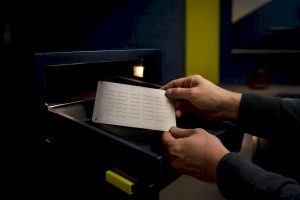










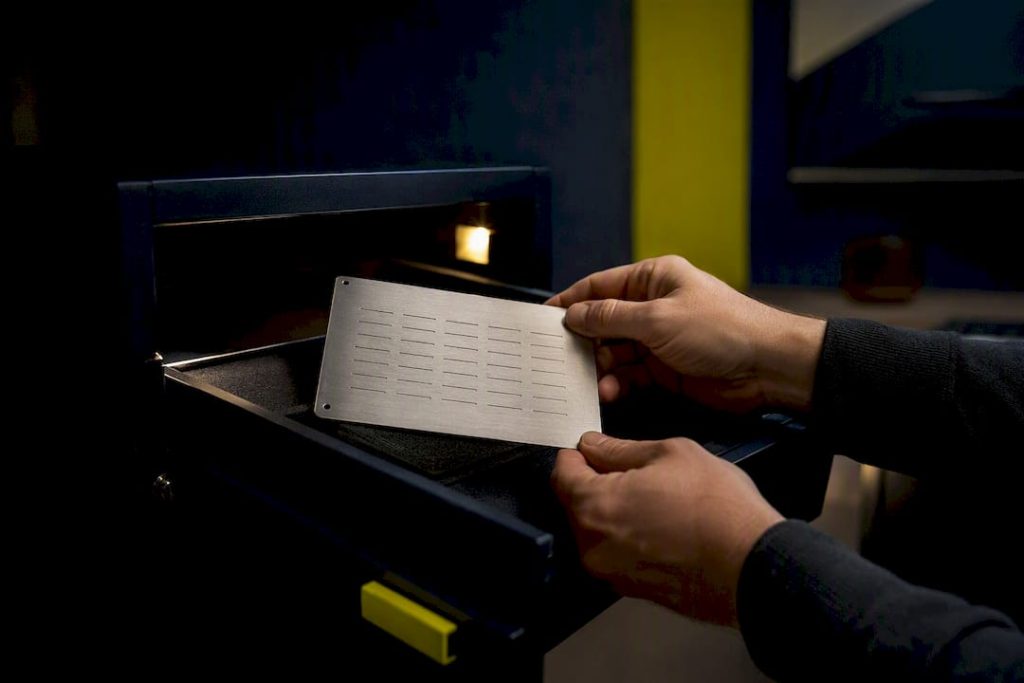
Hands securing a metal seed backup plate

Generate your seed phrase on a hardware wallet, stamp it into a stainless-steel plate, and split your backups across two physically separate, secure locations. Never type it into a phone, cloud note, or password manager. Test full recovery periodically on an offline device to ensure backup integrity, and only add a passphrase or Shamir Secret Sharing once you understand exactly how each one can lock you out permanently.
TL;DR:
Latest StoriesRead all latest stories → Three Major Signals Now Point to a New Bitcoin Bull Market
 Ethereum Is Unifying Its Transaction Model — The Impact Could Be Huge
 Sui User Growth Surges to New Highs — Bullish?
- Store your seed phrase stamped into deep-engraved stainless-steel plates in two geographically separated, secure locations to withstand environmental damage and theft.
- Never type or store your seed phrase in digital formats, including notes apps, cloud storage, or email, to prevent remote exposure and social engineering attacks.
- Test recovery annually on an offline, air-gapped device by manually entering your seed phrase to ensure backup integrity without revealing it online.
- Use a passphrase or Shamir Secret Sharing only after thoroughly understanding their risks, and avoid relying on ad-hoc splitting methods that weaken security.
- Always generate the seed on a hardware wallet and avoid storing digital copies or exposing your seed to potential hazards or scams.
What Is Seed Phrase Security and Why Does the Phrase Matter More Than the Key?
A seed phrase is a sequence of 12 or 24 words, generated according to the BIP-39 standard, that encodes the master key for every address your wallet can ever produce. Enter that phrase into any BIP-39-compatible wallet and it recreates your entire balance, transaction history, and future addresses, which is exactly why Bitcoin with anyone, under any circumstance.
A private key, by contrast, controls a single address or a narrow set of derived addresses. Lose one private key and you lose access to whatever it protects. Lose your seed phrase and you lose (or hand over) every wallet ever derived from it, past and future. That asymmetry is the entire reason seed phrase security deserves more attention than password hygiene ever will.
The 12-versus-24-word question comes down to entropy. A 12-word phrase encodes a standard level of entropy, and a 24-word phrase encodes a higher level of entropy. Both are computationally unbreakable by brute force today, so the practical difference is smaller than most people assume:
- 12 words: slightly easier to transcribe, stamp, and store without error, with entropy that remains far beyond any realistic attack.
- 24 words: preferred by security-conscious institutions and some hardware vendors as a margin against future advances, at the cost of a longer physical backup.
- Either length is only as strong as how you store it. A 24-word phrase written on a sticky note is weaker than a 12-word phrase stamped in steel and locked in a safe.
Why Seed Phrase Exposure Causes Permanent, Unrecoverable Loss
There is no password reset for a blockchain wallet. If your seed phrase is lost, you lose funds; if it’s exposed, someone else can drain them before you notice, and there’s no support line to call in either case.
Real-world losses rarely involve dramatic hacks. They usually come from ordinary habits: a photo of a recovery sheet that auto-syncs to iCloud or Google Photos, a seed phrase typed into a phone’s notes app “temporarily,” or a wallet reset performed without confirming the backup first. Each of these turns a private phrase into something that lives on a server you don’t control.
A study published in ACM testing user understanding of wallet security found that fewer than half of participants could correctly identify an image of a seed phrase, and a notable share incorrectly believed a lost seed phrase could be reset like an online password. That gap between what people assume and how self-custody actually works is where most losses originate.
If you can’t recognize the artifact you’re supposed to protect, you can’t protect it. That single finding explains more crypto losses than any exchange hack.
How BIP-39 Actually Generates Your Backup
BIP-39 turns a block of random data, its entropy, into a human-readable phrase you can write down and later re-enter to reconstruct your keys. Understanding the mechanics explains why certain storage habits are non-negotiable.
- Entropy generation: a wallet’s random number generator produces 128 or 256 bits of randomness, which is exactly why NIST SP 800-57 guidance on RNG quality matters. A hardware wallet with a certified RNG is safer than software that generates keys on a general-purpose, potentially compromised computer.
- Checksum: a portion of each word list encodes a checksum, so a single mistyped or mis-stamped word during recovery typically throws an error instead of silently producing a wrong wallet. This is why testing your backup matters more than trusting your memory.
- Wordlist standardization: the 2,048-word BIP-39 list is fixed and public, which means the same seed phrase reconstructs identical addresses across any BIP-39-compliant wallet, letting you migrate hardware brands without losing funds.
- Passphrase as salt: an optional passphrase isn’t a “25th word” appended to your list. It’s a cryptographic salt that, combined with your seed, derives a completely separate wallet. Forget the passphrase and that wallet is gone, even if the original 12 or 24 words are perfectly intact, a point Coldcard’s own documentation makes explicit.
Where to Physically Store Your Seed Phrase
Paper is the weakest option available, vulnerable to fire, water, and simple fading, yet it’s still where most beginners start. If you’re holding anything beyond a trivial amount, move past it quickly.
A stamped stainless-steel plate is the standard for anyone serious about secure cryptocurrency wallet protection. Security guidance from Secure Notes recommends steel plates as the primary backup precisely because they survive house fires, floods, and years of basement humidity that would destroy paper or a laminated card. Stamped or punched characters hold up far better than laser engraving, since shallow engraving can be sanded off or degraded by corrosion, while a deep stamp remains legible after real fire damage.
Your storage stack should look something like this:
- Generate the seed on a hardware wallet, never on a phone or web browser, so the private keys never touch an internet-connected device.
- Primary backup: stamp the words into steel, then store the plate in a home fireproof safe or a bank safe deposit box.
- Secondary backup: a second stamped plate held by a trusted family member, an attorney, or a deposit box in a different city, so a single fire, flood, or burglary can’t wipe out both copies.
- Digital copies: avoid them entirely for the actual seed. If you need a reference for wallet setup notes, keep it encrypted, offline, and completely separate from the words themselves. Never store a seed phrase in cloud storage, a password manager, email drafts, or a photo library.
- Travel handling: never carry your only backup with you. If you need portable access, use a separate, funded travel wallet rather than exposing your primary seed to airport scanners or hotel rooms.
Pro Tip: Some experienced users stamp only the first four letters of each BIP-39 word rather than the full word, since four letters uniquely identify every word on the list. It shortens the plate and adds a small layer of obscurity if someone glances at it without recognizing what it is.
Keep your passphrase, if you use one, off the same plate as your seed words. Combining them on a single physical object defeats the entire purpose of having a separate secret.
Passphrases, Shamir Splits, and Multisig: When More Complexity Helps
A passphrase adds real protection against someone who finds your steel plate, since the plate alone won’t unlock funds without the extra word. That same strength is its biggest risk: forget the passphrase and there is no recovery path, since it isn’t stored anywhere by design. If you use one, memorize it, test it during your annual recovery check, and write down a process for heirs that explains a passphrase exists without ever recording the passphrase itself.
Shamir Secret Sharing (standardized as SLIP-39 on Trezor devices) splits a seed into multiple shares with a threshold, say 3-of-5, so no single share reveals anything useful. It’s a legitimate tool for large holdings, but only when implemented through vendor-supported software. Amateur approaches, like manually splitting a 12-word phrase into two 6-word halves, don’t create real Shamir security. They just create two weaker, easier-to-guess fragments.
- Use vendor-native SLIP-39 tools, not ad-hoc card splitting, if you adopt Shamir.
- Document share locations and the reconstruction threshold separately from the shares themselves.
- Consider multisig (requiring signatures from multiple independent hardware wallets) when you want to eliminate any single point of failure, particularly for shared custody among business partners or family trusts.
Pro Tip: If your goal is simplicity and reliability over sophistication, a single well-stored steel backup with geographic redundancy beats a complicated Shamir or multisig setup you’re not confident you can reconstruct five years from now.
Testing Recovery and Rotating an Exposed Seed
A backup you haven’t tested is a guess, not a plan. Run this once a year:
- Wipe a spare hardware wallet or use a dedicated air-gapped device with no network connection.
- Manually type in your seed phrase (and passphrase, if applicable) from your physical backup.
- Confirm the first few receiving addresses match your live wallet, without moving any funds.
- Fully wipe the test device before storing or reusing it.
Validate the checksum offline. Never paste a seed phrase into a website “validator,” no matter how trustworthy it looks; that’s an instant compromise. Use your hardware wallet’s built-in verification or a vetted, offline script instead.
Any exposure, a photo that synced to the cloud, a seed typed into a note app, a screen shared during a video call, means the wallet should be treated as burned. Security guidance is unambiguous on this point: rotate immediately by generating a brand-new seed and transferring all funds to the new wallet, rather than hoping the exposure went unnoticed.
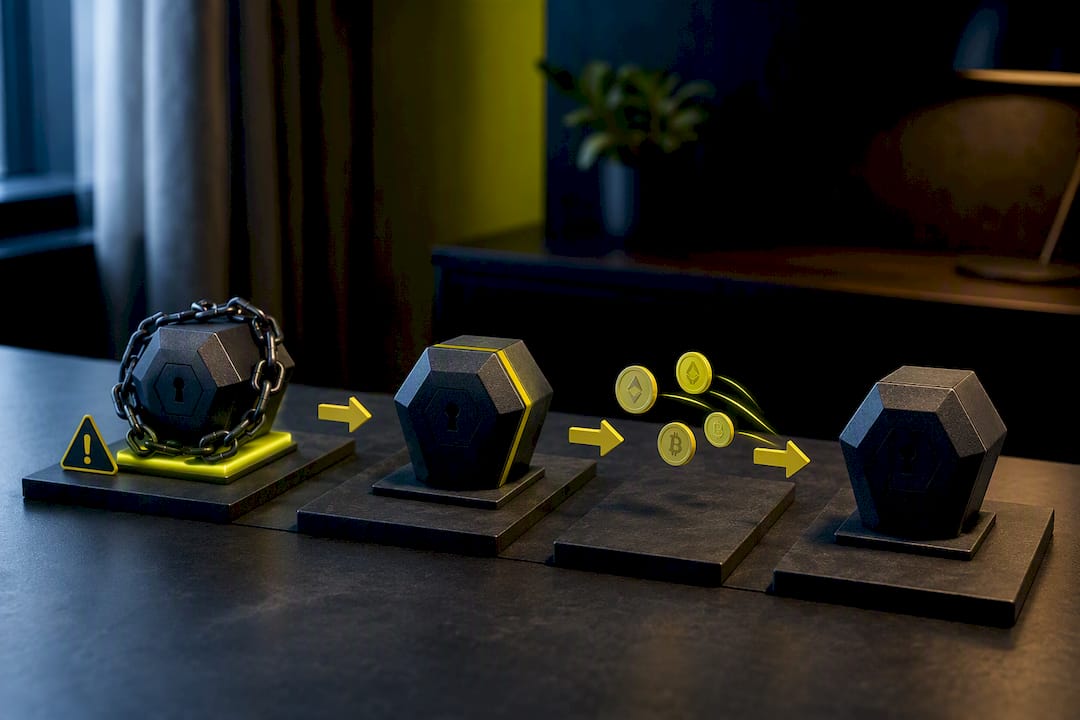
The Five Threats Behind Most Seed Phrase Losses
Every storage decision should map back to a specific threat, not a vague sense of caution.
- Environmental damage (fire, flood): mitigated by steel backups and geographic separation, not paper in a drawer.
- Casual theft (burglary, a snooping houseguest): mitigated by hiding backups in a safe or deposit box, not a labeled envelope on a bookshelf.
- Coercion (someone forcing you to hand over funds): mitigated by a passphrase-protected decoy wallet or multisig requiring a second party.
- Remote compromise (cloud leaks, synced photos, malware): mitigated by never digitizing the seed in the first place.
- Social engineering (fake support agents, phishing texts, “wallet verification” scams): mitigated by remembering that no legitimate service will ever ask for your seed phrase, a scam pattern Techgaged has documented in real incidents targeting job seekers.
The most common avoidable mistakes are photographing a seed phrase “just in case,” storing it in a notes app synced across devices, and splitting a phrase into two halves that each become easier to guess. If any of that describes your current setup, destroy the digital copies today and schedule a proper steel backup this week.
A Quick Checklist Before You Close This Tab
Techgaged covers crypto security incidents regularly, from rug pulls and private key theft prompting new state legislation to wallet vulnerabilities that put self-custodied funds at risk. The pattern across nearly all of them is the same: attackers exploit careless storage and human trust, not cryptography.
Run through this before you consider your setup finished:
- Seed generated on a hardware wallet, never on an internet-connected device.
- Primary backup stamped in steel, stored in a fireproof safe or deposit box.
- Secondary backup geographically separated, held by a trusted party or a second deposit box.
- No digital copies of the seed anywhere, ever.
- Recovery tested on an air-gapped device within the last twelve months.
For ongoing coverage of wallet vulnerabilities, scam patterns, and security incidents as they emerge, Techgaged’s crypto news desk tracks these developments as they happen.
Your Next Steps for Seed Phrase Security
The core rules don’t change no matter how much your portfolio grows: keep the seed offline, keep your durable primary backup and geographically separated secondary copy apart from each other, test recovery annually, and treat passphrases as an advanced tool that requires its own discipline.
Before you close this article, take three concrete actions:
- If you haven’t already, move your seed off paper and onto a stamped steel plate.
- Pick a second, distant location for your backup copy this month, not “eventually.”
- Put a recurring calendar reminder on your phone to run a recovery test every year.
Seed phrase security isn’t a one-time setup task. It’s closer to fire insurance: cheap to arrange now, and the only thing that matters the day something goes wrong. Techgaged will keep tracking the incidents, scams, and regulatory shifts that make this guidance necessary, so check back as the threat landscape evolves.
Sources
- ACM study on seed phrase misconceptions
- NIST SP 800-57 Part 1 revision 5
- Bitcoin
- How to store crypto recovery phrase safely (2026) — Secure Notes
- Shattered
FAQ
What Is the Difference Between a Seed Phrase and a Private Key?
A seed phrase is a master backup that can regenerate every private key and address in your wallet, while a private key controls only a single address or a narrow derived set.
Should I Use 12 or 24 Words for My Seed Phrase?
Both offer entropy well beyond any realistic brute-force attack; 24 words gives a larger security margin, but a 12-word phrase stored properly in steel is far safer than a 24-word phrase left on paper.
Is It Safe to Store a Seed Phrase in a Password Manager?
No. Any seed phrase entered into a password manager, cloud note, or synced photo should be treated as exposed, and security guidance recommends rotating to a new wallet immediately in that scenario.
What Happens if I Forget My Passphrase?
The wallet it protects becomes permanently inaccessible, since the passphrase acts as a cryptographic salt rather than a recoverable password, so it should be memorized and tested, never guessed at later.
How Often Should I Test My Seed Phrase Backup?
Once a year, using a wiped or air-gapped device to confirm the first few receiving addresses match your live wallet without moving any funds.
Can Multiple Wallet Brands Use the Same Seed Phrase?
Yes. Any wallet that follows the BIP-39 standard will reconstruct identical addresses from the same seed phrase, which is what makes cross-vendor recovery possible.
Recommended
How do you rate this article?
Subscribe to our YouTube channel for crypto market insights and educational videos.






Join our Socials
Briefly, clearly and without noise – get the most important crypto news and market insights first.





8
Also read
Similar stories you might like.

Crypto News
Three Major Signals Now Point to a New Bitcoin Bull Market
Azeez | 2026-08-30

Crypto News
Ethereum Is Unifying Its Transaction Model — The Impact Could Be Huge
Azeez | 2026-08-30

Crypto News
Sui User Growth Surges to New Highs — Bullish?
Azeez | 2026-08-30

Crypto News
This Mystery Whale Isn’t Done Buying HYPE
Azeez | 2026-08-30
Crypto Guides
Open Interest in Crypto: Four Steps to Verify Data and Spot Breakouts
Rokas | 2026-08-30
Crypto News
Solana’s Inflation Curve Gets a Major Overhaul After Community Vote
Azeez | 2026-08-29

Crypto News
Ethereum Faces One of Its Most Extreme Sell-Side Readings on Binance
Azeez | 2026-08-29

Crypto News
Chainlink Is Expanding Again — Here’s Where It’s Moving Next
Azeez | 2026-08-29
Crypto News
Metaplanet Moves 3,000 BTC in 24 Hours — What Are They Planning?
Azeez | 2026-08-29

Crypto Guides
Protect Personal Savings: Hot and Cold Wallets, Watch Bluetooth Risks
Rokas | 2026-08-29