









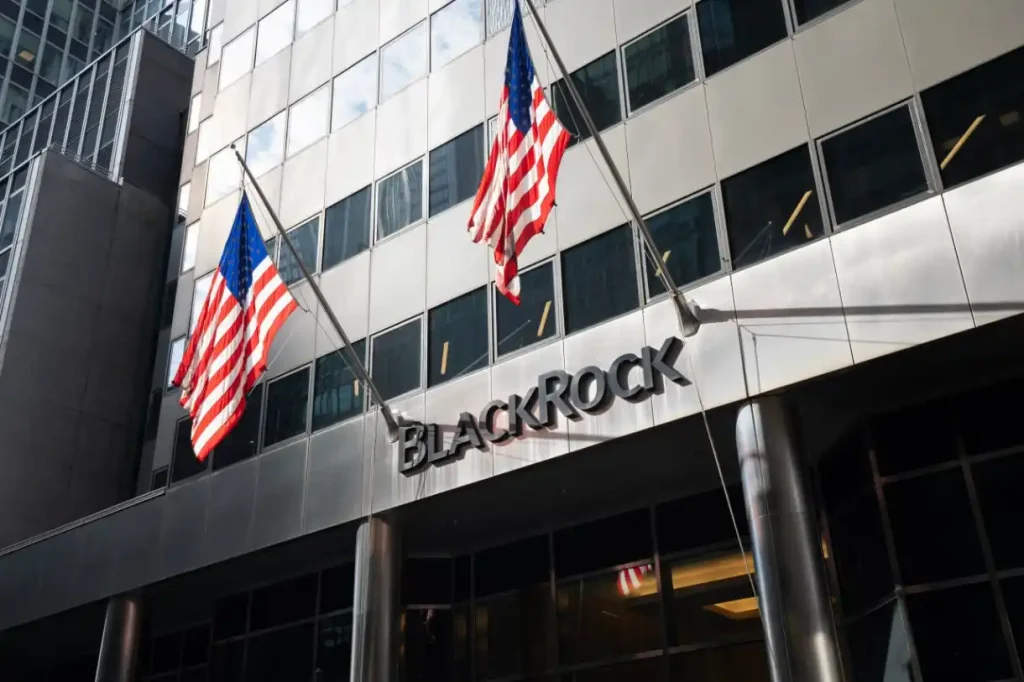
An exterior view of the BlackRock office, having American flags in front of it. Source: TechGaged / Shutterstock.
BlackRock’s Tokenization Play Could Unlock Wall Street’s Biggest Transformation Yet
In Brief
- • BlackRock is bringing traditional assets on-chain.
- • Tokenization may boost speed, liquidity, and access.
- • New risks include regulation, security, and volatility.

For decades, BlackRock helped shape traditional finance. Now, the world’s largest asset manager is bringing real-world assets onto blockchain and positioning itself at the center of Wall Street’s move toward on-chain markets.
Unlike banks building private blockchain networks, BlackRock is using existing public blockchains to modernize traditional financial products.
Its BlackRock USD Institutional Digital Liquidity Fund (BUIDL), launched with Securitize, was initially issued on Ethereum. Shares in the fund are represented as digital tokens that can move across blockchain rails.
Latest Stories
October Fed Hike Odds Slip to 45% — Crypto Traders Are Watching Closely
Tether Adds 3.7 Tons of Gold-Backed Assets: Tokenization Enters a New Phase
Zcash’s Private Payments Could Scale Dramatically
The Problem BlackRock Is Targeting
Global markets still rely on slow and fragmented settlement systems.
This creates three major problems:
- Locked-up liquidity: Capital remains tied up while trades settle.
- Higher costs: Multiple intermediaries add fees and operational overhead.
- Counterparty risk: One party may fail to deliver during the settlement delay.
Tokenization aims to solve these inefficiencies by enabling faster and more efficient transfers.
What BlackRock’s Strategy Means
BlackRock’s goal is to bring assets such as stocks, bonds, and money market funds onto blockchain networks.
Instead of waiting days for settlement, ownership can be transferred digitally in near real time.
If adoption grows, traditionally illiquid assets could become 24/7 tradable, instantly transferable, and more accessible worldwide.

How the Model Works
BUIDL represents tokenized shares backed by U.S. Treasury instruments.
These tokens are issued on public blockchains like Ethereum, allowing transfers at any time.
Securitize handles investor verification and onboarding, ensuring the system meets institutional compliance standards.
The result is a hybrid model: traditional assets remain regulated, while settlement happens on blockchain infrastructure.
Benefits for Markets and Investors
Tokenization offers several potential advantages:
- Faster settlement, reducing delays
- Improved liquidity
- Lower transaction costs
- Broader investor access
For institutions, this could significantly improve capital efficiency.
Risks and Challenges
The transition also carries risks:
- Regulatory uncertainty
- Cybersecurity threats
- Fragmentation across blockchains
- Greater volatility during market stress
These issues will shape how quickly tokenized markets develop.
Key Takeaway
BlackRock’s tokenization strategy points to a future where traditional assets move on blockchain rails. The shift could make markets faster, more liquid, and more accessible, while introducing new challenges in regulation, security, and market stability.
Disclaimer:
This article is for informational purposes only and does not constitute financial, investment, or trading advice. The views expressed are based on publicly available data, market observations, and the author’s interpretation at the time of writing. Cryptocurrency markets are highly volatile and unpredictable, and past performance or current technical setups do not guarantee future results. Readers should conduct their own research and consult with a qualified financial advisor before making any investment decisions. TechGaged does not accept liability for any losses incurred based on the information presented.
How do you rate this article?
Join our Socials
Briefly, clearly and without noise – get the most important crypto news and market insights first.
Most Read Today
1
October Fed Hike Odds Slip to 45% — Crypto Traders Are Watching Closely
2Bitcoin Whales Reach Highest Holdings Since August — The Setup Changes
3Tether Adds 3.7 Tons of Gold-Backed Assets: Tokenization Enters a New Phase
4Chainlink Keeps Stacking LINK — The Reserve Has Crossed $70M
5Zcash’s Private Payments Could Scale Dramatically
Latest





8
Also read
Similar stories you might like.

Crypto News
Crypto Keeps Outperforming Stocks and Commodities: The Numbers Tell the Story
Azeez | 2026-09-28

Crypto News
Chainlink Reserve Crosses 6 Million LINK — What This Means for the Token
Azeez | 2026-09-26
Crypto News
Solana’s RWA Surge Hits Another Record as Total Value Tops $4.6B
Azeez | 2026-09-24

Crypto News
Bitcoin Leaves Stocks and Gold Behind as a Powerful New Trend Emerges
Azeez | 2026-09-23
Crypto News
BlackRock’s Bitcoin Buying Hits Another Level
Azeez | 2026-09-23
Crypto News
Solana Is Becoming a Key AI Payment Network: A Bigger Shift Is Unfolding
Azeez | 2026-09-22
Crypto News
Hyperliquid Opens Native Lending: HYPE and BTC Can Now Unlock More Liquidity
Azeez | 2026-09-19

Crypto News
Ethereum Removes One of Its Biggest Barriers as Fees Approach Record Lows
Azeez | 2026-09-18
Crypto News
Over $16 Trillion in Payments Could Reach Onchain Rails — Chainlink Is Behind the Connection
Azeez | 2026-09-17
Crypto News
Stablecoin Activity on Solana Is Accelerating — The Next Phase Could Be Bigger
Azeez | 2026-09-16