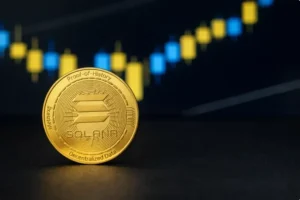








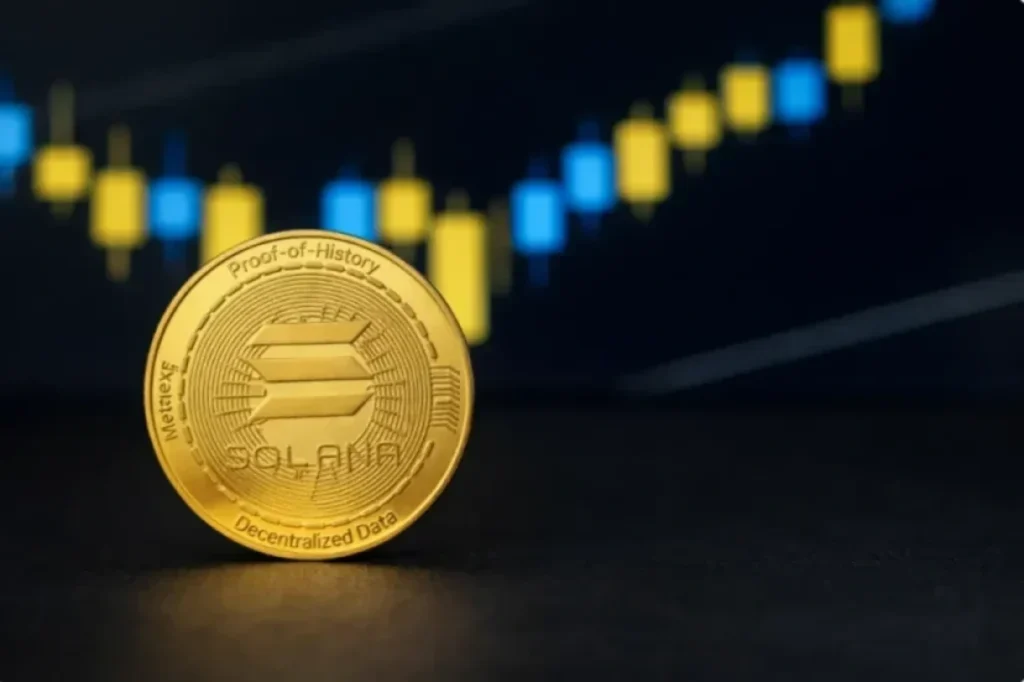
Solana coin in front of a blue and yellow price chart, representing market structure. Source: TechGaged / Shutterstock.
Solana Validators Are Voting to Slow New SOL Creation and Raise Daily Burns

Solana is trading at $99.00, up a sharp 29.7% over the past seven days, according to CoinGecko data.
The strong weekly performance comes as validators vote on proposals that could slow new SOL issuance and increase daily token burns — a combination drawing fresh attention to the network’s long-term supply dynamics.
Price Action Shows Clear Momentum
The seven-day chart reveals a decisive upward move. SOL began the period near the mid-$70s before accelerating higher from August 20 onward.
Latest Stories
The ETH/BTC Ratio Has Printed A Golden Cross For The First Time In 14 Months
More Than Half Of BlackRock’s Recent Bitcoin Buying Came In One Week
Bitcoin Dominance Holds at 59% as Capital Concentrates Rather Than Rotating Into Altcoins
Price pushed through successive resistance levels, briefly tested above $100, and is now consolidating near $99.
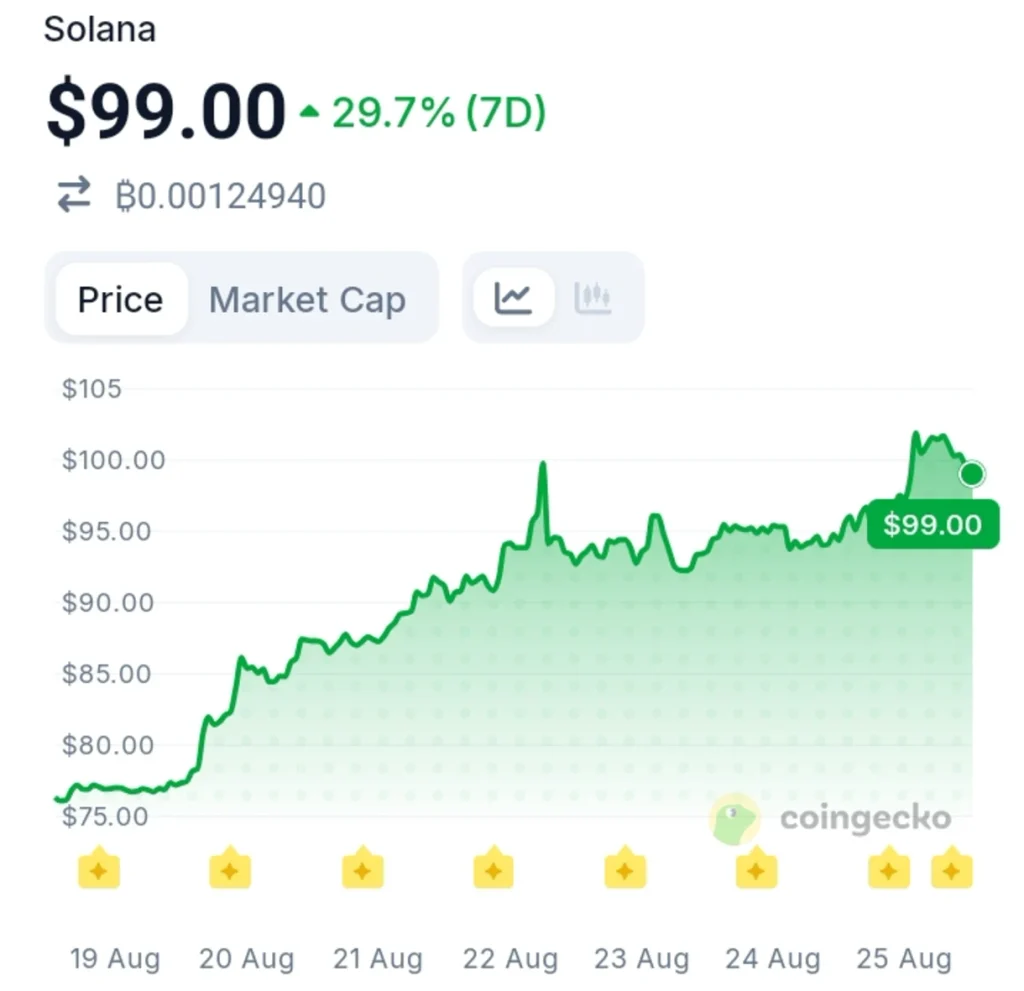
The nearly 30% weekly gain ranks among Solana’s stronger recent advances and has brought the token back toward key psychological levels.
TechGaged has previously examined Solana’s price outlook and growing network adoption, highlighting the relationship between network activity and SOL’s longer-term performance.
What the Validator Vote Could Change
At the center of the vote are proposals that would alter Solana’s inflation schedule and fee-burning mechanism.
One proposal would double the annual disinflation rate from 15% to 30%, while another could increase daily SOL burns from roughly 650 SOL to as much as 7,500–9,000 SOL.
Solana already has a built-in burn mechanism. According to the official Solana fee documentation, 50% of the base transaction fee is burned, while the remaining 50% goes to the validator. Priority fees currently go entirely to validators.
If the proposed changes are approved, the combination of slower issuance and higher burns would reduce SOL’s net supply growth over time.
However, higher burns alone would not necessarily make SOL deflationary because new issuance could still exceed the amount burned.
TechGaged has also covered Solana’s validator participation and network activity, providing additional context on the role validators play in maintaining the network.
Chart and Policy Align for Now
The timing of the price strength alongside the governance vote is notable. While short-term moves reflect multiple factors, the prospect of tighter tokenomics has added another bullish narrative around SOL.
A successful vote that meaningfully reduces net supply growth could strengthen the longer-term fundamental case, particularly if network activity and fee generation continue expanding.
What to Look Forward To
Solana’s immediate focus now shifts to the outcome of the validator vote and the eventual implementation of any approved changes.
If issuance falls while network activity supports higher fee burns, SOL’s supply dynamics could become increasingly favorable.
For now, strong price momentum and potentially tighter tokenomics give SOL two important catalysts to watch, with the validator decision likely to provide the next major signal for the market.
Disclaimer:
This article is for informational purposes only and does not constitute financial, investment, or trading advice. The views expressed are based on publicly available data, market observations, and the author’s interpretation at the time of writing. Cryptocurrency markets are highly volatile and unpredictable, and past performance or current technical setups do not guarantee future results. Readers should conduct their own research and consult with a qualified financial advisor before making any investment decisions. TechGaged does not accept liability for any losses incurred based on the information presented.
How do you rate this article?
Subscribe to our YouTube channel for crypto market insights and educational videos.






Join our Socials
Briefly, clearly and without noise – get the most important crypto news and market insights first.
Most Read Today
1
What Is a Funding Rate in Crypto Trading?
2Fed Rate Hike Probability Climbs to 42% — What It Means for Markets
3Tokenized Assets Hit New Highs — US Treasuries Dominate the Growth
4Bitcoin Dominance Holds at 59% as Capital Concentrates Rather Than Rotating Into Altcoins
5Clarity Act 2026: Everything You Should Know
Latest



8
Also read
Similar stories you might like.
Crypto News
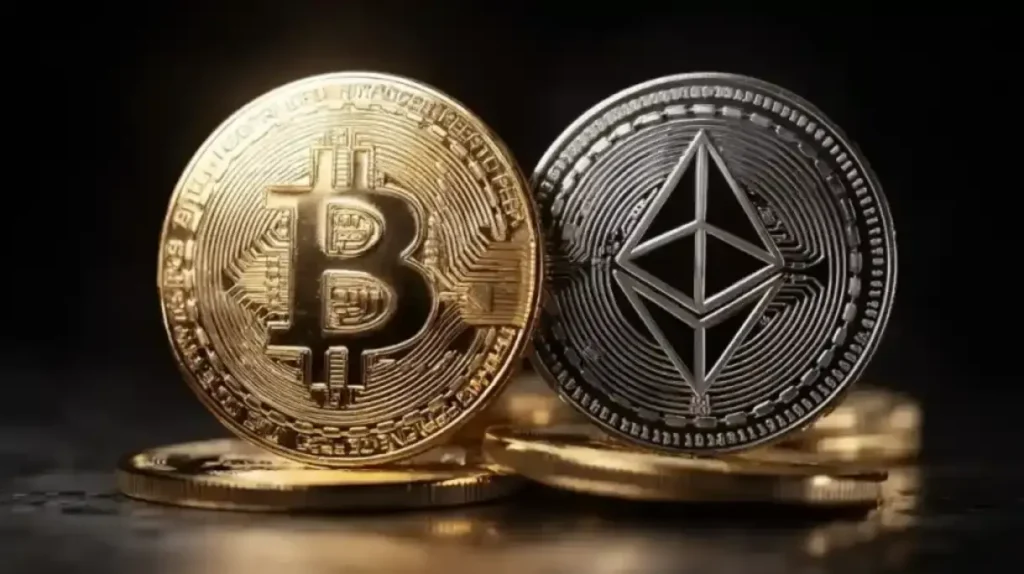
The ETH/BTC Ratio Has Printed A Golden Cross For The First Time In 14 Months
Azeez | 2026-08-25
Crypto News
More Than Half Of BlackRock’s Recent Bitcoin Buying Came In One Week
Azeez | 2026-08-25

Crypto Guides
Impermanent Loss Explained: Risks, Math, and Fixes
Rokas | 2026-08-25
Crypto News
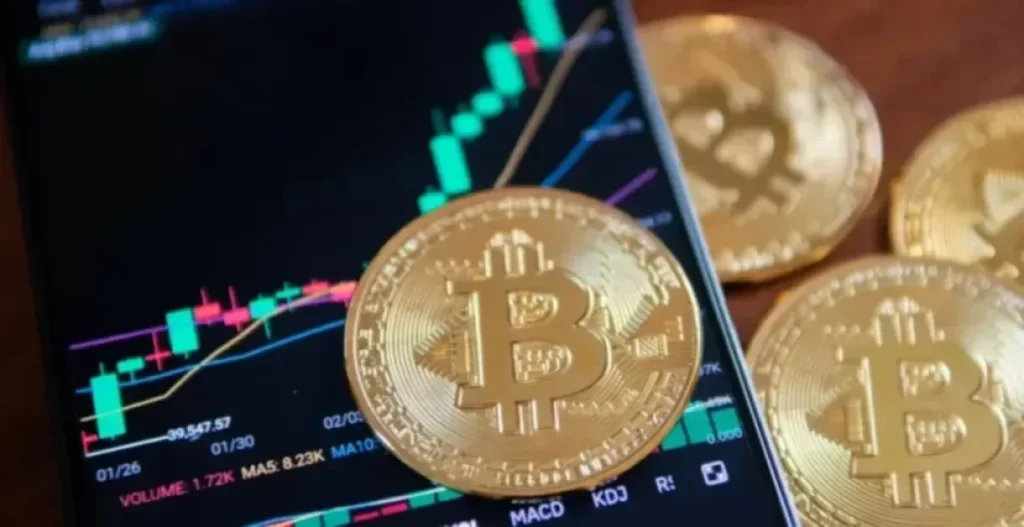
Bitcoin Dominance Holds at 59% as Capital Concentrates Rather Than Rotating Into Altcoins
Azeez | 2026-08-24
Crypto News
XRP Is Up 51% This Week — Its Biggest Weekly Gain in 21 Months
Azeez | 2026-08-24
Crypto News
Fed Rate Hike Probability Climbs to 42% — What It Means for Markets
Azeez | 2026-08-24
Crypto News
Tokenized Assets Hit New Highs — US Treasuries Dominate the Growth
Azeez | 2026-08-24

Beginners
What Is a Funding Rate in Crypto Trading?
Rokas | 2026-08-24

Crypto News
Institutional Crypto Demand Is Surging As ETF Inflows Hit Multi-Month Highs
Azeez | 2026-08-23
Crypto News
Zcash Has Delivered A 121% Rally Since June — Social Interest Is Finally Returning
Azeez | 2026-08-23