












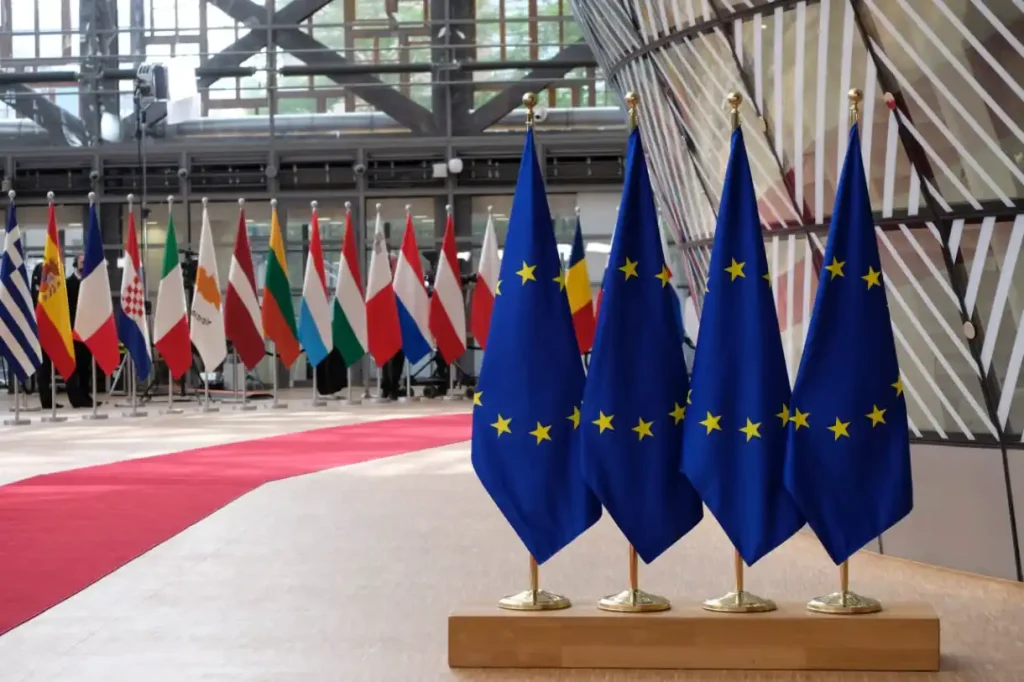
MiCA Fuels Blockchain Gaming – Why Money is Flowing. Source: TechGaged / Shutterstock
MiCA Fuels Blockchain Gaming – Why Money is Flowing
In Brief
- • MiCA has created a more stable environment for blockchain entertainment growth.
- • Institutional investors are viewing blockchain gaming and entertainment as viable long-term opportunities.
- • Developers are expanding activity within the sector, with blockchain gaming emerging as a key driver.

In the short time since its liftoff, MiCA has transformed the EU’s blockchain entertainment landscape, boosting innovation and investment, analysts claim.
Per a report compiled by analyst Oskar Flasiński, this mandatory rule has acted as a form of fertilizer, making the EU ground fertile for the blockchain gaming industry. The reason, it claims, is simple: the much-needed regulatory clarity. The now standardized rules for digital asset issuers and service providers have formed a more predictable environment for developers and companies, while also solving the issue of fragmentation.
The resulting benefits came in interconnected waves. First, institutional investors now see crypto as an asset worthy (and less risky) of incorporating into diversified portfolios. And one of the long-term investment areas are blockchain-based entertainment platforms.
Therefore, there’s been an evident shift in investor attitude toward these platforms, no longer dismissing them as speculative ventures. “The findings suggest that the ‘MiCA Effect’ has played a central role in legitimising blockchain-based entertainment as a credible investment category,” Flasiński argues.
The Markets in Crypto Assets Regulation (MiCA) entered into force in June 2023. It became fully applicable in December 2024, with a transitional period for the member states until July 2026. MiCA created a unified regulatory framework across the EU, a massive milestone for both the regulators and crypto insiders.
Blockchain Gaming Leads The Sector
It’s not just the investments driving blockchain gaming. Developers are now also far more comfortable working within the rules established by MiCA, boosting both their own sector and acting as the primary driver for the expansion of blockchain-powered entertainment in general.
Recent developments “reflect a broader transition toward utility-focused blockchain applications within the entertainment sector,” Flasiński writes.
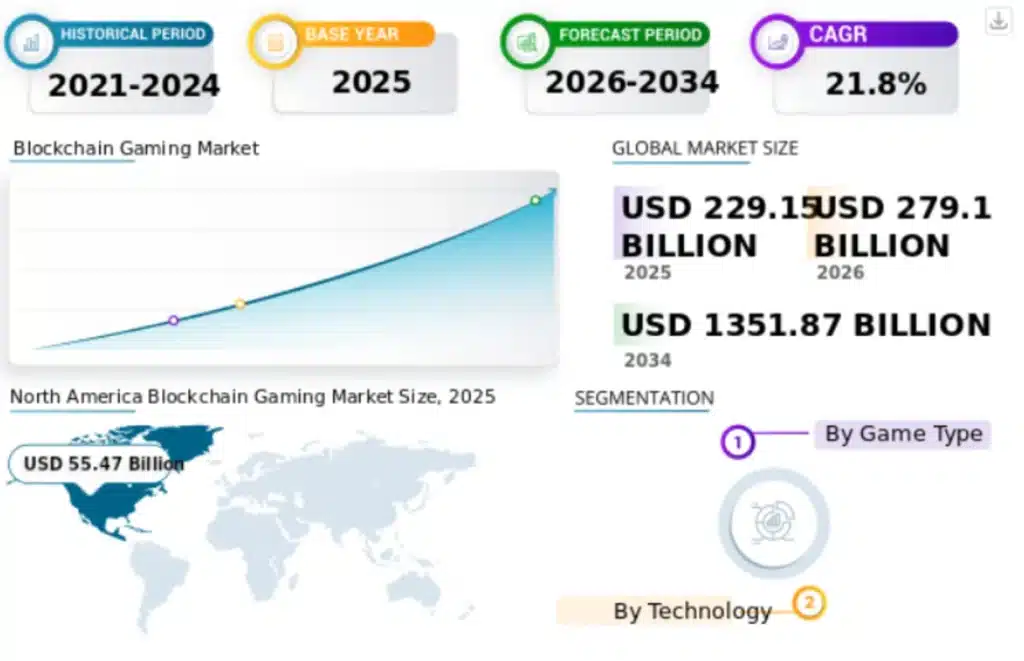
Fortune Business Insights found that the global blockchain gaming market size was at some $229.15 billion in 2025. It estimated a rise to 279.1 billion in 2026 and $1351.87 billion by 2034. This means expanding at a CAGR of 21.8% in this timeframe.
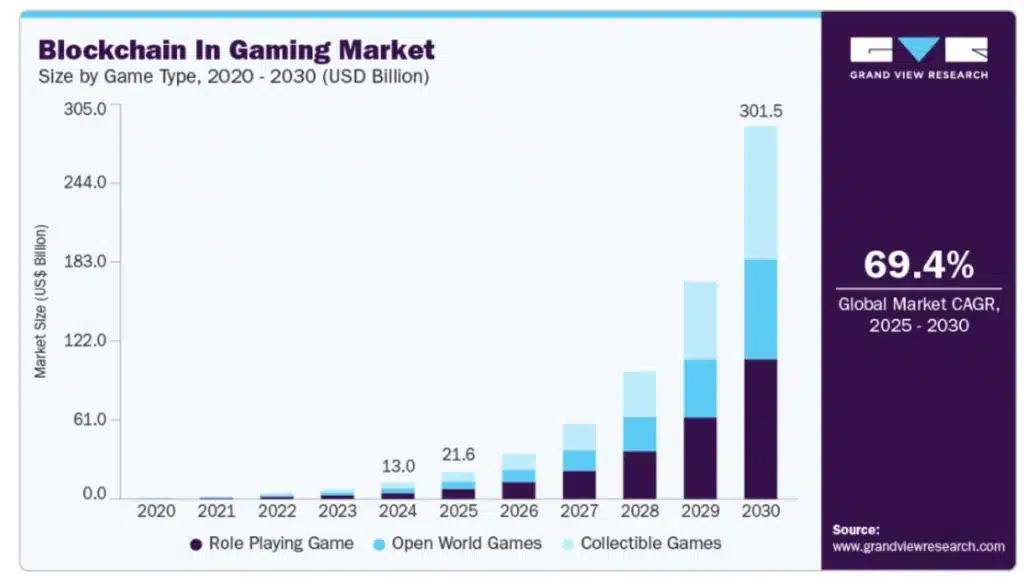
According to a market analysis by Grand View Research, the global blockchain in gaming market size is projected to hit $301.53 billion by 2030, growing at a CAGR of 69.4% from 2025 to 2030. The EU’s MiCA regulation provides legal clarity for blockchain-based games, “encouraging startups to innovate confidently,” the analysis found. “Countries are witnessing the rising adoption of blockchain games, supported by local ecosystems of developers and blockchain incubators.”
“Europe is expected to maintain its leadership position due to its established regulatory framework and ongoing innovation within the sector. […] By providing legal certainty and operational standards, the regulation has enabled both startups and institutional investors to operate within a unified ecosystem.” Flasiński concludes.
How do you rate this article?
Subscribe to our YouTube channel for crypto market insights and educational videos.






Join our Socials
Briefly, clearly and without noise – get the most important crypto news and market insights first.






8
Also read
Similar stories you might like.
Research
6 in 10 Top Blockchains Are Unprepared for Quantum Attacks; Bitcoin and Hyperliquid Most Exposed, Cardano Safest
Jastra | 2026-05-04

Crypto News
US Crypto Bill Nears Vote – Markup Could Force Final Decisions
Rokas | 2026-04-30

Altcoins
Meta Launches USDC Payments for Colombian and Filipino Creators, More Coming
Rokas | 2026-04-30
Altcoins
Ripple Doubles Down On Dubai – What Investors Should Know
Sead | 2026-04-30
Bitcoin
Peter Schiff Warns Bitcoin Could Drop as Strategy Buys
Ana | 2026-04-28

Bitcoin
Billionaire Jack Dorsey declares “Bitcoin is Money” as Block Expands Ecosystem
Rokas | 2026-04-28

Altcoins
Bitcoin Surge Turns Brutal as $140M Shorts Liquidated
Ana | 2026-04-27

Altcoins
Kelp DAO Exploit Funds Moved to Bitcoin as DeFi Rescue Begins
Ana | 2026-04-24

Blockchain
On-Chain Businesses Hit $587M Revenue as DeFi Matures
Ana | 2026-04-24
Defi
Senator Lummis Says CLARITY Act Has Bipartisan Support as Pressure Builds
Rokas | 2026-04-24