












SBI Holdings logo on smartphone with stock market display. Source: TechGaged / Shutterstock
Japan Bank Taps Ripple for 24/7 International Transfers
In Brief
- • SBI Remit and Tottori Bank launched 24/7 transfers.
- • Ripple tech enables faster, lower-cost remittances.
- • XRP remains optional but supports the bridge asset model.

A new partnership in Japan is quietly reinforcing one of crypto’s most persistent narratives: real-world utility. SBI Remit has teamed up with Tottori Bank to expand international money transfer services starting April 20.The service continues to integrate technology from Ripple, a name that keeps resurfacing whenever banks experiment with blockchain-based payments.
The deal’s importance
According to the SBI Holdings press release on April 17, the partnership aims to serve foreign workers sending money home, which is a growing segment in Japan. With labor shortages increasing and foreign employment hitting record levels in regions like Tottori, demand for faster, cheaper remittance options is rising.

SBI Remit’s model beats traditional banking rails that struggle with limited hours and higher fees by facilitating 24/7 transfers, lower costs, app-based access, and multi-language support.
Ripple’s distributed ledger technology is part of that stack, enabling quicker settlement across borders without relying entirely on legacy systems like SWIFT.
Where XRP fits into the picture
In corridors where liquidity is strong, XRP can act as a bridge asset to move value between currencies more efficiently. That’s been Ripple’s pitch for years, and partnerships like this keep that narrative alive, even if adoption remains selective.
In other words, XRP isn’t always in use, but the system is built in a way that it can be. What makes this story more interesting is how it contrasts with the broader crypto conversation.
With headlines focused on speculation and macro narratives, deals like this show a slower, quieter trend, in which banks are experimenting with blockchain. Ripple’s tech is becoming part of the financial system, especially in niche areas like remittances where efficiency gains are easiest to prove.
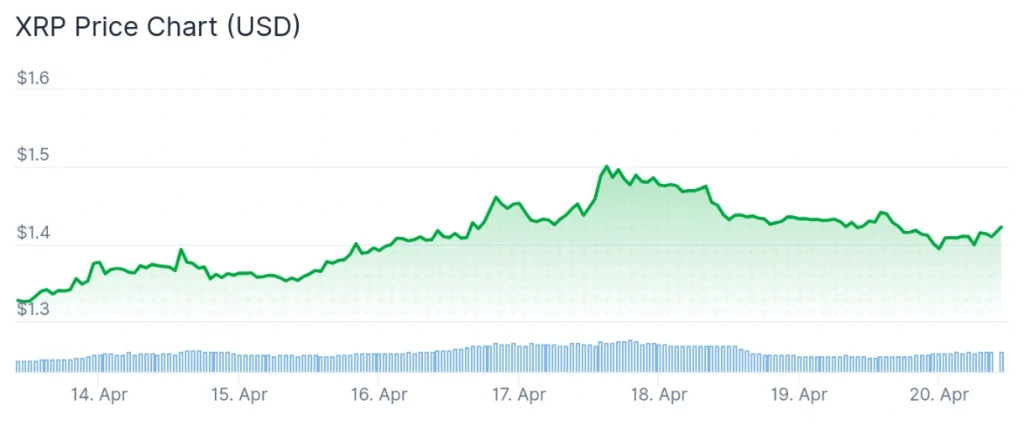
On April 20, XRP was trading at $1.42, without any change in the last 24 hours, but advancing 7.2% over the week and declining 1.3% in the past month, per the latest price chart data.
This partnership adds another data point to a trend that hasn’t gone away. Crypto’s loudest narratives revolve around price, but its most durable ones tend to come from infrastructure. And right now, that infrastructure is still finding its way into traditional banking, one regional deal at a time.
How do you rate this article?
Subscribe to our YouTube channel for crypto market insights and educational videos.






Join our Socials
Briefly, clearly and without noise – get the most important crypto news and market insights first.
Most Read Today
1
Hormuz Reclosure: This Could Fuel the Next Bitcoin Short Squeeze
2Safe or Suspect? What Wealthsimple’s Partnership with X Means for DOGE
3Smart Money Rotation: HBAR Volume Spike Points to a Deeper Move
4How THORChain is Making Monero More Accessible Than Ever
5$290M Exploit Hits Kelp DAO via Bridge Attack
Latest





8
Also read
Similar stories you might like.
Altcoins
XRP Signals 35% Move As Bitcoin Struggles
Ana | 2026-04-20
Altcoins
SEC Rule Change Might Be Huge for XRP; Here’s Why
Ana | 2026-04-15
Altcoins
Dogecoin Goes Live on Rakuten: Can 44 Million Japanese Users Influence DOGE?
Azeez | 2026-04-17

Altcoins
Ripple CEO Says SEC-CFTC Move Ended Crypto ‘Lawfare’ Era
Rokas | 2026-04-15

Altcoins
Crypto Market Adds $100B as Bitcoin Leads Rally
Ana | 2026-04-16
Altcoins
This Event Could Shake XRP
Azeez | 2026-04-17
Altcoins
Rally Imminent? XRP Sentiment Hits Third Worst Level in 2 Years
Ana | 2026-04-13

Altcoins
XRP Whales Buying Rises Ahead of Major Ripple XRPL Japan Event
Rokas | 2026-04-07
Altcoins
XRP Risks Liquidation at This Level as Leverage Climbs
Ana | 2026-04-06
Altcoins
Ripple Launches the First Treasury Management System — What This Means for XRP’s Enterprise Utility
Azeez | 2026-04-17