










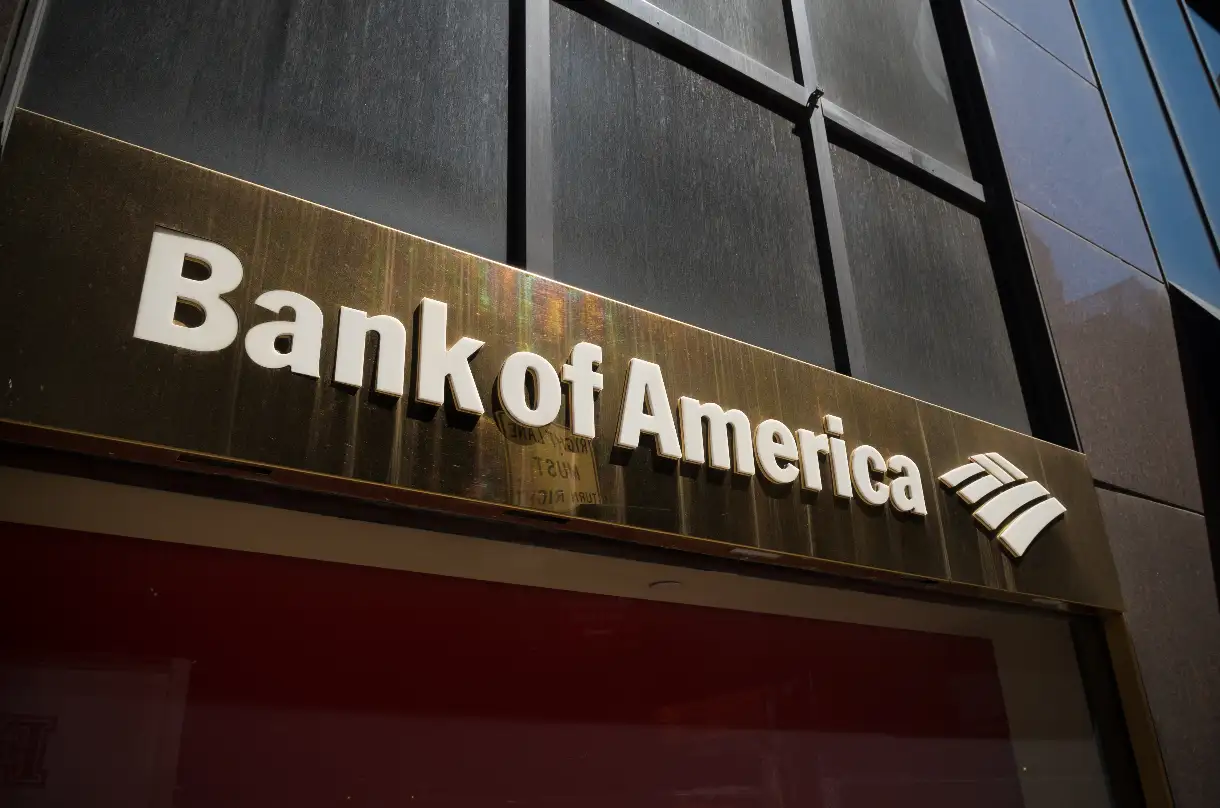
Bank of America logo on a building. Source: TechGaged / Shutterstock
Banks Are Quietly Preparing for the Next Crypto Compliance Wave
In Brief
- • U.S. banks are preparing for tighter oversight of crypto.
- • Banks are strengthening the monitoring of blockchain-related transactions.
- • Clearer rules for tokenized securities may speed up institutional adoption.

Banks across the United States are ramping up preparations for a new era of cryptocurrency oversight as regulators, financial institutions, and compliance teams increasingly focus on monitoring risks tied to digital assets.
One of the latest signals comes from the American Bankers Association, which recently announced a training program titled “Crypto Compliance: How Monitoring Drives Outcomes,” underscoring how banks are preparing for the growing role of digital assets in the financial system.
While crypto regulation has been debated for years, the industry is now entering a phase where practical compliance systems — not just policy discussions — are becoming a priority for financial institutions.
Where Crypto Risk Actually Appears
The compliance training highlights that the most critical risks connected to cryptocurrencies often emerge where blockchain activity intersects with traditional banking infrastructure.
Rather than originating purely on-chain, suspicious activity frequently becomes visible when digital asset transactions interact with bank systems, payment networks, or fiat settlement processes.
For compliance teams, this means monitoring activity across multiple layers — from blockchain transaction flows to internal fraud-detection and anti-money-laundering (AML) tools.
The shift reflects a broader reality: crypto oversight is increasingly becoming a core operational challenge for banks, not just a niche regulatory issue.
Compliance Is Becoming a Core Banking Function
Historically, compliance departments focused mainly on regulatory reporting and anti-money-laundering monitoring. But the rapid growth of digital assets is significantly expanding that role. Banks now need to understand blockchain activity, track cross-border flows, and monitor new types of financial behavior tied to crypto markets.
Industry groups such as the American Bankers Association say banks must meet rising demand for digital asset services while managing the risks these technologies may pose to consumers and the financial system.
As a result, compliance teams are becoming one of the most important internal functions in institutions exploring crypto infrastructure.
A Regulatory Shift Is Already Underway
Recent developments in Washington suggest that regulators are beginning to clarify how digital assets should fit within existing financial frameworks.
Earlier this week, U.S. banking regulators confirmed that tokenized securities — traditional financial instruments represented on blockchain — should generally follow the same capital rules as their conventional counterparts.
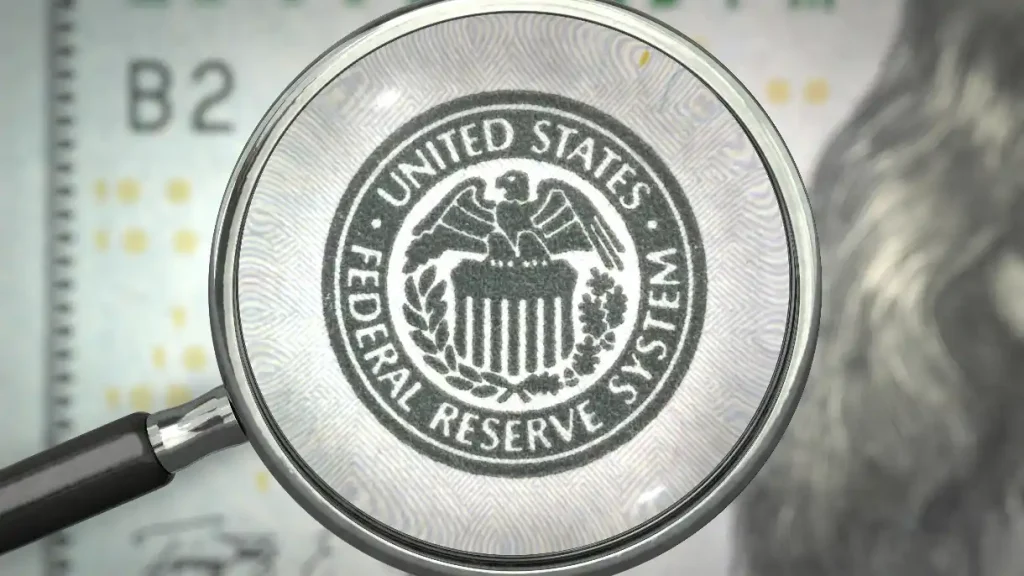
The guidance from the Federal Reserve, the Federal Deposit Insurance Corporation, and the Office of the Comptroller of the Currency emphasized that the banking system should remain “technology neutral,” meaning the underlying blockchain infrastructure does not automatically change how an asset is regulated.
In practical terms, this clarification removes a key uncertainty that had previously discouraged banks from experimenting with blockchain-based financial instruments.
Institutional Adoption May Be Closer Than Many Think
Taken together, these developments suggest a broader shift underway across the financial sector.
While public debate about crypto often focuses on price volatility and speculative trading, the real transformation may be happening quietly inside banks, as they prepare for a future in which blockchain-based assets become part of mainstream financial infrastructure.
The regulatory clarity around tokenized securities — recently highlighted in a TechGaged report examining new guidance from U.S. banking agencies — could further accelerate institutional adoption by removing a major barrier for traditional financial institutions.
If that trend continues, the next phase of the crypto industry may be defined less by retail speculation and more by large financial institutions integrating blockchain technology into the core of the global financial system.
More Must-Reads:
How do you rate this article?
Subscribe to our YouTube channel for crypto market insights and educational videos.






Join our Socials
Briefly, clearly and without noise – get the most important crypto news and market insights first.

Most Read Today
1
The Man Who May Have Built Bitcoin Has Bet It Hits $500K–$1M by 2028
2Solana DEX Dominance Continues to Outpace Ethereum — But the Full Story Is More Complicated
3Strategy’s $2.54B Bitcoin Bet Signals a Potential Market Shift
4April’s Crypto Hack Crisis: $606M Drained in Just 18 Days
5Bitcoin Nears $80K as Ceasefire Boosts Crypto Sentiment
Latest






8
Also read
Similar stories you might like.
Altcoins
The Osaka Countdown: Will the April 28 Upgrade Push BNB Past Resistance?
Azeez | 2026-04-26

Altcoins
Dogecoin’s Path to $0.50 in 2026: What Would Actually Need to Happen
Azeez | 2026-04-26

Bitcoin
Strategy’s $2.54B Bitcoin Bet Signals a Potential Market Shift
Azeez | 2026-04-25

Altcoins
Solana DEX Dominance Continues to Outpace Ethereum — But the Full Story Is More Complicated
Azeez | 2026-04-25

Bitcoin
The Man Who May Have Built Bitcoin Has Bet It Hits $500K–$1M by 2028
Azeez | 2026-04-25

Altcoins
April’s Crypto Hack Crisis: $606M Drained in Just 18 Days
Azeez | 2026-04-25
Altcoins
Bitcoin Nears $80K as Ceasefire Boosts Crypto Sentiment
Ana | 2026-04-25

Altcoins
Kelp DAO Exploit Funds Moved to Bitcoin as DeFi Rescue Begins
Ana | 2026-04-24

Blockchain
On-Chain Businesses Hit $587M Revenue as DeFi Matures
Ana | 2026-04-24
Defi
Senator Lummis Says CLARITY Act Has Bipartisan Support as Pressure Builds
Rokas | 2026-04-24