














A hooded hacker holding a Bitcoin coin over a laptop with glowing red charts in the dark. Source: TechGaged / Shutterstock.
6.9 Million BTC Including Satoshi’s Are Now Exposed to Quantum Attacks — Here’s Why
In Brief
- • About 6.9M BTC are exposed due to publicly visible keys, including Satoshi’s holdings. Advancements in quantum computing are bringing theoretical risks closer to reality. Bitcoin lacks clear consensus on a quantum-resistant solution, increasing long-term uncertainty.

There is a version of Bitcoin’s future where the coins don’t get stolen through a hacked exchange or a phishing link.
They get stolen mathematically — quietly, systematically, by a machine that simply outsmarts the encryption guarding them. That future moved closer in 2026 than most people noticed.
The Exposure Hiding in Plain Sight
Here is what surprises most people: the vulnerability isn’t hidden. It’s public. Every transaction ever recorded on the Bitcoin blockchain is permanently visible — including the public keys tied to those wallets.
Latest Stories
Binance’s Bitcoin Reserves Plunge — Are Late Buyers Finally Feeling FOMO?

Gold Falls to a Seven-Week Low as Markets React to Changing Rate Expectations

Crypto Keeps Outperforming Stocks and Commodities: The Numbers Tell the Story
Send Bitcoin even once from an address, and the key protecting whatever remains is exposed forever.
That design choice, baked into Bitcoin’s earliest architecture, is now a liability. An estimated 6.9 million BTC sits in addresses where those keys are already out in the open.
This also includes Satoshi Nakamoto’s holdings, stored in an old address format that never even attempted to conceal the public key.
READ ALSO: Exclusive: Dr. Persichetti Challenges Key Claims in Cointelegraph’s Quantum Crypto Analysis
Why 2026 Changed the Conversation
Quantum risk has circled crypto discourse for years. Two events made it harder to dismiss.
In March,a Google Quantum AI paper co-authored with Stanford and the Ethereum Foundation concluded that a machine operating with under 500,000 qubits could crack Bitcoin’s encryption in under ten minutes.
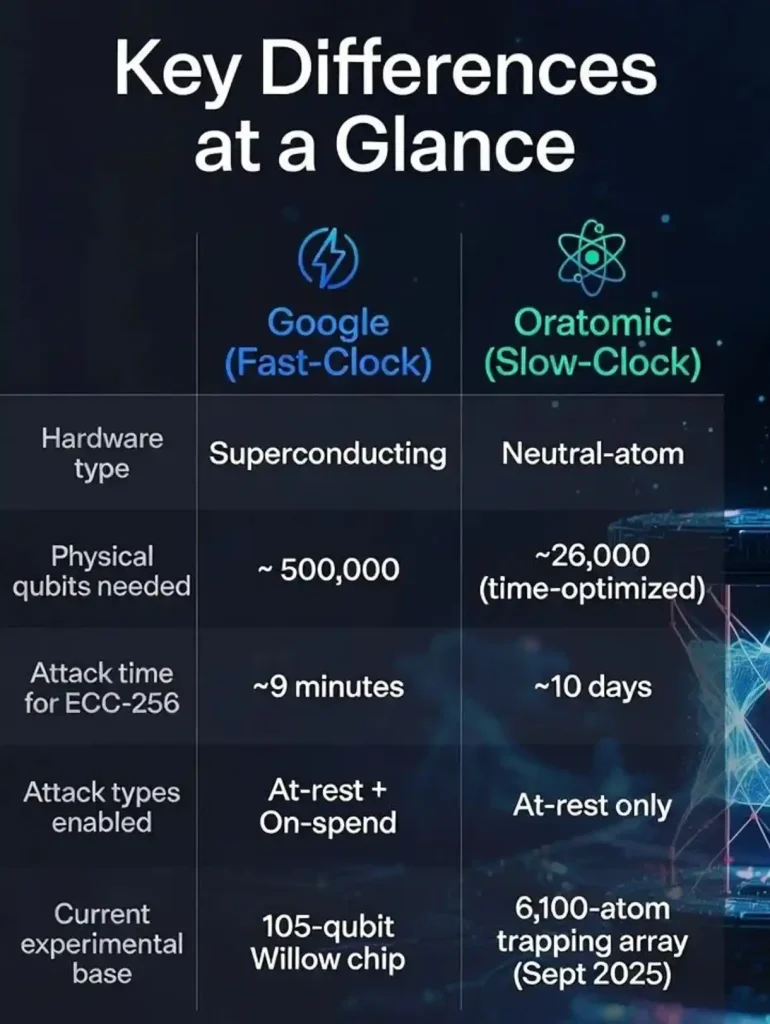
What looked like a 2040 problem suddenly felt more like 2029.
Then in April, an independent researcher cracked a 15-bit elliptic curve key on commercially available quantum hardware, winning Project Eleven’s bounty prize — a 512-fold jump from the previous public record.
Bitcoin uses 256-bit encryption. The gap remains enormous. But the direction of travel is no longer theoretical.
YOU MAY LIKE: Bitcoin Developers Work on Post-Quantum Security Upgrade
A Network That Struggles to Agree on Anything
BIP-360 would introduce quantum-resistant address formats. Ethereum, Ripple, and Tron have published post-quantum roadmaps.
Bitcoin hasn’t reached consensus on any coordinated response — and its decentralised governance makes that harder than it sounds.
Satoshi’s coins crystallise the dilemma perfectly. Lock the old address format and those coins become permanently inaccessible — even to their creator. Leave them open, and they sit as history’s most valuable unsecured prize.
If quantum computing matures faster than Bitcoin can agree to change — who decides what happens to the coins no one can reach?
RELATED POST: Ripple Maps Out Quantum-Resistant Future For XRP Ledger
Disclaimer:
This article is for informational purposes only and does not constitute financial, investment, or trading advice. The views expressed are based on publicly available data, market observations, and the author’s interpretation at the time of writing. Cryptocurrency markets are highly volatile and unpredictable, and past performance or current technical setups do not guarantee future results. Readers should conduct their own research and consult with a qualified financial advisor before making any investment decisions. TechGaged does not accept liability for any losses incurred based on the information presented.
How do you rate this article?
Subscribe to our YouTube channel for crypto market insights and educational videos.






Join our Socials
Briefly, clearly and without noise – get the most important crypto news and market insights first.
Most Read Today
1
Binance’s Bitcoin Reserves Plunge — Are Late Buyers Finally Feeling FOMO?
2These US Data Releases Could Set Crypto’s Direction This Week
3Gold Falls to a Seven-Week Low as Markets React to Changing Rate Expectations
4Crypto Keeps Outperforming Stocks and Commodities: The Numbers Tell the Story
5Sui Is Preparing Something Big — Basecamp 2026 Could Reveal It All
Latest





8
Also read
Similar stories you might like.

Crypto News
Bitcoin Repeats a Rare Q3 Pattern — Could Q4 Bring Another Explosive Rally?
Azeez | 2026-09-27

Crypto News
Bitcoin May Soon Have Private Transfers Without Changing Its Core Rules
Azeez | 2026-09-25

Crypto News
Bitcoin’s $18B Options Expiry Is Coming — A Major Market Move Could Follow
Azeez | 2026-09-24

Crypto News
Bitcoin Leaves Stocks and Gold Behind as a Powerful New Trend Emerges
Azeez | 2026-09-23

Crypto News
Most Altcoin Holders Are Still Losing — Why This Cycle May Have Room to Run
Azeez | 2026-09-23

Crypto News
BlackRock’s Bitcoin Buying Hits Another Level
Azeez | 2026-09-23

Crypto News
Crypto Open Interest Is Surging — Ethereum Stands Out
Azeez | 2026-09-22

Crypto News
Bitcoin Passes a Major Historical Test — A New Phase May Be Emerging
Azeez | 2026-09-21

Crypto News
Bitcoin’s Demand Is Holding Strong — One On-Chain Level Could Decide What Comes Next
Azeez | 2026-09-20

Crypto News
Hyperliquid Opens Native Lending: HYPE and BTC Can Now Unlock More Liquidity
Azeez | 2026-09-19