








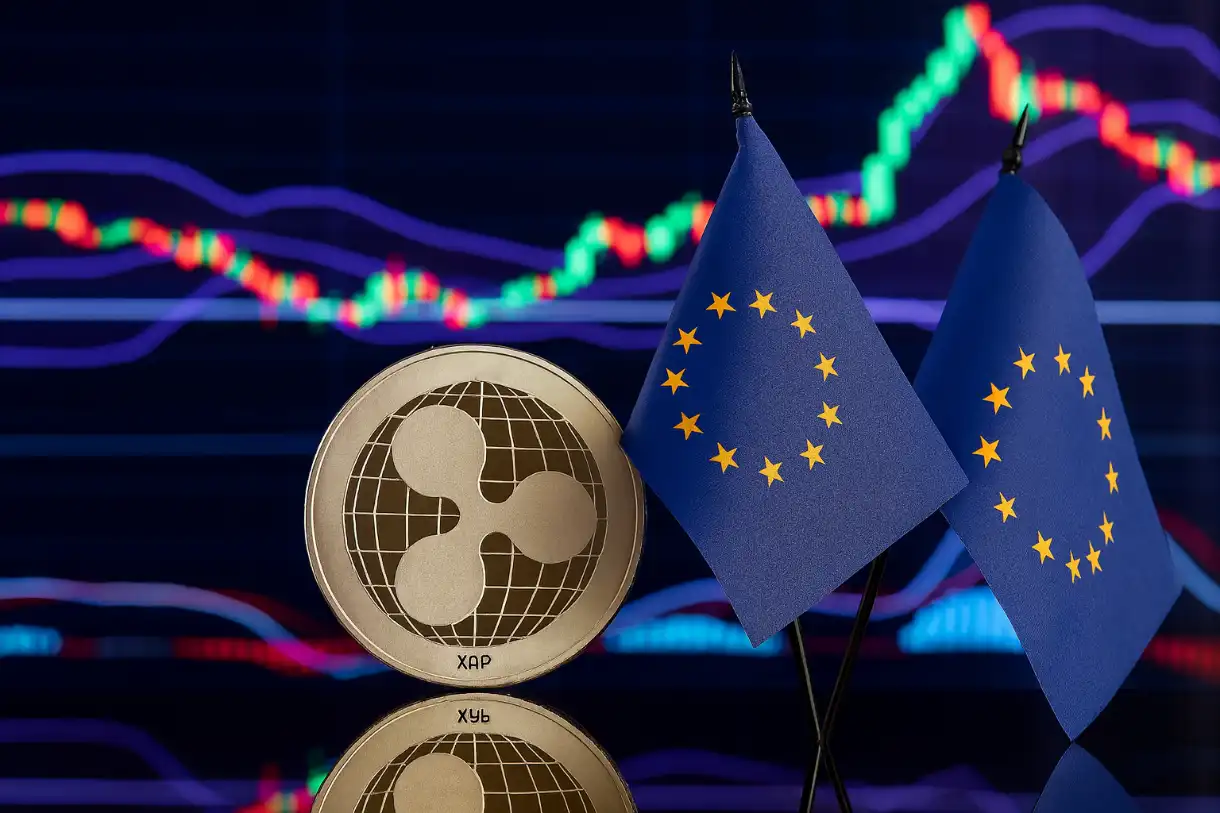
Ripple’s full EMI license in Luxembourg unlocks EU-wide access to regulated blockchain.
This Crypto Giant Just Cracked Europe’s Banking System
In Brief
- • Ripple secured EU‑wide authorization for regulated electronic money and payment services. The license enables Ripple Payments to expand seamlessly across all 27 EU member states under a single supervisory regime. This milestone strengthens compliance credibility and positions it as a core blockchain infrastructure provider in Europe.
Ad
Ripple achieved a major regulatory milestone by securing a full Electronic Money Institution (EMI) license from Luxembourg’s Commission de Surveillance du Secteur Financier.
This approval immediately opens regulated access to payment and electronic money services across the European Union.
Moreover, the license follows Ripple’s preliminary authorization from January 2026. Showing that the company met every compliance, governance, and operational requirement demanded by the CSSF.
Therefore, Ripple can now issue electronic money and deliver regulated payment services across all EU member states.
This authorization places Ripple directly inside Europe’s regulated financial infrastructure. Accelerating the expansion of Ripple Payments, the company’s blockchain‑powered cross‑border settlement platform.
Furthermore, the EU’s regulatory passporting framework allows Ripple to operate across all 27 member states under a single supervisory regime.
This structure eliminates fragmented national approvals and creates a unified compliance foundation for digital money services at continental scale.
Expanding Regulated Operations Across the EU
Ripple earned the full EMI license by satisfying strict CSSF standards covering corporate governance, anti‑money‑laundering controls, capital requirements, and operational resilience.
These standards aim to protect consumers and strengthen financial stability.
Additionally, the license enables Ripple to issue electronic money and offer payment services that merge blockchain infrastructure with regulated financial systems.
As a result, Ripple now bridges decentralized technology with institutional‑grade compliance.
Ripple chose Luxembourg as its regulatory base because the country serves as a major European financial hub.
The jurisdiction offers legal certainty, regulatory clarity, and access to sophisticated financial markets.
Also, the EMI license grants Ripple passporting rights across the EU, allowing banks, fintechs, and enterprises to adopt Ripple’s services without navigating a patchwork of local regulatory regimes.
Regulatory Momentum and Strategic Impact
Ripple’s approval in Luxembourg builds on its growing regulatory momentum across Europe. The company already holds an EMI license and cryptoasset registration with the UK Financial Conduct Authority.
Moreover, Ripple now ranks among the most comprehensively licensed digital asset firms globally, with more than 75 approvals across multiple jurisdictions.
The EMI license also aligns with the European Union’s MiCA framework. Which aims to harmonize digital asset regulation and reduce institutional uncertainty.
By securing this license ahead of full MiCA implementation, Ripple strengthens its position as a compliant infrastructure provider for blockchain‑based payments.
However, the company continues distancing itself from speculative crypto platforms by focusing on regulated financial services.
For banks, payment providers, and enterprises. This development removes regulatory friction from cross‑border blockchain settlement.
Therefore, institutions can now access Ripple’s regulated payment rails under a single EU authorization.
As Ripple expands its European footprint, the Luxembourg EMI license becomes the legal backbone for compliant, scalable, blockchain‑powered money movement across the region.
More Must-Reads:
How do you rate this article?
Subscribe to our YouTube channel for crypto market insights and educational videos.






Join our Socials
Briefly, clearly and without noise – get the most important crypto news and market insights first.
Most Read Today
1
Crypto Trading Volume Collapse: March on Track for Worst Month Since 2020
2SEC Move Opens New Phase For Bitcoin And Ethereum ETFs
3Bitcoin Crash Fears Return as Market Pressure Builds
4A Healthy Pullback Or Something More — What Drove Crypto Markets This Week
5New Threat to Prediction Markets as U.S. Crackdown Expands
Latest







8
Also read
Similar stories you might like.

Altcoins
Cardano Traders Are Capitulating — A Turning Point or Warning Sign?
Ana | 2026-03-24
Altcoins
XRP May Be Entering a Key Phase as Market Stress Signals Are Building
Ana | 2026-03-24

Market
Exclusive: AI Finance Is Now “Institutional Grade”, Says True Trading Co-Founder Igor Stadnyk
Sead | 2026-03-24
Altcoins
XRP Ownership Patterns Are Changing — And It May Signal Something Bigger
Ana | 2026-03-24

Bitcoin
Wall Street Behavior Suggests a Turning Point for Bitcoin Strategy Firms
Rokas | 2026-03-24

Altcoins
Ethereum Supply Concentration Is Rising — A Quiet Shift Is Underway
Rokas | 2026-03-24

Market
A Healthy Pullback Or Something More — What Drove Crypto Markets This Week
Sead | 2026-03-23

Bitcoin
Bitcoin Supply Shift Raises New Questions Across Market
Ana | 2026-03-23

Market
Crypto Trading Volume Collapse: March on Track for Worst Month Since 2020
Jastra | 2026-03-23

Industry
U.S. Crypto Regulation Breakthrough Pushes Clarity Act Closer to Reality
Ana | 2026-03-23