













Bitcoin coin on golden background. Source: TechGaged / Shutterstock
Supply Shock: 204K BTC Leave Exchanges As Whales Stay Dormant
In Brief
- • About 204,000 BTC have left exchanges this year.
- • Retail traders are selling while long-term whales remain inactive.
- • Reduced exchange supply could tighten Bitcoin liquidity.
Ad
Bitcoin (BTC) is trading above the $70,000 level. However, on-chain data suggests the market is split between retail traders selling at losses and long-term holders remaining inactive. Analysts say that divergence could eventually tighten Bitcoin’s circulating supply, possibly resulting in a supply shock.
Retail selling as whales remain inactive
According to the analysis shared by CryptoQuant’s GugaOnChain on March 12, Bitcoin exchange reserves have fallen significantly since the start of the year.
Data shows exchange balances dropping from 2.99 million BTC to roughly 2.786 million BTC, a reduction of about 204,000 BTC. That decline suggests fewer coins are available for sale on trading platforms.
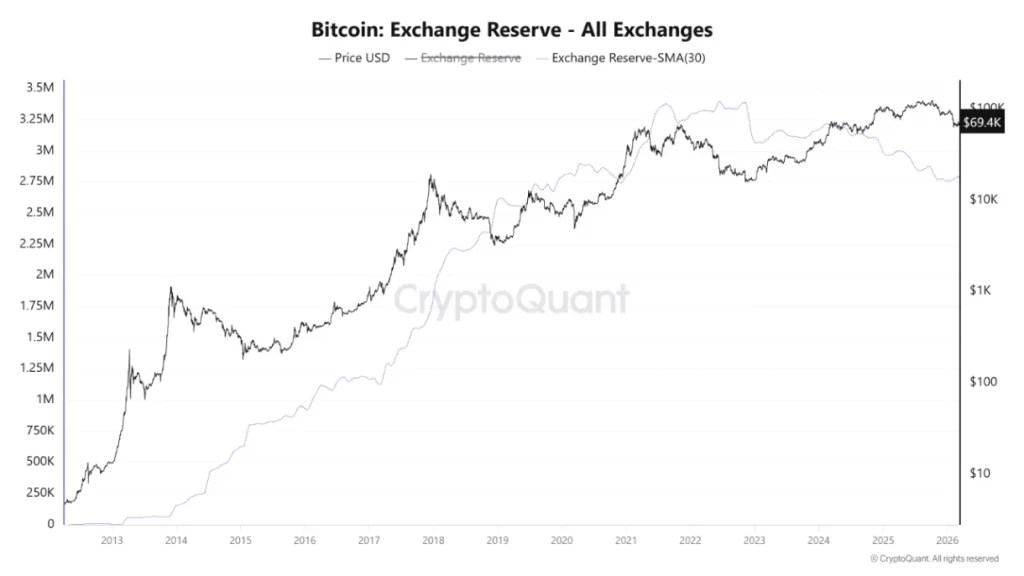
At the same time, long-term whales appear to be sitting still. Older coins, many of which are sitting on large unrealized gains, have remained largely untouched, indicating that long-term holders are not participating in the current selling pressure.

Retail investors selling at losses
Though whales remain inactive, short-term investors appear to be capitulating. One metric tracking whether recent buyers are selling at a profit or loss, the Short-Term Holder SOPR (SOPR-STH), is currently around 0.97. A reading below 1.0 indicates that coins are being sold at a loss.
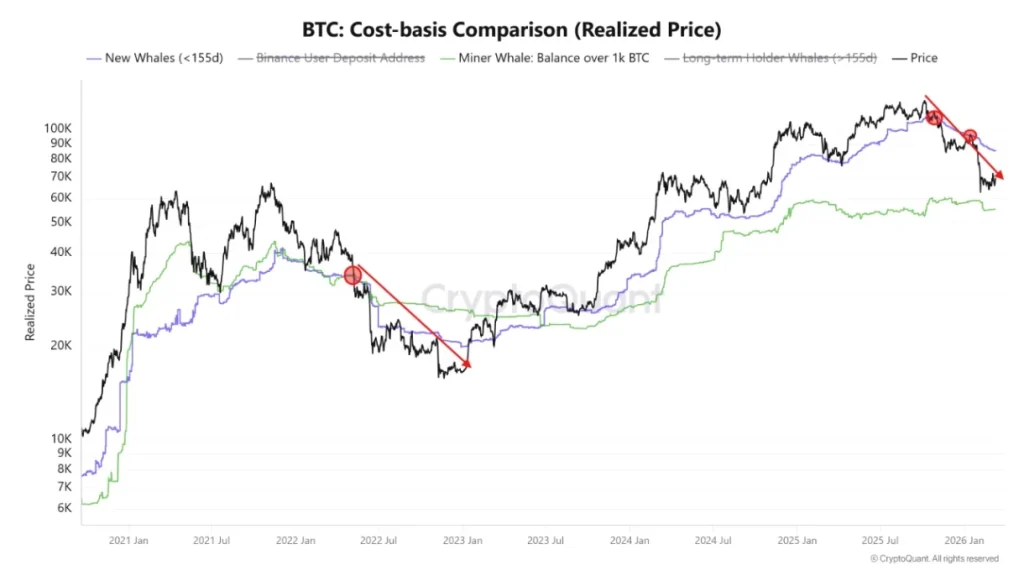
According to analysts, that pattern suggests panic selling among newer traders who bought Bitcoin at higher prices and are now exiting positions. CryptoQuant contributor burakkesmeci added that whales who acquired Bitcoin within the last 155 days have an average cost basis of roughly $85,600.
With Bitcoin trading well below that level, many of those newer whales are currently underwater.
Key level for the next bull cycle
Historically, Bitcoin bull markets tend to resume only after the price reclaims the cost basis of short-term whales. As the analyst noted:
“Looking at Bitcoin’s cycles, the pattern is consistent: when price falls below the STH whale cost basis, bear season begins – when price reclaims and holds above it, bull season follows.”
That $85,600 level was tested earlier this year but held as resistance, pushing Bitcoin back toward $60,000.
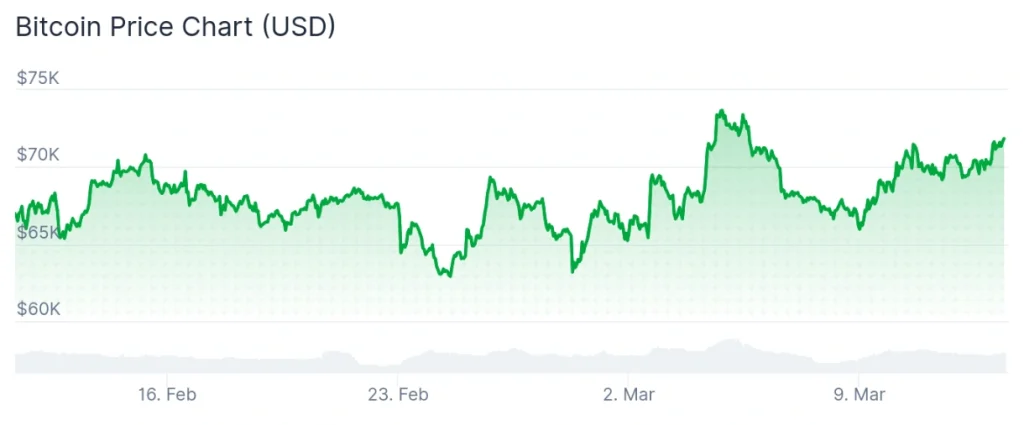
Currently, BTC is changing hands at the price of $71,847.22, indicating an increase of 2.8% in the last 24 hours, a 1.6% gain across the past seven days, and a 7.2% advance over the month, per the most recent chart information.
Supply conditions tightening
Despite recent weakness, some analysts believe the combination of falling exchange reserves and inactive whales could create conditions for a future supply squeeze.
More than 71% of Bitcoin UTXOs are currently in profit, meaning most long-term holders remain comfortably above their entry price. If demand returns and whales continue holding their coins off exchanges, the market could face a period of reduced sell-side liquidity.
More must-reads:
How do you rate this article?
Subscribe to our YouTube channel for crypto market insights and educational videos.






Join our Socials
Briefly, clearly and without noise – get the most important crypto news and market insights first.
Most Read Today
1
148 Public Companies Now Hold Bitcoin, With Strategy Accounting for 63% of All Corporate BTC
2Should You Sell Bitcoin at $100K? Here’s What ChatGPT Says
3TechGaged Launches a Live Bitcoin Millionaires Tracker
4Exclusive: Crypto Trader Josh Rager Says Bitcoin’s 4-Year Cycle “Isn’t What It Used To Be”
5Another Public Company Buys More Bitcoin; Nears $1B in BTC
Latest






8
Also read
Similar stories you might like.

Altcoins
Whales Quietly Scoop Up Millions Of TRUMP Tokens; What’s Happening?
Rokas | 2026-03-13
Bitcoin
Record Strategy Bitcoin Purchase Raises Supply Pressure Questions
Rokas | 2026-03-13

Bitcoin
Should You Sell Bitcoin at $100K? Here’s What ChatGPT Says
Rokas | 2026-03-12
Bitcoin
TechGaged Launches a Live Bitcoin Millionaires Tracker
Rokas | 2026-03-12

Bitcoin
Bitcoin Tax Debate Intensifies After Coinbase Lobbying Allegations
Ana | 2026-03-12

Bitcoin
12 Countries Are Quietly Mining Bitcoin, VanEck Analyst Claims
Ana | 2026-03-12

Bitcoin
Another Public Company Buys More Bitcoin; Nears $1B in BTC
Ana | 2026-03-12

Industry
SEC And CFTC Sign Historic Agreement To Coordinate Regulation
Ana | 2026-03-12

Blockchain
Wells Fargo Files ‘WFUSD’ Trademark for Crypto and Payment Services
Ana | 2026-03-11
Bitcoin
Here’s The Average Price of All Strategy’s Bitcoin Purchases
Ana | 2026-03-11