












Ripple coin chart. Source: TechGaged / Shutterstock
Ripple CEO Says U.S. Can’t Survive “Gensler 2.0”
In Brief
- • Ripple CEO warns against another enforcement-heavy crypto regime.
- • Industry says only legislation can ensure lasting clarity.
- • Policy uncertainty continues to weigh on crypto growth.
Ad
Brad Garlinghouse warned that the U.S. crypto industry could face another wave of aggressive regulation if lawmakers fail to pass clear legislation, arguing that guidance alone is not enough to protect companies from policy reversals. Speaking in an interview, he said the industry “can’t have another Gary Gensler moment,” referring to the enforcement-heavy approach under former SEO chair.
Industry fears policy swings without legislation
As it happens, Garlinghouse’s warning, shared in an interview with FOX Business’s Maria Bartiromo on March 27, reflects a broader concern across the industry that regulatory clarity remains fragile. Though recent leadership at the U.S. Securities and Exchange Commission has shifted tone, that progress could be undone by a future administration.
“We need the Clarity Act to get done. (…) We want to see this codified into law in case there is another (…) Gary Gensler moment, where they tried to weaponize policy in a way that’s about politics and not what’s good for the United States.”
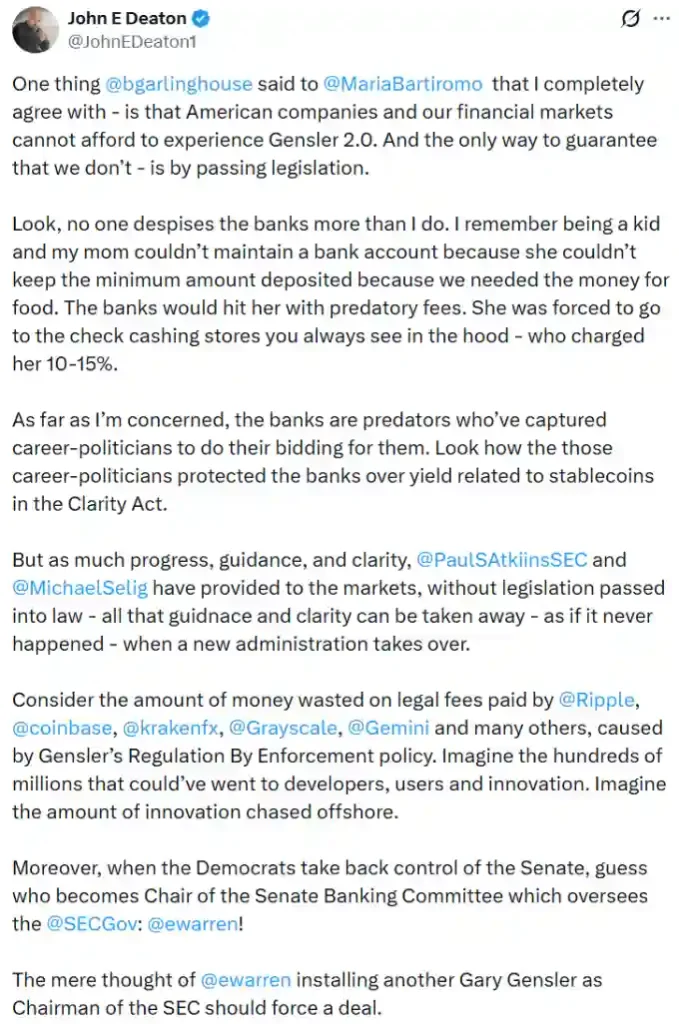
Meanwhile, pro-XRP attorney John E. Deaton echoed this view, arguing that only legislation can lock in clarity and prevent a repeat of what many in the crypto industry describe as “regulation by enforcement.” He pointed to the legal battles involving Ripple, Coinbase, Kraken, Grayscale, and Gemini as examples of the cost of unclear rules.
Deaton also criticized how traditional finance influences crypto policy, arguing that banks have pushed back against yield-bearing stablecoins during legislative discussions like the Clarity Act. He framed this as part of a broader struggle between incumbents and emerging financial technologies.
At the same time, he warned that political shifts could quickly reshape oversight. If control of key committees changes, figures like Elizabeth Warren could play a larger role in shaping crypto regulation, potentially influencing who leads the SEC next.
What it means for crypto markets
The core issue is consistency. Without laws passed by Congress, guidance from regulators can change with leadership, creating uncertainty for companies building in the U.S.
Companies may delay investment, shift operations offshore, or spend heavily on legal defense instead of development. At the same time, clearer rules could unlock innovation and capital, especially in areas like stablecoins and tokenized finance.
All things considered, the debate is moving beyond whether crypto should be regulated. The real question now is whether the U.S. can create rules that survive political cycles, or if the industry will continue to face boom-and-bust regulatory environments.
How do you rate this article?
Subscribe to our YouTube channel for crypto market insights and educational videos.






Join our Socials
Briefly, clearly and without noise – get the most important crypto news and market insights first.





8
Also read
Similar stories you might like.

Blockchain
Crypto Apps Exposed to Risk After Malicious Axios Versions Go Live
Rokas | 2026-03-31

Research
How Accurate Are Robert Kiyosaki’s Predictions?
Sead | 2026-03-31
Industry
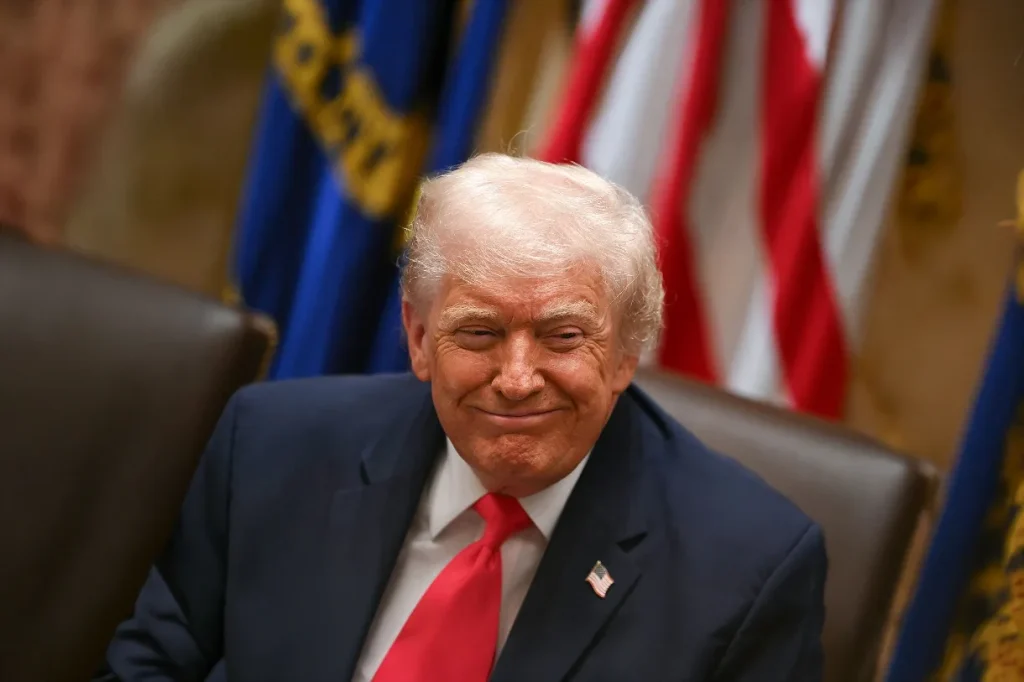
Trump Backs Bitcoin, Stablecoins In New Pro-Crypto Push
Ana | 2026-03-30
Industry
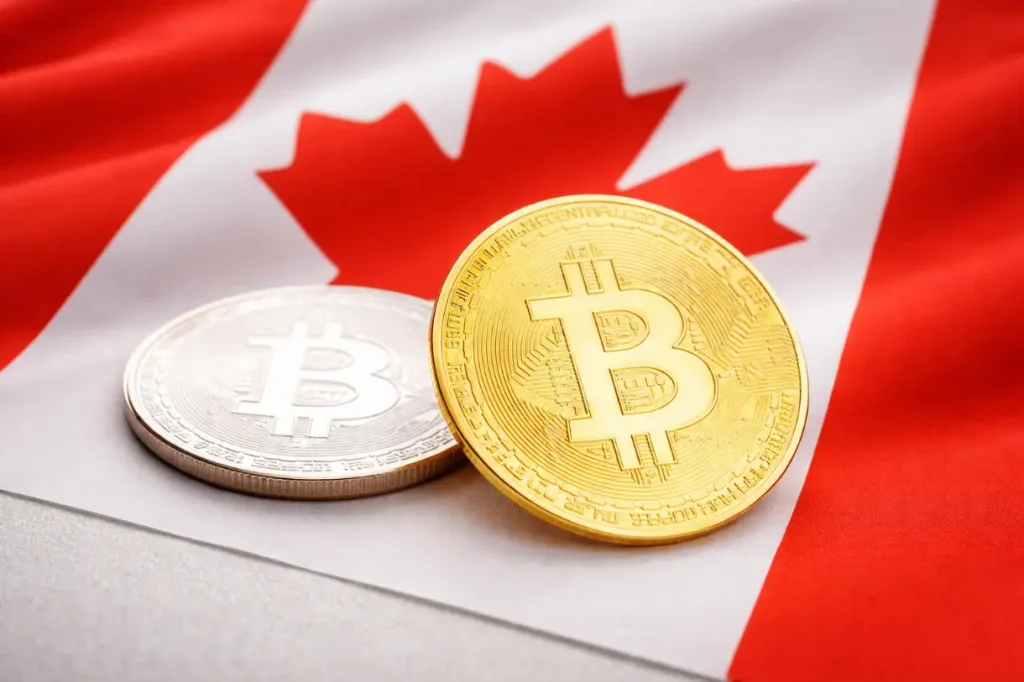
Canada Proposes Ban on Crypto Political Donations
Ana | 2026-03-30
Bitcoin
Mystery Deepens as $400M ‘Lost’ Bitcoin Suddenly Moves
Rokas | 2026-03-30

Altcoins
Kiyosaki Warns of Inflation Crisis, Lists 6 Safest Investments for 2026
Rokas | 2026-03-30
Altcoins
TRON Moves Toward Institutions: How Anchorage Support Could Influence TRX Price
Azeez | 2026-03-29

Altcoins
Sui Approaches 800K Users as Token Unlock Nears — Can Price Stay Resilient?
Azeez | 2026-03-29

Altcoins
Could SpaceX’s IPO Be the Catalyst That Sends Dogecoin Above $0.10?
Azeez | 2026-03-29

Altcoins
Cardano’s Big Bank Moment: Why Whales Are Buying the Dip Most Traders Are Ignoring
Azeez | 2026-03-28