
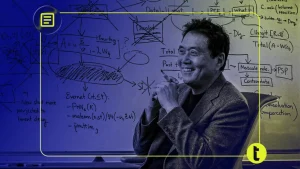





Robert Kiyosaki. Source: TechGaged/Shutterstock
How Accurate Are Robert Kiyosaki’s Predictions?
In Brief
- • Kiyosaki often gets the macro trend right but misses timing.
- • Several high-profile crash predictions failed to materialize.
- • His core thesis favors scarce assets over fiat currency.
Ad
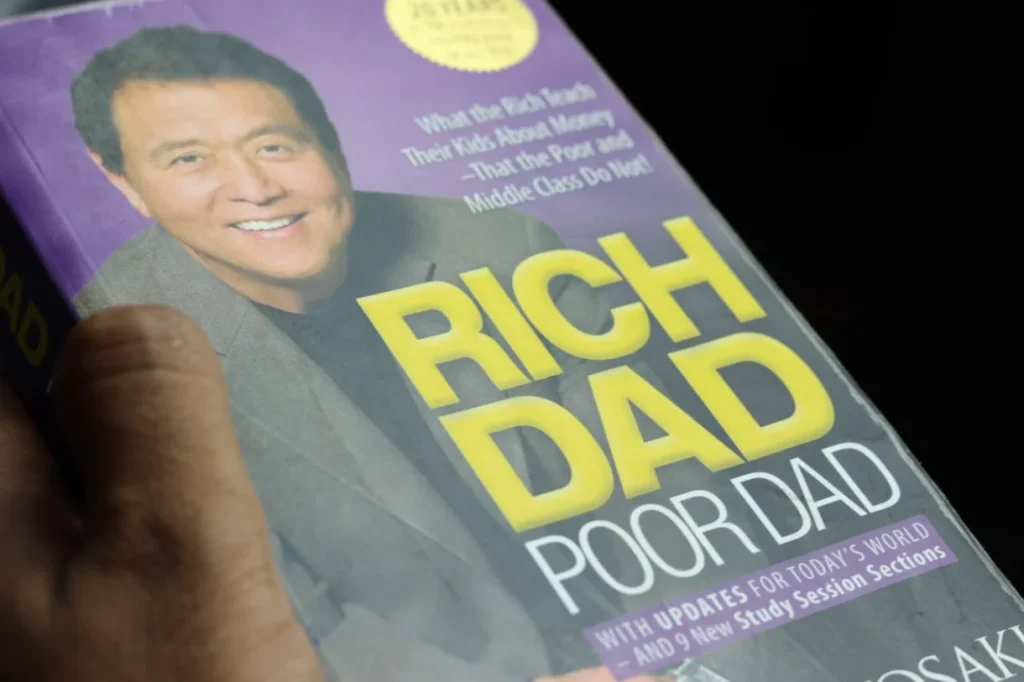
For almost three decades now, Robert Kiyosaki has been one of the financial world’s loudest and polarizing voices. The man who taught thousands to distinguish between assets and liabilities in his bestseller ‘Rich Dad Poor Dad’ is relentlessly sounding his opinions on all things money, which includes crypto.
While his macro-pessimism has earned him a reputation as a permanent bear, his pivot to Bitcoin and Ethereum has reframed him as an unlikely champion for the decentralized future.
If you put aside Kiyosaki’s political affiliations and focus strictly on his financial perspectives, his words carry weight with the general public, for better or for worse. That makes him interesting. It’s not every day you hear that Bitcoin could hit $750,000 after a massive market crash.
But does it make him worth your time and, more importantly, money?
Is he a strategic investor who successfully caught the second wave, or simply a sensationalist who happens to be right once in a blue moon?
Let’s take a look.
What Kiyosaki got right
Kiyosaki’s credibility in the finance world is largely based on his ability to spot structural issues in the legacy system long before the collapse began. In cases where he was right, the results were consistent with the ‘short the dollar, long the asset’ framework Kiyosaki applied over three decades.

In this investment strategy, the expectation is that the US dollar will depreciate, either in value against other currencies or in real purchasing power due to inflation.
Bankruptcy of Lehman Brothers and Bear Stearns
Perhaps his most famous call was his early warning about the subprime mortgage crisis. In his 2002 book ‘Rich Dad’s Prophecy’, Robert Kiyosaki predicted a catastrophic, Great Depression-level market event triggered by an unstable retirement system and a housing bubble.
Specifically, he argued that the transition from defined-benefit pensions to 401(k) plans had created a “wall of dumb money” that Wall Street would inevitably exploit. Kiyosaki targeted the delusional wealth of the American middle class, noting that people were treating their homes like piggy banks through predatory cash-out refis.
While the mainstream media was celebrating the housing boom of 2005-2006, Kiyosaki was publicly warning that the entire system was built on subprime foundations that could not withstand a rate hike.
So, when Lehman Brothers (a US global financial services firm) and Bear Stearns (a Wall Street investment bank) collapsed in 2008 due to a $13 trillion mortgage market implosion, it vindicated Kiyosaki’s years-long warning.
This visionary hit, as some have perceived it, transformed him from a self-help author into a macro-economic commentator that major news outlets could no longer ignore.
Multifamily strategy in the 1990s
Long before he became a media personality, Kiyosaki proved his ‘debt is wealth’ theory during the recovery following the savings and loan crisis that began in the late 80s. The theory hinges on using debt as a tool to purchase income-generating assets, often utilizing tax loopholes to maximize returns.
The average investor was terrified of debt at the time, but Kiyosaki leveraged a tax-free rollover strategy to roll small gains into large apartment complexes in Texas and Arizona (primarily Phoenix). He targeted distressed multifamily units that provided immediate cash flow. He sold his smaller buildings and immediately moved 100% of the profits into larger apartment complexes
In doing so, Kiyosaki recognized that while the value of the dollar might fluctuate, the need for affordable housing in growing tech hubs like Phoenix was a permanent demographic trend.
As a result, by the time the 2000s real estate boom hit its stride, Kiyosaki owned thousands of units, creating what can only be called a private central bank of rental income. This allowed him to practice what he preached: using other people’s money (bank debt) to acquire so-called hard assets that paid him every month, regardless of what the stock market was doing.
By never actually touching the cash, he legally avoided the tax bill that usually hits when you sell for a profit.
“Gold rush” of 2023
In late 2023, Kiyosaki began asserting that the $31 trillion US national debt had reached a point of no return.
His thesis was about the impending inflation and geopolitical de-dollarization in equal measure. He correctly anticipated that BRICS nations (Brazil, Russia, India, China, and South Africa) would begin aggressively stockpiling gold to settle international trade outside the SWIFT system.
Looking back, gold didn’t just break its previous ceiling – it moved well beyond it. The author’s favorite asset embarked on a historic rally to $4,600/oz as central banks shifted their reserves away from US Treasuries. Investors who listened to Kiyosaki’s gold advice in 2023 outperformed almost every “safe” bond fund in existence.
He urged his followers to ignore the “paper gold” (ETFs) and buy physical bullion before the supply became unobtainable. Kiyosaki was adamant that gold would soon break through $2,100 and then take off.
What Kiyosaki got wrong
For a man who famously predicted the 2008 crash, the subsequent 18 years have often seen his warnings fall into a predictable pattern of directionally relevant, but timing-wise disastrous misses. It’s not harsh to say that Kiyosaki has called several of the last zero market crashes, which says a lot.
Here are some of the failed predictions:
2016 stock market crash
Back in September 2015, Kiyosaki predicted a stock market crash in 2016. His exact words were:
“I’ve been predicting since 2002 that we would see a stock market crash in 2016.”
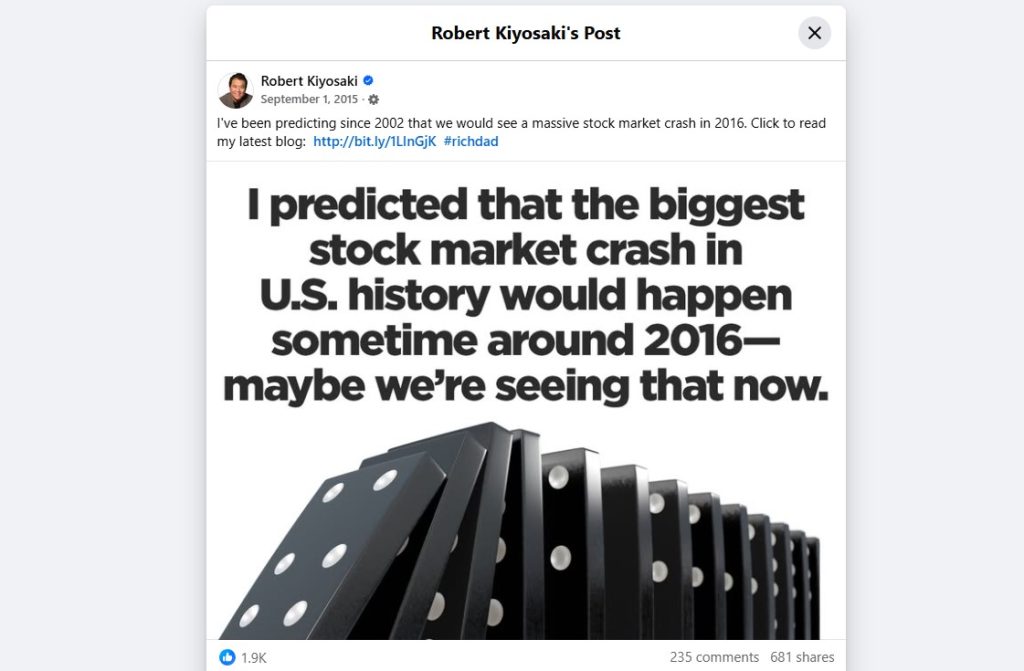
His argument was that the first wave of Baby boomers reaching age 70.5 (then the age for mandatory retirement distributions) would force a massive sell-off of stocks, triggering a collapse that would dwarf 2008. So, he urged people to get out of the S&P 500 immediately.
History tells a different story, as in 2016, there was a considerable market growth. Despite a brief dip in early 2016 due to oil price volatility, the S&P 500 index ended the year up roughly 9.5%. Following the US election in November, the markets embarked on a giant bull run, with investors anticipating corporate tax cuts and deregulation.
In the end, investors who followed Kiyosaki’s advice and moved to cash or gold missed out on one of the more profitable decade-long stretches in market history. From the date of his 2016 crash warning to the end of 2019, the S&P 500 rose by over 60%.
2022-2023 hyperinflation
Throughout 2022 and early 2023, Kiyosaki warned that the US was entering a period of hyperinflation (50% price growth per month). He predicted that the dollar would become worthless within months and silver would skyrocket to $500.
To be fair, 2023 saw significant price increases, but the extreme form of inflation Kiyosaki envisioned never materialized. Instead, the Fed’s aggressive rate hikes to 5.25% successfully cooled the economy, leading to an opposite trend for the remainder of the year.
As for silver, it (together with gold) remained relatively stable throughout 2023. It only made its big moves a couple of years later. Those who bought silver at a premium in 2023 based on Kiyosaki’s imminent collapse narrative were forced to hold through two years of flat price action before seeing any real return.
He revisited his warning regarding hyperinflation in December 2025, saying it could financially wipe out millions of Americans. Even though it’s only about four months later, so far, so good. It also doesn’t help Kiyosaki’s case that the situation has never occurred in US history, making it highly unrealistic to happen.
March 2024 and the “biggest crash in history”
In late 2023, Kiyosaki issued one of his most aggressive warnings yet. He warned that a global collapse would begin in March 2024, specifically targeting the private debt bubble. He even called it a “house of cards built on loans,” arguing that unregulated private lending would finally cave under high interest rates.
In late 2023, Kiyosaki warned that a global collapse would begin in March 2024, specifically targeting the
However, rather than crashing, the S&P 500 and the Nasdaq embarked on a historic AI version of the gold rush. Driven by NVIDIA and the semiconductor boom, the markets hit dozens of new all-time highs throughout the very month Kiyosaki predicted they would vanish.
The S&P 500 finished the year up roughly 23%. For the retail investor, following this advice in March meant missing out on one of the most explosive wealth-generation windows in modern market history.
February 2025 and the “biggest stock market crash in history”
This essentially saw Kiyosaki dust off his ‘Rich Dad’s Prophecy’ book and pin a fresh date on the same decades-old warning. He urged followers to “get out of fakes” (stocks and bonds) and into assets like Bitcoin, gold, and silver.
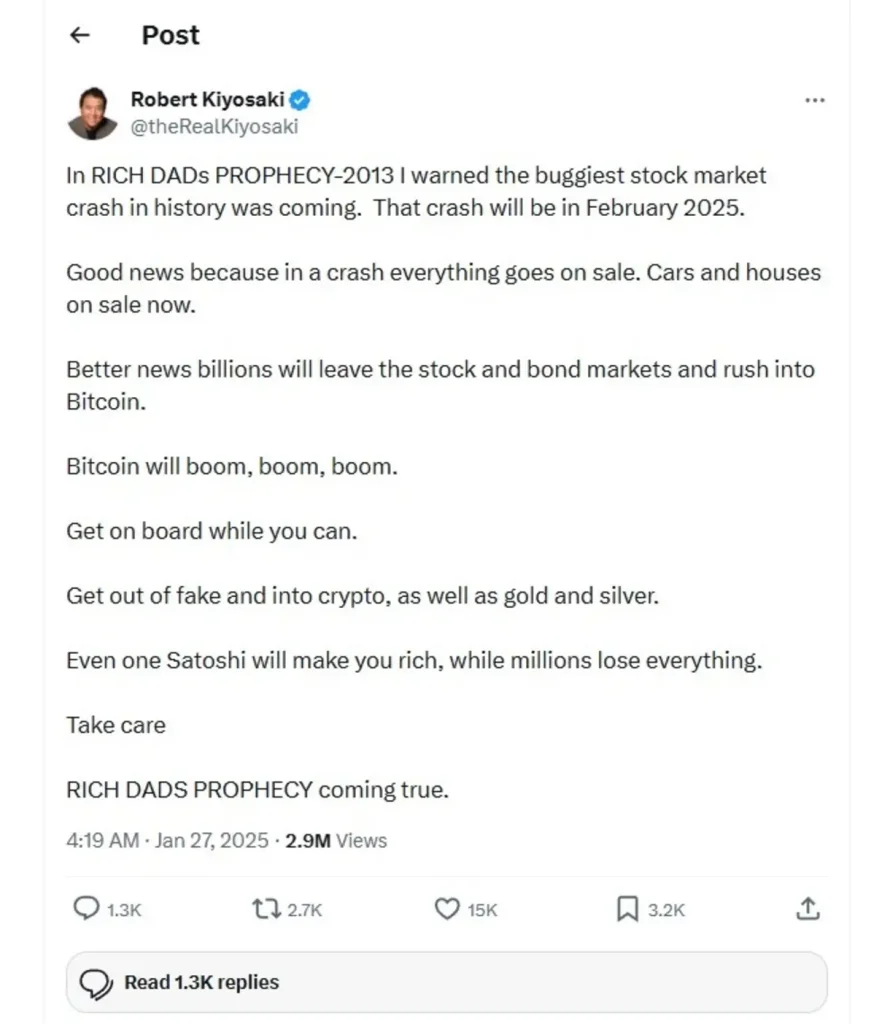
The idea was that billions of dollars would flee traditional markets due to an enormous liquidity rug pull. Kiyosaki predicted that Bitcoin would explode as people panicked out of the S&P 500.
And for a while, the markets experienced significant turbulence in early 2025. But, they didn’t crash in the way Kiyosaki described. The S&P 500 saw its worst day of the year in early March (dropping 1.7%), and the Nasdaq fell into correction territory (a 10% drop from its peak).
Though a 10% drop is painful for retail investors, it falls far short of the “biggest crash in history” label. For context, the 1929 and 2008 crashes involved 50%+ declines.
Bitcoin to $100k by June 2024
Perhaps his most visible miss within the crypto community, Kiyosaki was riding the wave of ETF excitement in early 2024. So, he repeatedly staked his reputation on a specific target: Bitcoin at $100,000 by June 2024.
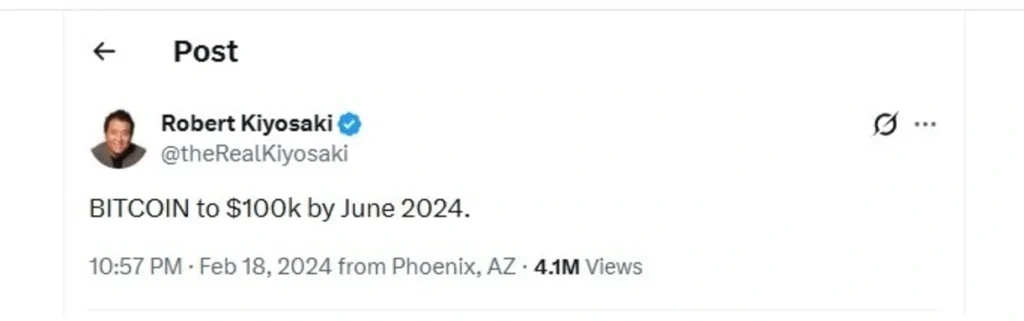
In his defense, the reasoning was sound. Institutional inflow from BlackRock and Fidelity was a catalyst. However, Bitcoin spent the summer of 2024 in a grueling sideways chop, dropping as low as $58,000 in early July.
It took nearly another six months of consolidation before Bitcoin finally approached the six-figure milestone in the 2025 cycle. Investors who used high-leverage positions based on Kiyosaki’s June deadline were effectively washed out by the very volatility he often praises.
Bitcoin to $750,000 (March 2026)
In what might be his most ambitious/outrageous prediction yet, Kiyosaki warned that a major market collapse is on the horizon. He even went so far as to say that the conditions have created the “biggest bubble” in history, suggesting that global markets are nearing a breaking point.
He predicted that gold could reach $35,000 per ounce, whereas silver could climb to $200 per ounce within a year after the crash. Despite an unknown catalyst, Kiyosaki also forecast Ethereum reaching $95,000 over the same timeframe. We’ll just have to wait and see for this one.
How Kiyosaki sees crypto
This is arguably the most interesting aspect of Kiyosaki’s persona.
For decades, Robert was the ultimate gold advocate. He lived by a simple rule that if you can’t hold something in your hand, it’s not real.
To him, Bitcoin wasn’t a revolution. In fact, he initially viewed Bitcoin as “digital magic money” that lacked the physical utility of his beloved gold and silver. He often used the term to mock Bitcoin during his early skeptic phase.
Nonetheless, his stance shifted when he realized that Bitcoin’s supply is finite during the height of the COVID-19 pandemic. When the Federal Reserve began printing trillions of dollars, the ‘Rich Dad Poor Dad’ author saw a currency crisis. He realized that while the government could print infinite dollars, it couldn’t print more than 21 million Bitcoin.
So, he began calling it “The People’s Money,” placing it alongside Gold (“God’s Money”) and the US dollar (“Fake Money”). Just like that, Bitcoin became “real” because its supply is limited by math.
What’s more, he treats the king of cryptocurrencies as a store of value, even suggesting that it might be superior to gold because it’s easier to transport across borders during a systemic collapse.
Inclusion of Ethereum and Solana
While the crypto community knows him for his Bitcoin advocacy, by 2024, Kiyosaki’s Bitcoin-only stance started showing cracks. He began to listen to analysts who argued that if Bitcoin is the gold of the internet, the world still needed silver.
That must have made tremendous sense to Kiyosaki, as he embraced Ethereum not as a store of value, but as industrial infrastructure. This sudden love came from the fact that Ethereum is the rails for everything Kiyosaki valued about crypto: stablecoins, tokenized real estate, and smart contracts.
Convinced that Ethereum is essential for the future of global payments, he started telling his followers that buying ETH at $4,000 was like buying Bitcoin at $4,000 – a generational second chance.
But while Kiyosaki urges holding Bitcoin and Ethereum alongside traditional hard assets, what’s surprising is his support for Solana.
By early 2025, Kiyosaki began including Solana in his Top 3 crypto picks. His rationale was centered on the blockchain’s speed and cost. He views Solana as the retail version of Ethereum. It’s faster, cheaper, and more likely to be adopted by the masses who are priced out of high Ethereum gas fees-
Now, the reason why Kiyosaki expanded his hard asset philosophy is not decentralization or the tech at hand.
I dare say that, unlike most crypto supporters, Kiyosaki doesn’t care about that. He cares about inflation-proofing. It’s highly likely that if Bitcoin had a supply of 100 trillion, he would hate it. He loves these three specifically because they represent a breakout from the centralized banking system he has spent a huge chunk of his life fighting.
Which brings us to:
The problem with Robert Kiyosaki’s predictions
Kiyosaki’s track record is indicative of his firm belief in an economic disaster that is bound to happen any day now, even though these phantom crashes never quite materialized on schedule. Points go to his remarkably consistent core thesis.
After all, for all these years, he has sounded the same horn: the global debt-based system is extremely fragile, and the only escape is through tangible assets.
| Event | Kiyosaki’s prediction | Actual outcome | Verdict |
| 1990s real estate | Leveraged debt to buy distressed multifamily units in Phoenix and Texas following the S&L crisis | Built a massive portfolio of rental units that provided “private central bank” income through the 2000s boom | Hit |
| 2008 housing crash | Predicted a “catastrophic” event due to a housing bubble and the 401(k) system | Lehman Brothers and Bear Stearns collapsed in 2008, vindicating his multi-year warning | Hit |
| 2016 market crash | Predicted a 2016 collapse “dwarfing 2008” due to Baby boomer retirement distributions | The S&P 500 rose 9.5% in 2016 and gained over 60% by the end of 2019 | Miss |
| 2023 gold surge | Predicted gold would break its $2,100 ceiling as central banks ditched US Treasuries | Gold embarked on a historic rally, reaching $4,600/oz by early 2026 | Hit |
| March 2024 “biggest crash” | Warned a global collapse would begin in March 2024, targeting the “private debt bubble” | Markets hit dozens of new all-time highs in March 2024, fueled by the NVIDIA-led AI boom | Miss |
| Bitcoin at $100k (June 2024) | Staked his reputation on Bitcoin hitting $100,000 by June 2024 | Bitcoin spent the summer in a “sideways chop,” dropping to $58k in July; it didn’t hit $100k until the 2025 cycle | Miss |
| Feb 2025 “liquidity rug pull” | Claimed the “biggest crash in history” would arrive in Feb 2025 as billions fled traditional markets | The S&P 500 saw only a 1.7% dip in early March; the correction was painful but far from a “historic” 50% collapse | Miss |
| March 2026 Bitcoin to $750,000 | Warned of a major market collapse and the “biggest bubble” in history, which will result in Bitcoin reacing $750,000 | To be seen | TBD |
When you think about it, Kiyosaki’s entire ‘Rich Dad’ philosophy is essentially a 25-year-long advertisement for the debasement trade. When he calls the dollar “fake money” or “toast,” he is describing currency debasement. He wins when the “denominator” (the dollar) gets weaker, making his “numerator” (Bitcoin/Gold) look much more expensive.
The man likes the sound of his voice, or to be more precise, text. There’s nothing wrong with that. Plenty of people do the same. Otherwise, there wouldn’t be so many influencers.
But as mentioned before, Kiyosaki’s words resonate with a fair share of people. Some follow him intently, not to mention blindly.
When analyzing his numerous misses (perhaps too many of them), one thing becomes clear:
there is a systemic pattern of timing versus thesis.
Kiyosaki prioritizes the message over the math. He was and remains a master of the attention economy. By predicting a crash every year, he ensures his relevance. So, when the market eventually corrects, he can claim that his prophecy was fulfilled.
The danger here isn’t his macro-philosophy, which is often insightful. There is logic, or at the very least, some semblance of it in his words.
For instance, in a recent post on X, Kiyosaki argued that cash can play an important role during financial crashes. He even admitted that he used quite a bit of it to buy additional oil wells, gold, silver, and Bitcoin. He generally avoids holding cash because it loses value to inflation, but acknowledges its power during a liquidity freeze.
The issue is his precision. In the world of crypto and high-stakes finance, being right on the concept but wrong on the date is often the same thing as being wrong.
For the crypto investor, his misses serve as a vital lesson: macro-skepticism is an insurance policy, not a trading strategy. If you trade on his timing, you will likely get liquidated. If you listen to his core thesis (buy scarce assets), you may thrive. The danger is confusing the two.
All of this begs the question:
Should you listen to Robert Kiyosaki?
I’m going to say probably not in terms of taking his advice for granted. For my liking, there is just too many doomsday peddling in his messages to take them seriously. You should take Kiyosaki’s warnings with a huge grain of salt.
That said, it’s far from everything he says being complete BS. Beneath all the sensationalism, there is a bedrock of common sense that even his fiercest critics can’t argue with
When all is said and done, there is one thing Robert Kiyosaki said that makes perfect sense:
“Don’t invest in what you don’t know. Learn first then invest.”
With today’s “get rich quick” AI tokens and high-risk private debt, that might be the most valuable advice he’s ever given.
How do you rate this article?
Subscribe to our YouTube channel for crypto market insights and educational videos.




Join our Socials
Briefly, clearly and without noise – get the most important crypto news and market insights first.




8
Also read
Similar stories you might like.
Altcoins
Ripple CEO Says U.S. Can’t Survive “Gensler 2.0”
Rokas | 2026-03-31

Blockchain
Crypto Apps Exposed to Risk After Malicious Axios Versions Go Live
Rokas | 2026-03-31
Industry
Trump Backs Bitcoin, Stablecoins In New Pro-Crypto Push
Ana | 2026-03-30
Industry
Canada Proposes Ban on Crypto Political Donations
Ana | 2026-03-30
Bitcoin
Bitcoin Miners Turn to AI as Profits Collapse
Ana | 2026-03-30
Bitcoin
Mystery Deepens as $400M ‘Lost’ Bitcoin Suddenly Moves
Rokas | 2026-03-30
Altcoins
Kiyosaki Warns of Inflation Crisis, Lists 6 Safest Investments for 2026
Rokas | 2026-03-30
Altcoins
TRON Moves Toward Institutions: How Anchorage Support Could Influence TRX Price
Azeez | 2026-03-29

Altcoins
Sui Approaches 800K Users as Token Unlock Nears — Can Price Stay Resilient?
Azeez | 2026-03-29

Altcoins
Could SpaceX’s IPO Be the Catalyst That Sends Dogecoin Above $0.10?
Azeez | 2026-03-29