








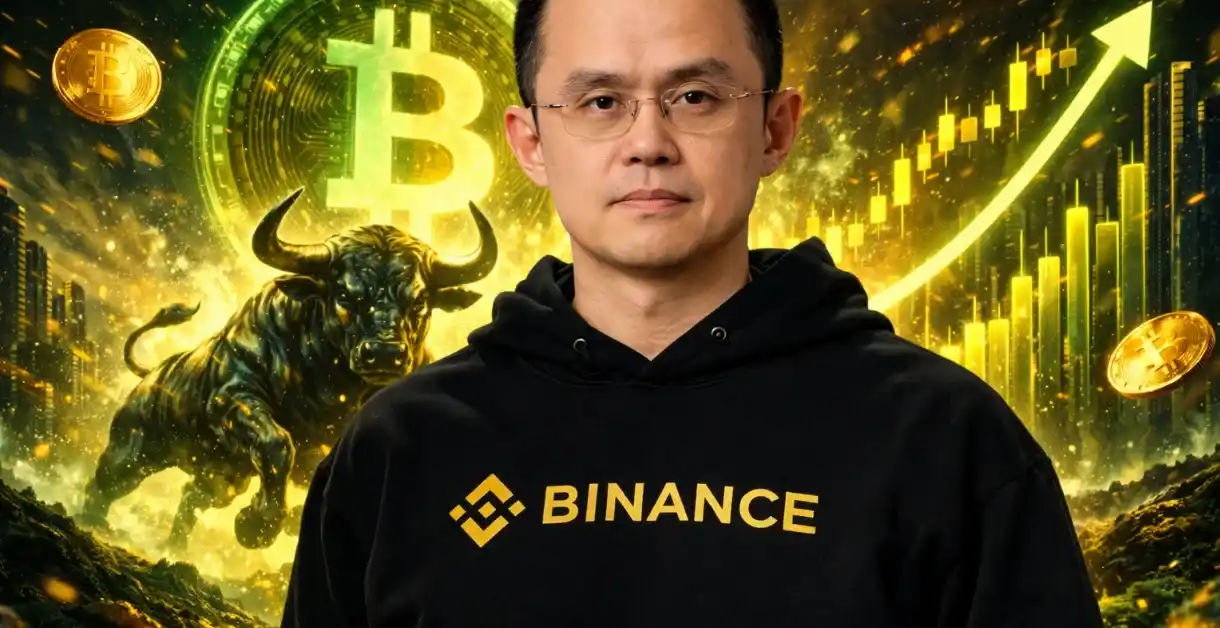
Binance CEO crypto. Source: TechGaged / Shutterstock
CZ Explains Why Quantum Computing Won’t Kill Crypto
In Brief
- • CZ says crypto can adapt to quantum threats over time.
- • The main challenge is coordinating upgrades across networks.
- • Users may need to move funds during future transitions.
Quantum computing fears are picking up after new research suggested future machines could break today’s crypto security. Binance CEO Changpeng Zhao responded directly, saying the industry doesn’t need to panic. His argument is that crypto can upgrade, and that’s what matters for long-term survival.
Upgrades are possible, coordination is the real problem
As it happens, the concern comes from recent work tied to Google Quantum AI showing how quantum systems could target encryption used in Bitcoin (BTC) and other networks.
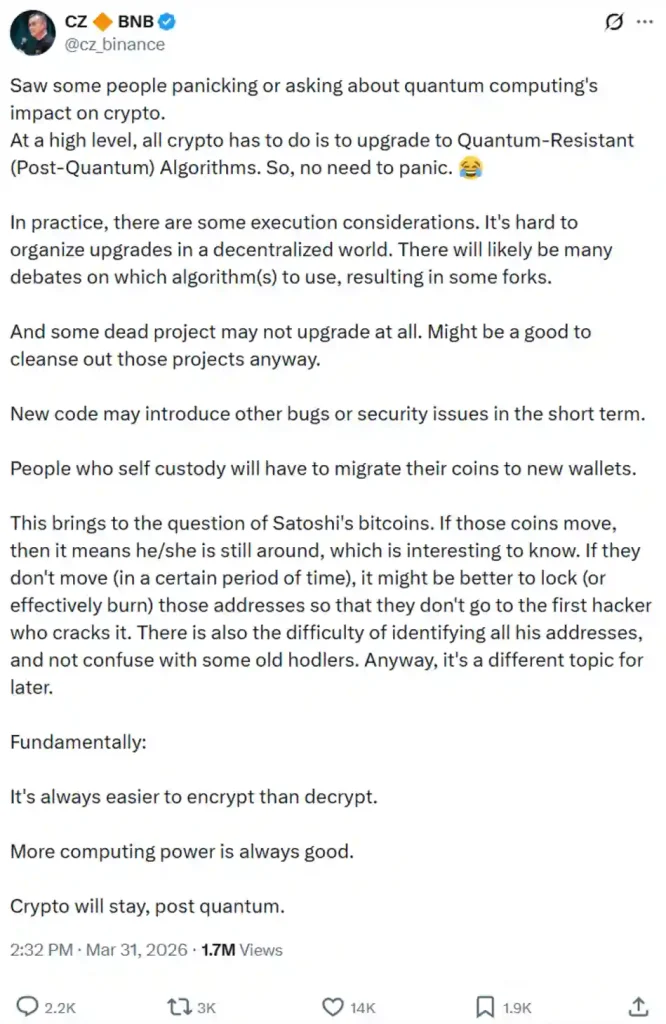
CZ’s position, shared in an X post on March 31, is grounded in how crypto has evolved before. Security standards change, algorithms get replaced, and systems move forward. None of that is new. What’s changed is the scale of coordination now required.
Crypto networks have no central authority pushing updates. Decisions move through consensus, which means debate, delays, and sometimes forks. Different groups could push competing quantum-resistant solutions, potentially splitting networks or producing parallel versions of the same blockchain.
“It’s hard to organize upgrades in a decentralized world. There will likely be many debates on which algorithm(s) to use, resulting in some forks. And some dead projects may not upgrade at all. Might be good to cleanse out those projects anyway.”
There’s also a short-term problem that doesn’t get enough attention: any major upgrade introduces new code, and new code breaks things. Bugs and rushed implementations are common in transition periods.
What this means for users and old wallets
CZ flagged something more practical. People who self-custody will likely need to migrate funds to new wallet formats once upgrades roll out, and that’s a real inconvenience for long-term holders who rarely touch their coins.
Then there’s the question of inactive wallets. Early Bitcoin addresses, including those linked to Satoshi Nakamoto, could become exploitable if legacy cryptography fails. That opens an uncomfortable debate: should those coins stay untouched, or should networks act to prevent them from being claimed by whoever gets there first?
Meanwhile, Bitcoin security researcher Justin Drake estimates a 10% chance of a so-called ‘Q-Day’ happening by 2032, when quantum computers, using a method called Shor’s algorithm, could crack widely used encryption like the one behind the original cryptocurrency.
That said, crypto venture capitalist Luke Martin pointed out that the mysterious Bitcoin creator Satoshi Nakamoto has considered the possibility of quantum computing presenting a risk to crypto, and said that:
“True, if it happened suddenly. If it happens gradually, we can still transition to something stronger. When you run the upgraded software for the first time, it would re-sign all your money with the new stronger algorithm.”
All things considered, quantum computing is a real challenge with no clear timeline for becoming a real threat. Crypto doesn’t break overnight. It changes, sometimes slowly, sometimes painfully. This would be another one of those moments.
How do you rate this article?
Subscribe to our YouTube channel for crypto market insights and educational videos.






Join our Socials
Briefly, clearly and without noise – get the most important crypto news and market insights first.
Most Read Today
1
Robert Kiyosaki Prediction Accuracy: Full Report (1990–2026)
2Bitcoin Block 666666 Hides Message That’s Hard To Ignore
3Hyperliquid (HYPE): Breakout or Breakdown After April 6 Token Unlock?
4Is It a Good Time to Buy Crypto Right Now?
5As Qubic Shifts to DOGE and AI, Monero’s Hashrate Faces a Rebalancing—What’s Next for XMR?
Latest






8
Also read
Similar stories you might like.
Altcoins
Solana Builds Real-Time Threat Detection and Response Network
Rokas | 2026-04-07
Altcoins
SUI at Crossroads: AI MemWal, USDsui and Inflows Could Drive Price Performance
Azeez | 2026-04-07
Altcoins
Chainlink’s ETF, Coinbase Deal, and Dev Surge – What’s Coming?
Azeez | 2026-04-07
Bitcoin
Bitcoin Spikes On War Headlines While Debate Heats Up
Ana | 2026-04-06
Bitcoin
Bitcoin Block 666666 Hides Message That’s Hard To Ignore
Ana | 2026-04-06
Altcoins
XRP Risks Liquidation at This Level as Leverage Climbs
Ana | 2026-04-06
Bitcoin
Circle Combines Wrapped Bitcoin Launch With Quantum-Ready Arc Blockchain
Rokas | 2026-04-06
Bitcoin
Analyst Sees Bitcoin Flat for Years Before Multi-Million Breakout
Rokas | 2026-04-06
Altcoins
HBAR ETFs Secure a Top 5 Spot in Inflows—Breakout Imminent?
Azeez | 2026-04-05
Altcoins
Ethereum’s Institutional Advantage in 2026: Why Smart Money Still Chooses ETH
Azeez | 2026-04-05