













Bitcoin coins with neon lighting. Source: TechGaged / Shutterstock
Top Crypto Investor Maps Bitcoin’s Path Through AI Shock and War Risk
In Brief
- • Arthur Hayes says Bitcoin is in a “no-trade zone.”
- • AI deflation and geopolitical risks are creating uncertainty.
- • Bitcoin’s next move depends on global liquidity expansion.

Arthur Hayes says Bitcoin (BTC) is stuck in a “no-trade zone” as macro forces collide, with AI-driven job losses and geopolitical escalation creating a highly uncertain backdrop. He argues the key driver is global liquidity, which will ultimately determine Bitcoin’s direction. For now, Hayes outlines multiple scenarios where Bitcoin first struggles before reacting to eventual money printing.
AI deflation and war create macro dead zone
In a post published on April 16, Hayes points to two dominant forces behind his cautious stance: the rise of AI replacing knowledge workers and escalating tensions around Iran and global energy flows.
On the AI side, he argues agentic systems could trigger a deflationary shock similar to the 2008 crisis. Consumer debt becomes the fault line, as job losses reduce borrowers’ ability to service loans, putting pressure on banks and forcing eventual intervention.
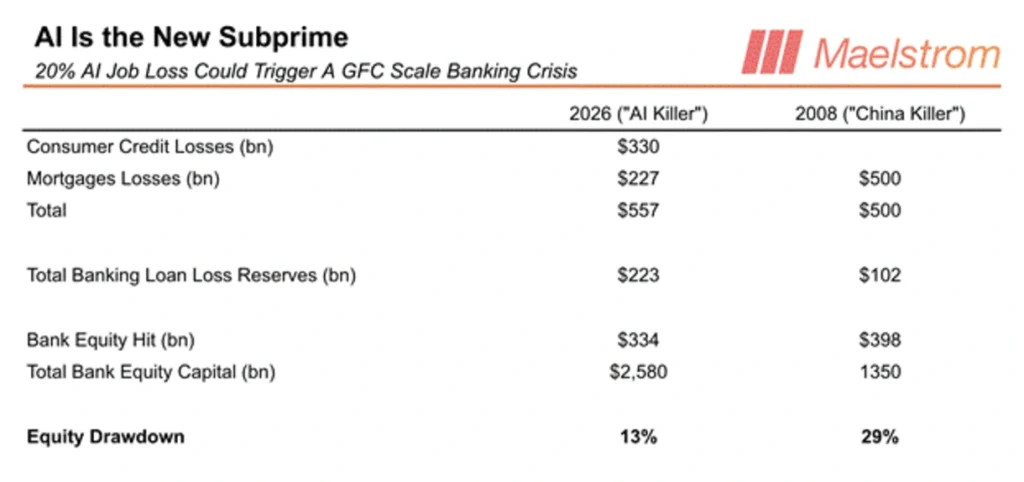
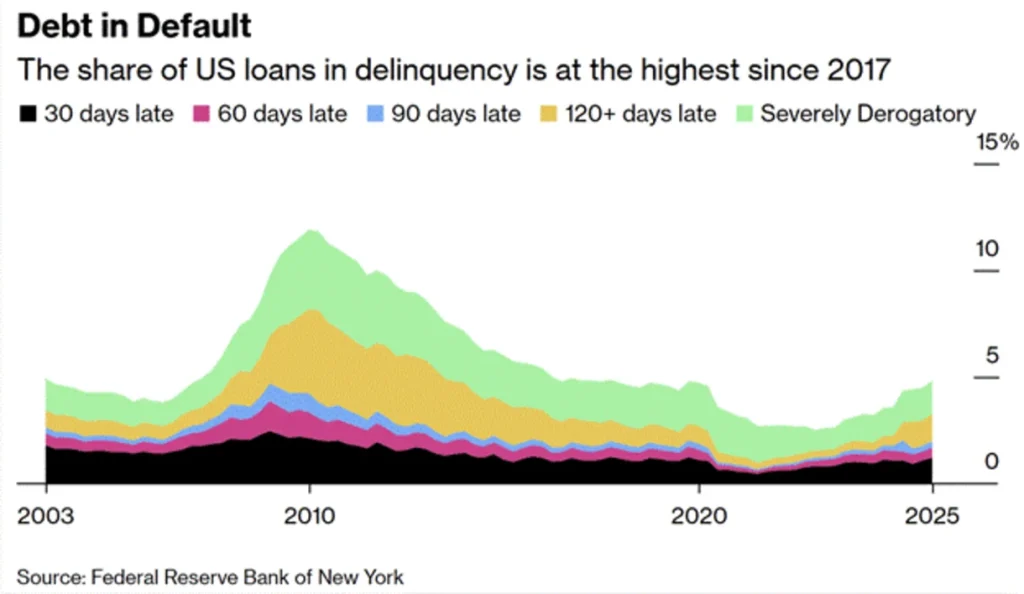
Data already shows rising delinquencies across consumer credit and student loans, even before large-scale layoffs hit. Hayes argues this sets up a structural risk where banks face mounting losses, requiring central bank support.
At the same time, geopolitical risk adds another layer. The Strait of Hormuz remains a key pressure point, with potential disruptions to oil flows capable of triggering inflation shocks and market instability.
“Since the war began, on a net basis, foreign securities holdings with the Fed fell $63 billion. I’m using this as a proxy for the directionality of foreign holdings of treasuries and other dollar securities like stocks.”
Hayes frames this as a macro environment where both deflation (from AI) and inflation (from commodities) can hit simultaneously, making traditional positioning difficult.
Earlier in January, the BitMEX co-founder said Bitcoin could be poised for fresh all-time highs in 2026 in a prediction centered on macro liquidity conditions, particularly the availability of the U.S. dollar. He referred to the time when the Fed was reducing its balance sheet and financial conditions became more restrictive, and argued that those dynamics were now shifting.
Arthur Hayes: Bitcoin depends on liquidity not interest rates
Hayes’ core thesis is that Bitcoin follows the quantity of money, not the price of money. He argues that even if central banks raise rates to fight inflation, they will still be forced to print money to fund deficits and bail out banks. That combination creates a split outcome across assets.
As shown in recent market data, short-term yields have surged above policy rates, signaling tightening conditions. At the same time, Bitcoin has started to decouple slightly from tech stocks, hinting at its sensitivity to liquidity rather than growth expectations.
In practical terms, Hayes sees a consistent pattern across scenarios. In a risk-off event, Bitcoin initially falls alongside equities as investors de-risk and meet margin calls. Only after markets break and central banks step in with liquidity does Bitcoin begin to rally.
“As volatility rises, big US tech stock prices fall, and Bitcoin will have a hard time meaningfully rallying. As investors de-risk their portfolios because of higher volatility and lower prices, investors sell Bitcoin to meet margin calls. Only when things get bad enough will Bitcoin rise, as expectations of a bailout become the consensus.”
He outlines three main paths.
Should tensions ease, Bitcoin may bounce but remains capped until liquidity returns. If global trade shifts away from the dollar toward gold and yuan, markets face stress that eventually triggers money printing. If energy markets break due to conflict, the resulting shock forces aggressive monetary expansion.
As of April 17, BTC is trading at the price of $76,211.82, up 2.1 % on the day, gaining 6 % across the week, and advancing 3.1% over the past month, according to the latest information.
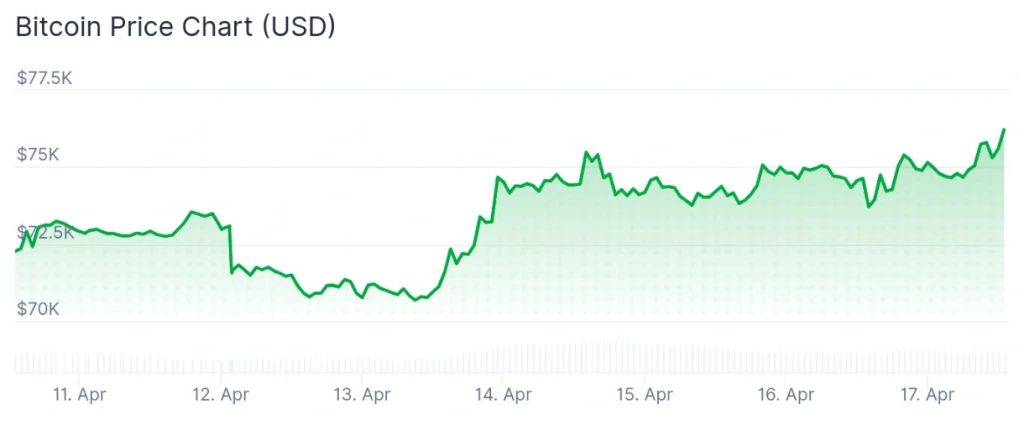
Across all cases, the endgame is the same. Bitcoin’s real upside begins when central banks ‘press the button’ and expand liquidity again. Until then, Hayes remains cautious, watching for a potential retest of lower levels before a more durable move higher.
How do you rate this article?
Subscribe to our YouTube channel for crypto market insights and educational videos.






Join our Socials
Briefly, clearly and without noise – get the most important crypto news and market insights first.
Most Read Today
1
Inverse Kiyosaki Strategy Explained: The Cost of Sitting Out
2Is Bitcoin a CIA Project? New Claims Spark Fresh Debate
3BNB Burn Signals Potential Price Shift — Here’s What Traders Are Watching
4Tokenized Real-World Assets Already Reached $27B — Why This Still Matters for Crypto’s Future
5Bitcoin Inflows Spike as $75K Caps Rally
Latest






8
Also read
Similar stories you might like.

Altcoins
Bitcoin Rallies as Oil Drops on Hormuz Reopening
Ana | 2026-04-17

Bitcoin
Billionaire Tim Draper Doubles Down on $250K Bitcoin Target; Here’s Why
Ana | 2026-04-17

Altcoins
New Record: Ethereum Hits 200M Transactions as Network Activity Breaks Out
Rokas | 2026-04-17

Bitcoin
Bitcoin to $0? Nobel Physicist’s Quantum Warning Jolts Crypto Again
Rokas | 2026-04-17

Beginners
Inverse Kiyosaki Strategy Explained: The Cost of Sitting Out
Sead | 2026-04-17

Bitcoin
Bitcoin Inflows Spike as $75K Caps Rally
Ana | 2026-04-16

Altcoins
BNB Burn Signals Potential Price Shift — Here’s What Traders Are Watching
Azeez | 2026-04-16

Bitcoin
951 BTC Move Sparks Questions: Is Tether Quietly Accumulating Bitcoin?
Azeez | 2026-04-16

Bitcoin
Bitcoin Core Developers Push Emergency Plan as Quantum Threat Escalates
Ana | 2026-04-16

Altcoins
X Introduces Cashtags and Market Charts in Push Toward Trading
Ana | 2026-04-16