












JPMorgan logo on glass building. Source: TechGaged / Shutterstock
JPMorgan Projects Massive Growth In Tokenized Markets This Decade
In Brief
- • JPMorgan sees tokenized assets reaching $13T by 2030.
- • Institutions are expanding into blockchain-based finance.
- • Growth depends on regulatory clarity and market infrastructure.
JPMorgan Chase says tokenized real-world assets (RWAs) could grow into a $13 trillion market by 2030, pointing to rapid institutional adoption of blockchain-based finance. The estimate comes as banks and asset managers expand into tokenized bonds, funds, and onchain settlement systems. The projection signals that tokenization is moving from early experiments toward becoming core financial infrastructure.
Tokenization moves deeper into traditional finance
According to JPMorgan Chase’s annual report for 2025, tokenized assets have moved away from being a niche concept and are now part of a growing financial ecosystem reshaping how value is stored and transferred.
The bank points to accelerating use of stablecoins and blockchain-based settlement systems as a key driver behind this shift. Tokenization allows onchain representation of traditional assets like bonds and real estate, enabling faster, more transparent settlement and broader investor access.
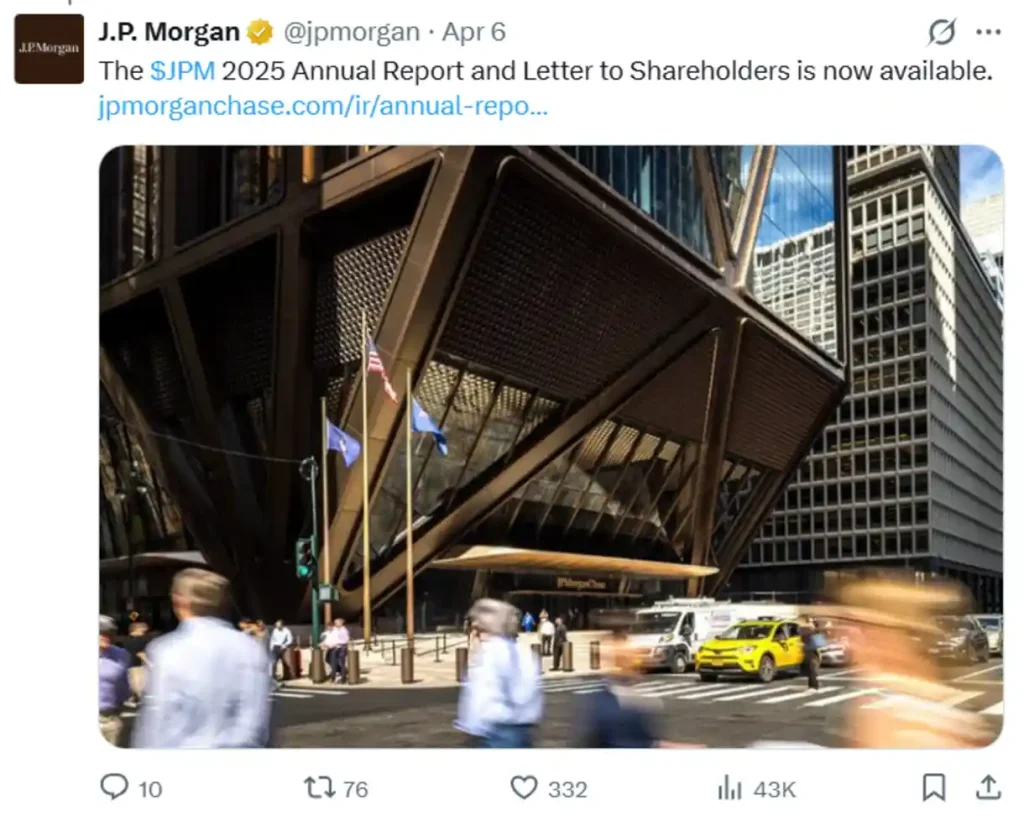
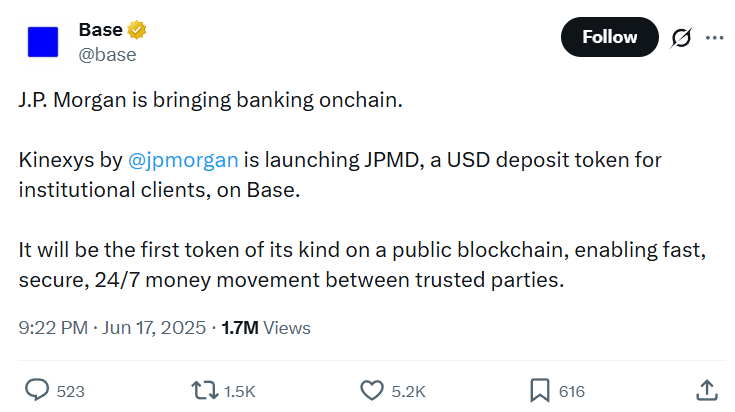
That efficiency is attracting institutions. JPMorgan’s own blockchain platform, Kinexys, has seen transaction volumes grow significantly, and new products like tokenized money market funds and deposit tokens are gaining traction.
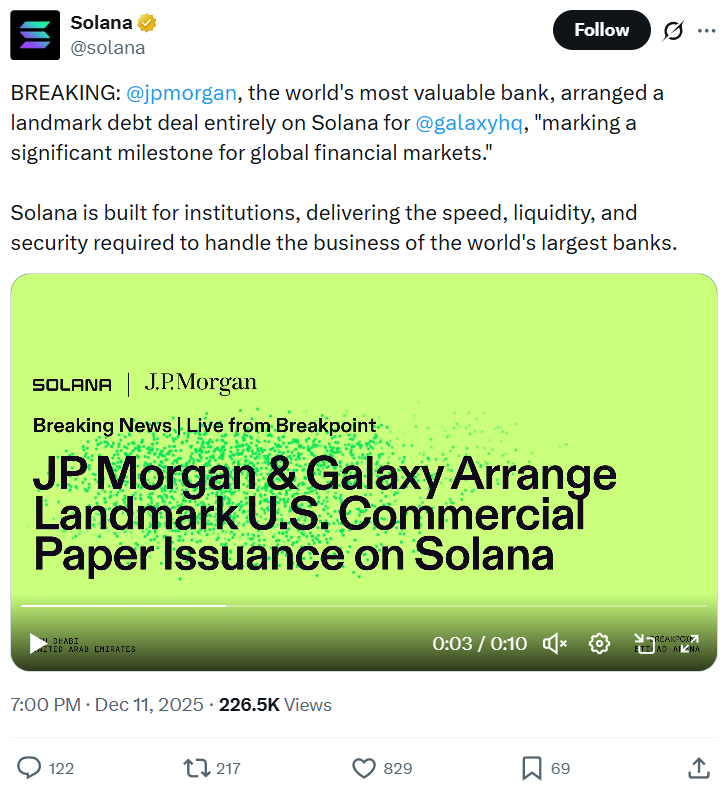
A milestone from three months ago highlights the trend. The first U.S. commercial paper issuance on the Solana was completed using stablecoins and digital custody, showing that public chains can support institutional-grade transactions.
Growth potential faces regulatory hurdles
Despite the bullish outlook, the tokenized RWA market remains in its early stages. Current estimates place its size in the tens of billions, far below JPMorgan’s long-term projection. That gap highlights both opportunity and risk.
On one hand, tokenization can unlock liquidity by allowing fractional ownership and near real-time trading. On the other, adoption depends heavily on regulatory clarity and integration with existing financial systems. That’s the key bottleneck.
JPMorgan noted the critical importance of consistent regulatory frameworks to scaling the market, assuring similar treatment of tokenized assets to traditional ones while maintaining safeguards.
Liquidity is another challenge. Though tokenization enables continuous trading in theory, secondary markets remain underdeveloped, limiting broader participation for now. Still, the direction is clear.
As institutions continue building infrastructure and regulators move toward clearer rules, tokenized real-world assets are getting closer to becoming a core pillar of the next financial system rather than an experimental edge case.
How do you rate this article?
Subscribe to our YouTube channel for crypto market insights and educational videos.






Join our Socials
Briefly, clearly and without noise – get the most important crypto news and market insights first.
Most Read Today
1
Crypto’s ‘Middle Class’ Is Shrinking Fast — Mid-Priced Tokens Down 32%
2Robert Kiyosaki Prediction Accuracy: Full Report (1990–2026)
3Bitcoin Block 666666 Hides Message That’s Hard To Ignore
4Hyperliquid (HYPE): Breakout or Breakdown After April 6 Token Unlock?
5Is It a Good Time to Buy Crypto Right Now?
Latest






8
Also read
Similar stories you might like.
Market
Crypto’s ‘Middle Class’ Is Shrinking Fast — Mid-Priced Tokens Down 32%
Jastra | 2026-04-07

Defi
Korea and France Rush Into Crypto Talks as Regulatory Changes Loom
Ana | 2026-04-07
Altcoins
XRP Whales Buying Rises Ahead of Major Ripple XRPL Japan Event
Rokas | 2026-04-07
Altcoins
Solana Builds Real-Time Threat Detection and Response Network
Rokas | 2026-04-07

Altcoins
SUI at Crossroads: AI MemWal, USDsui and Inflows Could Drive Price Performance
Azeez | 2026-04-07

Altcoins
Chainlink’s ETF, Coinbase Deal, and Dev Surge – What’s Coming?
Azeez | 2026-04-07
Bitcoin
Bitcoin Spikes On War Headlines While Debate Heats Up
Ana | 2026-04-06
Bitcoin
Bitcoin Block 666666 Hides Message That’s Hard To Ignore
Ana | 2026-04-06
Altcoins
XRP Risks Liquidation at This Level as Leverage Climbs
Ana | 2026-04-06
Bitcoin
Circle Combines Wrapped Bitcoin Launch With Quantum-Ready Arc Blockchain
Rokas | 2026-04-06