











Judge’s gavel with Bitcoin and padlock. Source: TechGaged / Shutterstock
Two More U.S. States Grant DAOs Legal Recognition
In Brief
- • Alabama granted legal status to DAOs under a new law.
- • The framework allows DAOs to operate as recognized entities.
- • It reduces legal risk for onchain governance structures.
Alabama and West Virginia have become the most recent U.S. states to grant legal status to decentralized autonomous organizations (DAOs). The DUNA Act allows qualifying DAOs to operate as recognized legal entities with rights to own assets and enter contracts. This reduces legal risk for crypto governance structures and gives them a clearer path to operate in the U.S.
What the new law actually changes
The law, signed in Alabama by Governor Kay Ivey, introduces a structure called a decentralized unincorporated nonprofit association (aka the DUNA), according to the April 2 post by a16z’s crypto’s Head of Policy and General Counsel Miles Jennings and Policy Partner Aiden Slavin.
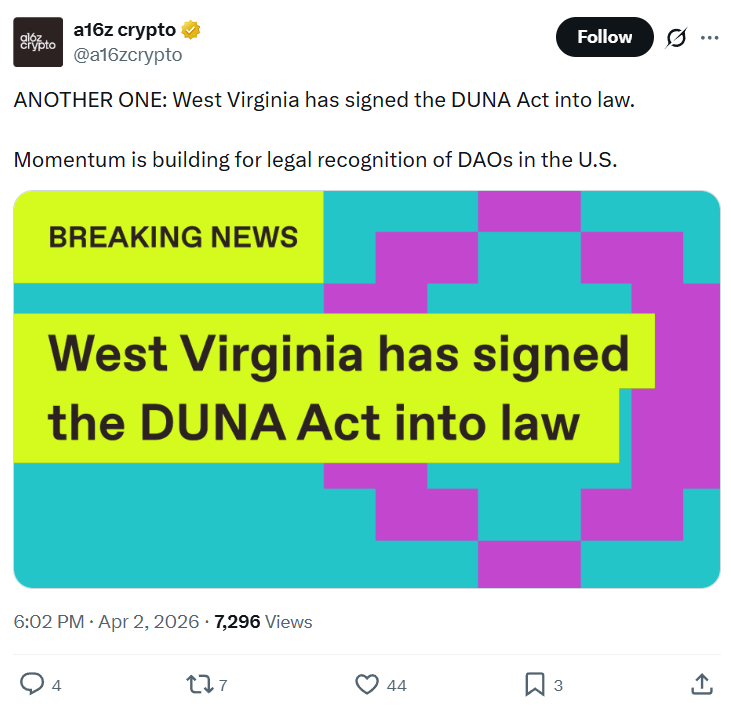
West Virginia followed suit, just 24 hours after Alabama, in a move that Jennings referred to in his X post as “another great step forward for innovation in the U.S,” profusely thanking the persons involved in its enactment.
In simple terms, it turns DAOs from loose online groups into legally recognized entities. That means they can sign agreements, hold property, appear in court, and interact with traditional businesses. Members and contributors are also shielded from personal liability, which has been one of the biggest risks around DAO participation.
The model follows a similar framework first introduced by Wyoming, but Alabama makes a few adjustments. It narrows how membership rights are defined and allows certain distributions that Wyoming restricts.
The core idea stays the same: give decentralized communities a legal wrapper that matches how they actually operate.
What this means for crypto builders
Until now, many DAOs relied on offshore foundations or informal setups. That created problems like legal uncertainty, tax ambiguity, and exposure to unlimited liability, which made it difficult for projects to scale or work with traditional institutions.
This law changes that dynamic: by giving DAOs legal personhood, it removes one of the biggest friction points between onchain governance and the real world.
Jennings and Slavin described the shift as critical for crypto’s future, noting that decentralized governance needs a legal structure that regulators can actually work with:
“As federal crypto market structure legislation moves closer to becoming law, builders need effective domestic legal structures.”
More states are already moving in the same direction. With Wyoming and now Alabama and West Virginia setting the template, DAO structures are starting to move out of the gray zone and into formal legal frameworks.
For builders, that means fewer workarounds and a more direct path to building compliant, onchain organizations inside the US.
How do you rate this article?
Subscribe to our YouTube channel for crypto market insights and educational videos.






Join our Socials
Briefly, clearly and without noise – get the most important crypto news and market insights first.
Most Read Today
1
How Accurate Are Robert Kiyosaki’s Predictions?
2TAO Subnet Reality Check: Revenue vs. Subsidies – What Investors Must Know After the Rally
3This Wall Street Giant Bought Crypto Firm Despite Market Slump
4RenderCon 2026 Preview: What the Upcoming Event Means for RENDER Price and Adoption
5Ripple’s Brokerage Arm Lands Investment-Grade Rating as Expansion Continues
Latest





8
Also read
Similar stories you might like.

Bitcoin
Bitcoin Consolidation Continues as Market Signals Rising Volatility; What’s Next?
Ana | 2026-04-03

Defi
Coinbase Lands OCC Approval in Major U.S. Crypto Shift
Ana | 2026-04-03
Defi
CFTC Sues Arizona, Illinois, Connecticut for Blocking Prediction Markets
Rokas | 2026-04-03
Defi
Ripple’s Brokerage Arm Lands Investment-Grade Rating as Expansion Continues
Rokas | 2026-04-03

Altcoins
NEAR Horizon: Is the Ecosystem Ready for the Next Wave of Mass Adoption?
Azeez | 2026-04-03
Defi
Major EU Bank CaixaBank Moves Into Crypto Under MiCA
Ana | 2026-04-02

Blockchain
Solana-Based Drift Protocol Halts Operations After Security Breach; What Happened?
Ana | 2026-04-02
Defi
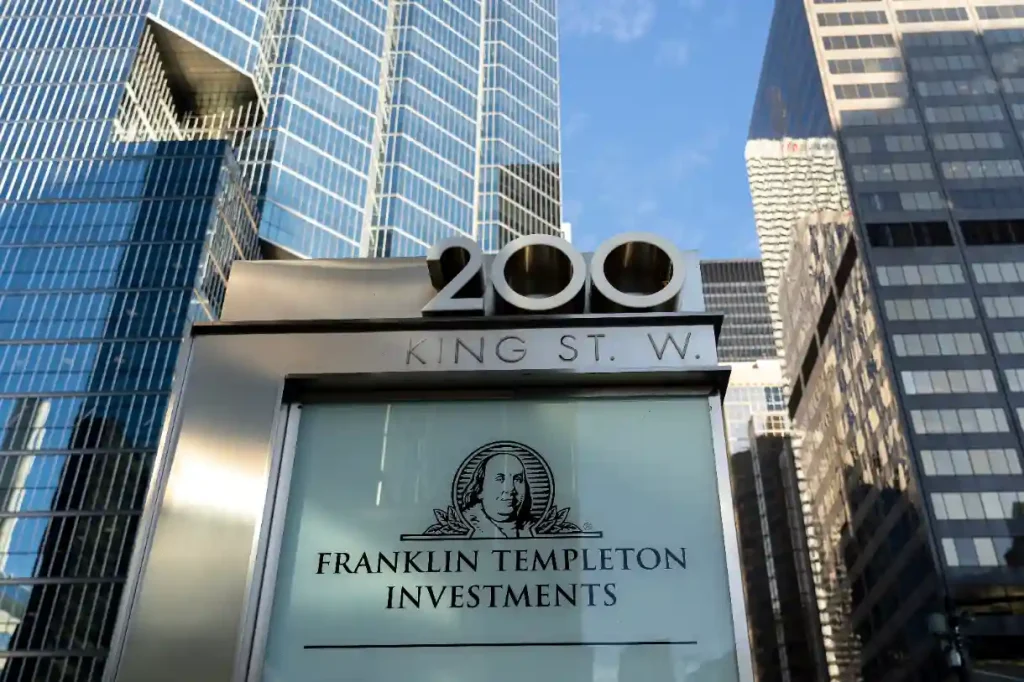
This Wall Street Giant Bought Crypto Firm Despite Market Slump
Rokas | 2026-04-02

Defi
Ripple Launches System Letting Firms Manage Crypto Like Cash
Rokas | 2026-04-02

Altcoins
RenderCon 2026 Preview: What the Upcoming Event Means for RENDER Price and Adoption
Azeez | 2026-04-02