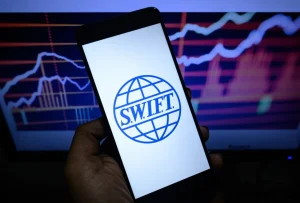











SWIFT phone screen. Source: TechGaged / Shutterstock
Swift Tests Blockchain System For Global Payments
In Brief
- • SWIFT is building a blockchain-based system for global payments.
- • The platform uses tokenized deposits for faster, 24/7 transfers.
- • Live testing with real transactions is expected soon.
Ad
SWIFT is moving into the next phase of its blockchain strategy, announcing it is now building a working version of its shared ledger system for cross-border payments. The goal is to enable banks to send money globally 24/7 using tokenized deposits instead of relying on slower, traditional systems. The first version, called a minimum viable product (MVP), should go live with real transactions later this year.
What Swift is actually building
In simple terms, Swift is creating a shared digital ledger that banks can use to coordinate payments between each other.
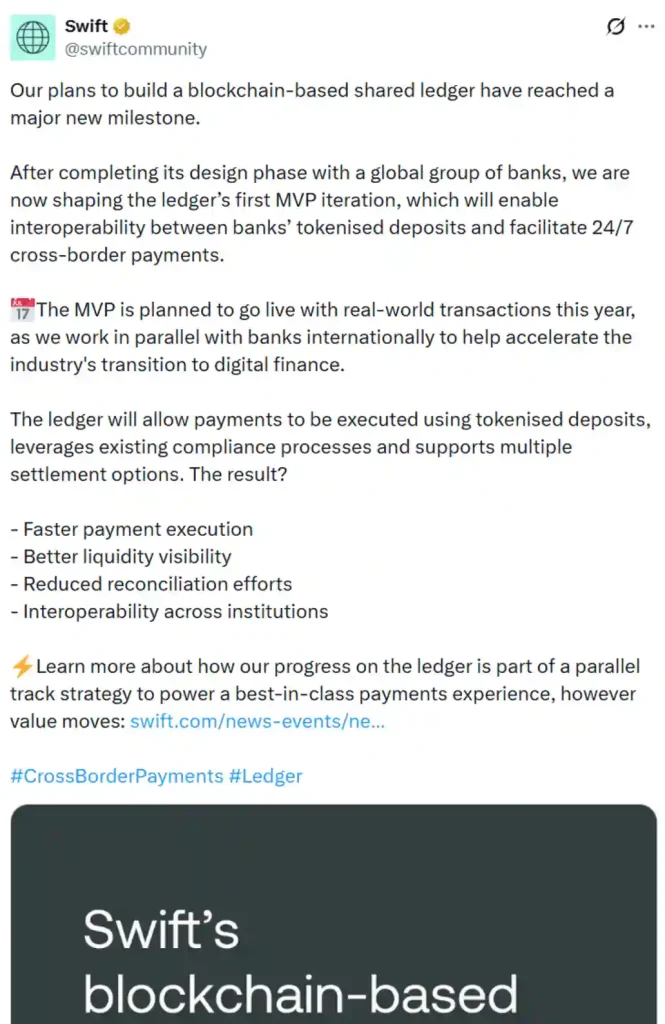
This means payments could run 24/7, instead of only during banking hours, transfers between countries could become faster and more predictable. Banks would use tokenized versions of money (digital representations of deposits) and the system would keep existing banking rules and compliance in place.
Importantly, banks still control their own money and accounts. The ledger acts more like a coordination layer, not a replacement for the banking system, according to Swift’s press release published on March 30.
The system is being built using an Ethereum-compatible (EVM) setup based on Hyperledger Besu. That means it can connect to the broader digital asset ecosystem while still operating within Swift’s existing infrastructure. In the words of Jonathan Ehrenfeld, who leads the Swift ledger strategy:
“We’re focused on delivering the best possible cross-border payments experience, whatever form value takes. (…) Adding a blockchain-based ledger to our infrastructure will bring the benefits of digital finance into the ecosystem seamlessly and safely, at scale and without compromising the trust and resilience that are essential to global finance.”
Instead of replacing current systems, Swift is adding blockchain as an extra layer to improve how banks communicate and settle payments. Swift connects more than 11,500 institutions across 200+ countries, so even small improvements can have a big global impact.
The main benefits banks are aiming for include faster payment execution, better visibility of funds in transit, less manual reconciliation work, and easier coordination between institutions. For users, this could eventually mean cheaper, faster international transfers with clearer fees and fewer delays.
What happens next
Banks involved in the pilot, including HSBC and Standard Chartered (which earlier in February partnered with B2C2 to broaden institutional access to digital assets and crypto liquidity services), will soon begin facilitating real transactions using tokenized deposits, testing how the system performs in live conditions.
At the same time, Swift is working on new rules to improve transparency and speed for everyday payments, including upfront costs and instant settlement where possible.
All things considered, traditional finance is not being replaced overnight, but it is steadily evolving. Swift’s move shows that even the core infrastructure of global banking is now adapting to blockchain and digital assets.
How do you rate this article?
Subscribe to our YouTube channel for crypto market insights and educational videos.






Join our Socials
Briefly, clearly and without noise – get the most important crypto news and market insights first.






8
Also read
Similar stories you might like.

Blockchain
Crypto Apps Exposed to Risk After Malicious Axios Versions Go Live
Rokas | 2026-03-31
Bitcoin
Bitcoin Miners Turn to AI as Profits Collapse
Ana | 2026-03-30

Bitcoin
Mystery Deepens as $400M ‘Lost’ Bitcoin Suddenly Moves
Rokas | 2026-03-30

Industry
McLaren Joins Hedera Network as HBAR Moves Higher After Announcement
Rokas | 2026-03-25
Altcoins
Ethereum Development Advances With New Block Model
Ana | 2026-03-25

Altcoins
Morgan Stanley: Wall Street’s Crypto Shift Was Years in the Making
Rokas | 2026-03-25

Research
Stablecoins Are Quietly Rewiring Global Finance, And Most People Haven’t Noticed
Sead | 2026-03-20