










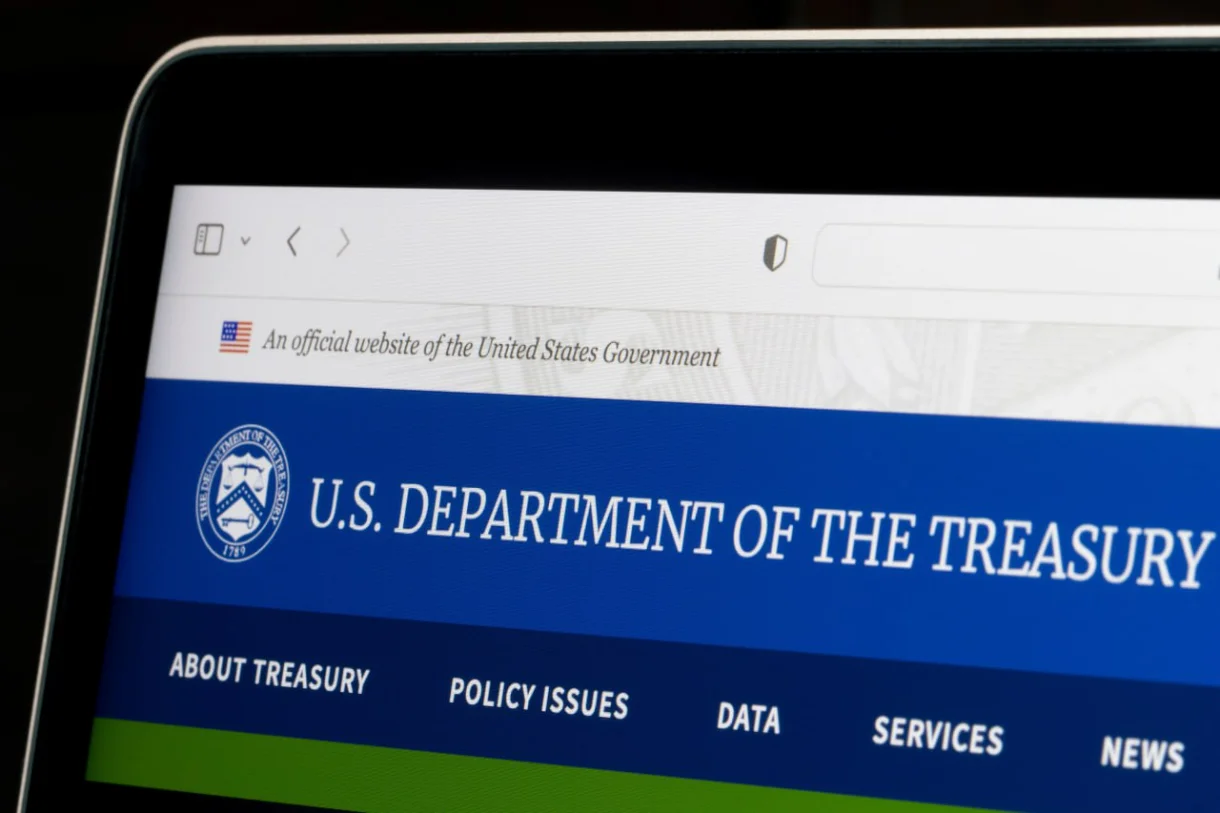
U.S. Department of the Treasury website displayed on screen. Source: TechGaged / Shutterstock
U.S. Treasury Signals Possible Pause on Crypto Mixer Ban Over Privacy Concerns
In Brief
- • Treasury says crypto mixers can have legitimate privacy uses.
- • Report recommends pausing some regulatory restrictions.
- • Debate continues over privacy versus illicit finance risks.
Ad
A new report from the U.S. Treasury Department says crypto mixer services can have legitimate privacy uses and recommends that lawmakers pause certain regulatory proposals targeting them. The document was submitted to Congress as part of research mandated by the GENIUS Act, which requires the Treasury to examine technologies used to combat illicit finance involving digital assets.
Treasury Says Mixers Also Serve Legitimate Purposes
Crypto mixers are services that obscure blockchain transaction trails by pooling or splitting digital asset transfers across multiple wallets. These tools have frequently been associated with money laundering, sanctions evasion, cybercrime, and other ill-natured practices, particularly in cases involving ransomware groups and North Korean hacking operations.
However, the Treasury report notes that mixers are not exclusively present in illicit purposes. According to the document from March 2026, lawful users may rely on mixing services to protect financial privacy when interacting with public blockchains. As it reads:
“Lawful users of digital assets may leverage mixers to enable financial privacy when transacting through public blockchains. For instance, individuals may use mixers to protect sensitive information on personal wealth, business payments, or charitable donations from appearing on a public blockchain.”
Since most blockchains operate as transparent ledgers, anyone can otherwise trace and analyze wallet activity. The Treasury also noted that privacy concerns could become more significant as digital assets increasingly become part of everyday payments and financial services.
Recommendation To “Hold” Proposed Mixer Restrictions
Though acknowledging their potential benefits, the report also stresses that criminal actors frequently exploit mixers as they seek to obscure stolen or illicit funds.
Cybercriminal groups, ransomware operators, and state-linked hackers have historically used mixing services to complicate blockchain tracing efforts. The report highlights that such tools can create significant challenges for investigators trying to track illicit transactions across multiple blockchains.
Despite these risks, the Treasury stopped short of recommending an immediate crackdown on mixing services. Instead, the department suggested that policymakers pause certain regulatory actions as they further evaluate their impact.
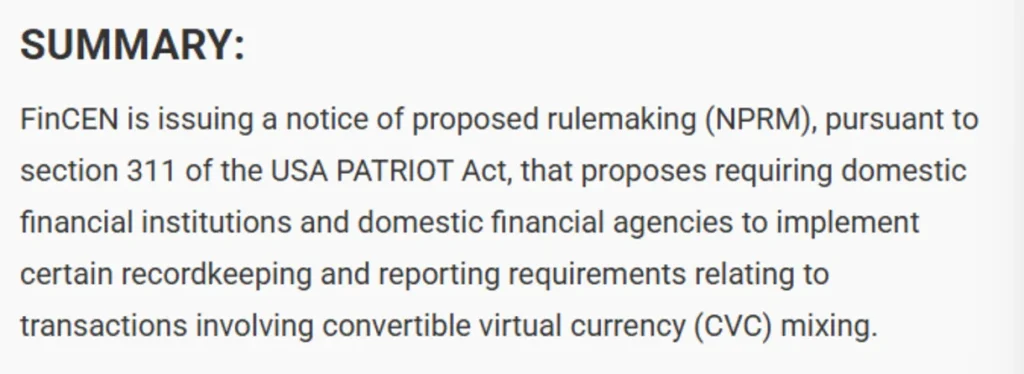
A 2023 proposal from the Financial Crimes Enforcement Network (FinCEN) would require financial institutions to implement stricter recordkeeping and reporting rules for transactions involving mixers. The Treasury’s report recommends reconsidering next steps on that proposal while balancing enforcement efforts with privacy protections.
The analysis reflects a broader debate over how regulators should approach blockchain privacy tools, which sit at the intersection of financial transparency, user privacy, anti-money-laundering enforcement, and efforts at curbing cybercrime.
More Must-Reads:
How do you rate this article?
Subscribe to our YouTube channel for crypto market insights and educational videos.






Join our Socials
Briefly, clearly and without noise – get the most important crypto news and market insights first.
Most Read Today
1
Banks Are Quietly Preparing for the Next Crypto Compliance Wave
2Hyperliquid (HYPE) Emerges as a Global Macro Hub Amid Weekend Oil Surge – Price Outlook
3Bitcoin “Death” Predictions Near 500 as Hollywood Actor Warns of Collapse
4U.S. Regulators Clarify Capital Rules for Tokenized Securities — Institutional Adoption Looms?
5Sui (SUI) Price Analysis: The Battle Between ETFs and Supply Pressure
Latest





8
Also read
Similar stories you might like.
Bitcoin
Trader Turns 10 Consecutive Bitcoin Trades Into $27M Profit
Rokas | 2026-03-09
Bitcoin
Strategy Now Owns Nearly 4% Of All Bitcoin
Rokas | 2026-03-09

Altcoins
Is Another 2020-Style Crypto Rally Coming? Analyst Sees Similar Setup
Ana | 2026-03-09

Bitcoin
Bitcoin “Death” Predictions Near 500 as Hollywood Actor Warns of Collapse
Ana | 2026-03-09
Regulation
Banks Are Quietly Preparing for the Next Crypto Compliance Wave
Rokas | 2026-03-08
Regulation
U.S. Regulators Clarify Capital Rules for Tokenized Securities — Institutional Adoption Looms?
Rokas | 2026-03-07

Industry
Pakistan Launches National Crypto Regulator; What’s Next?
Rokas | 2026-03-06

Altcoins
DOGE Forms Bullish Falling Wedge Against Bitcoin; What It Means
Rokas | 2026-03-06

Bitcoin
Bitcoin Wallets Hit Record 58.45M As Exchange Supply Falls
Ana | 2026-03-06

Bitcoin
Large Jane Street Bitcoin Transfers Detected Onchain
Ana | 2026-03-06