















US dollar bills close-up. Source: TechGaged / Shutterstock
Reshaping Payments: FDIC Moves to Set Rules for Stablecoin Issuers
In Brief
- • The FDIC proposed rules for stablecoin issuers.
- • The framework sets standards for reserves and risk management.
- • Stablecoins are moving closer to traditional banking oversight.
The Federal Deposit Insurance Corporation (FDIC) has approved a proposal to introduce formal rules for stablecoin issuers under the GENIUS Act. The framework sets requirements around reserves and risk management for firms operating in the U.S. financial system. The move could bring stablecoins closer to traditional banking standards and reshape how they are used in payments.
FDIC moves to formalize stablecoin rules
According to the agency’s press release from April 7, the proposal lays out a prudential framework for stablecoin issuers supervised by the FDIC, focusing on how these assets are backed and managed.
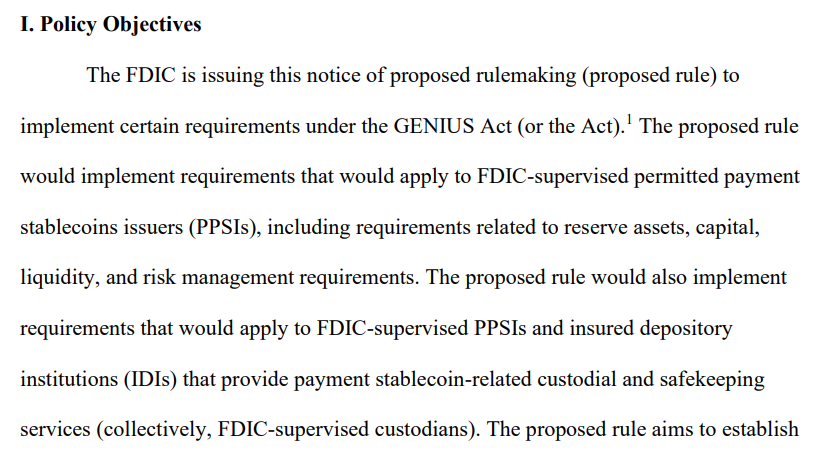
It introduces clear expectations around reserve assets, making sure that issuers maintain sufficient backing to support redemptions.
It also sets standards for capital and risk management, aligning stablecoin operations more closely with regulated financial institutions. The rules extend to banks that provide custody and safekeeping services for stablecoins, tightening oversight across the ecosystem.
“The proposed rule would establish a prudential framework for FDIC-supervised permitted payment stablecoins issuers, including requirements related to reserve assets, redemption, capital, and risk management standards.”
Another key point is the treatment of reserves. The FDIC is addressing whether deposits backing stablecoins qualify for pass-through insurance, which could affect how users view the safety of these assets.
Significance for crypto and payments
The proposal signals a continued shift toward integrating stablecoins into the regulated financial system rather than treating them as a separate category. By applying banking-style requirements, regulators are trying to reduce risks tied to liquidity and custody.
It also clarifies that tokenized deposits meeting the legal definition of a deposit will receive the same treatment as traditional deposits. That could open the door for banks to experiment more with blockchain-based payment systems without regulatory ambiguity.
The rule is still open for public comment, meaning changes are possible before it becomes final. But all things considered, stablecoins are moving deeper into the regulatory perimeter, with closer ties to the existing financial infrastructure.
How do you rate this article?
Subscribe to our YouTube channel for crypto market insights and educational videos.






Join our Socials
Briefly, clearly and without noise – get the most important crypto news and market insights first.
Most Read Today
1
Crypto’s ‘Middle Class’ Is Shrinking Fast — Mid-Priced Tokens Down 32%
2Robert Kiyosaki Prediction Accuracy: Full Report (1990–2026)
3Bitcoin Rejects $70K as Geopolitical Tensions Rise
4AIxCrypto (NASDAQ: AIXC) Stock Jumps After On-Chain AI Agent Progress, Enterprise Testing Begins
5XRP Whales Buying Rises Ahead of Major Ripple XRPL Japan Event
Latest






8
Also read
Similar stories you might like.

Defi
Korea and France Rush Into Crypto Talks as Regulatory Changes Loom
Ana | 2026-04-07

Bitcoin
Circle Combines Wrapped Bitcoin Launch With Quantum-Ready Arc Blockchain
Rokas | 2026-04-06

Defi
Major EU Bank CaixaBank Moves Into Crypto Under MiCA
Ana | 2026-04-02

Industry
Iran Demands Crypto, Yuan Fees For Passage Through Hormuz
Ana | 2026-04-02

Defi
Australia Passes Crypto Law, Exchanges Face New Rules
Rokas | 2026-04-01

Bitcoin
New U.S. Bill Backs Domestic Bitcoin Mining Industry
Ana | 2026-03-31

Industry
Trump Backs Bitcoin, Stablecoins In New Pro-Crypto Push
Ana | 2026-03-30

Industry
Canada Proposes Ban on Crypto Political Donations
Ana | 2026-03-30

Defi
Senator Lummis Warns Crypto Bill Delay Risks U.S. Financial Position
Ana | 2026-03-26

Industry
U.S. Crypto Regulation Breakthrough Pushes Clarity Act Closer to Reality
Ana | 2026-03-23