










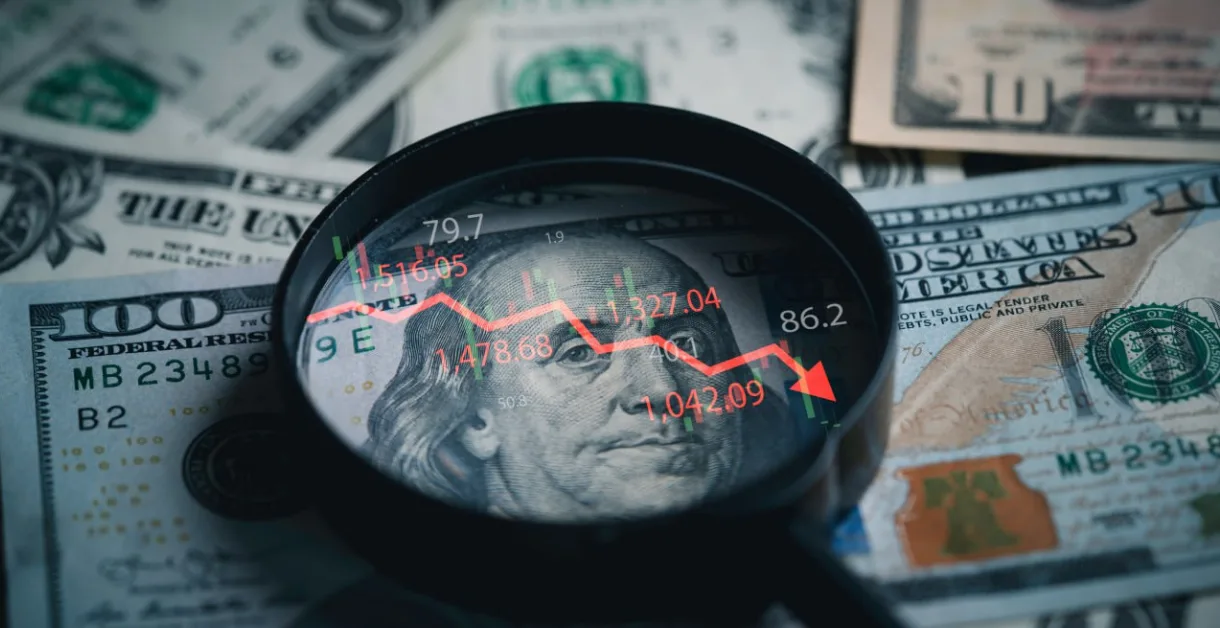
Lens on top of a $100 Note with a downtrend graph signaling falling inflation
Ad
Inflation in the U.S. is showing fresh signs of easing, but not in the way markets usually expect. Moreover, inflation is now tracking at 1.55% year over year, a sharp divergence from the 2.7% rate still reported by the Bureau of Labor Statistics.
According to the latest reading from the Truflation US CPI Inflation Index, inflation is now tracking at 1.55%. The data, updated daily using real-time price inputs, suggests inflation may already be well below the Federal Reserve’s long-standing 2% target.
Additionally, that gap is forcing investors to reassess whether monetary policy is aligned with current economic reality or still anchored to lagging indicators.
Inflation Is Falling Faster Than Official Data Suggests
Truflation’s system captures real-time price movements across housing, transportation, food, insurance, and consumer services. Instead of relying on delayed surveys and adjusted baskets.
As a result, it often reacts faster to shifts in demand, supply normalization, and consumer behavior. Therefore, the current 1.55% reading reflects broad-based disinflation rather than a single collapsing category.
On the other hand, goods inflation continues to unwind, shelter costs are softening, and services inflation is no longer accelerating. Together, those trends suggest inflationary momentum has already rolled over, even if official metrics haven’t reflected it yet.
However, if inflation is already below the targets in real-time, restrictive policies risk tightening into a slowdown. If it isn’t, cutting too early might risk reigniting price pressures. That uncertainty is now the dominant macro theme shaping market expectations.

What it Means for the Crypto Markets
If policymakers acknowledge easing inflation and signal rate cuts sooner than expected, liquidity conditions could loosen materially. Moreover, lower yields tend to push capital toward risk assets.
Particularly those with fixed supply narratives and high liquidity sensitivity, such as Bitcoin and large-cap digital assets. However, the perception that inflation is already under control changes positioning behavior.
Markets tend to front-run policy shifts instead of waiting for confirmation. Indeed, crypto can benefit simply from falling inflation expectations, as capital rotates out of cash and defensive instruments.
However, if central banks remain cautious and hold rates higher for longer despite easing inflation, crypto may continue to grind rather than surge.
The 1.55% inflation print doesn’t guarantee imminent rate cuts, but it does reshape the debate. Inflation is no longer the dominant threat, but policy lag is.
Bitcoin Price Today
More Must-Reads:
How do you rate this article?
Join our Socials
Briefly, clearly and without noise – get the most important crypto news and market insights first.

Most Read Today
1
Chainlink’s 499% Social Volume Spike: Why Attention is Outpacing Price
2Cardano (ADA) Price Analysis: Quiet Accumulation as Technical Signals Begin to Strengthen
3Mantle’s $1B Milestone: Why MNT is the Next Layer 2 Powerhouse to Watch
4Digital Silver’s Silent Strength: Litecoin (LTC) Fundamental and Technical Dive
5Zcash: The VC-Backed Rebirth of Private Finance
Latest







8
Also read
Similar stories you might like.

Market
Sui (SUI) Price Analysis: The Battle Between ETFs and Supply Pressure
Azeez | 2026-03-09

Industry
Trump’s Largest Tax Cut in U.S. History Will Take Effect This Year
Patrick | 2026-02-18

Industry
The Netherlands Approved a Tax That Could Force Investors to Sell
Patrick | 2026-02-14
Bitcoin
Bitcoin Flashes a Major Signal at $65k That Could Define the Next Leg
Patrick | 2026-02-12
Crypto News
A Major Shift Is Coming to Crypto Custody in Canada
Patrick | 2026-02-04

Altcoins
Ripple’s Update Changes the Game for Institutional Crypto Access
Patrick | 2026-02-04
Bitcoin
Bitcoin’s Cycle Is Breaking the Pattern – Raising New Questions
Patrick | 2026-02-04
Crypto News
Trump Announces Kevin Warsh as Nominee for FED Chair
Patrick | 2026-01-30
Bitcoin
Bitcoin’s Week Begins Below Key Levels as Market Awaits Direction
Patrick | 2026-01-26
Bitcoin
Real Estate Giant Cardone Capital Adds $10M Worth of Bitcoin
Patrick | 2026-01-20