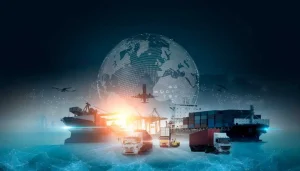

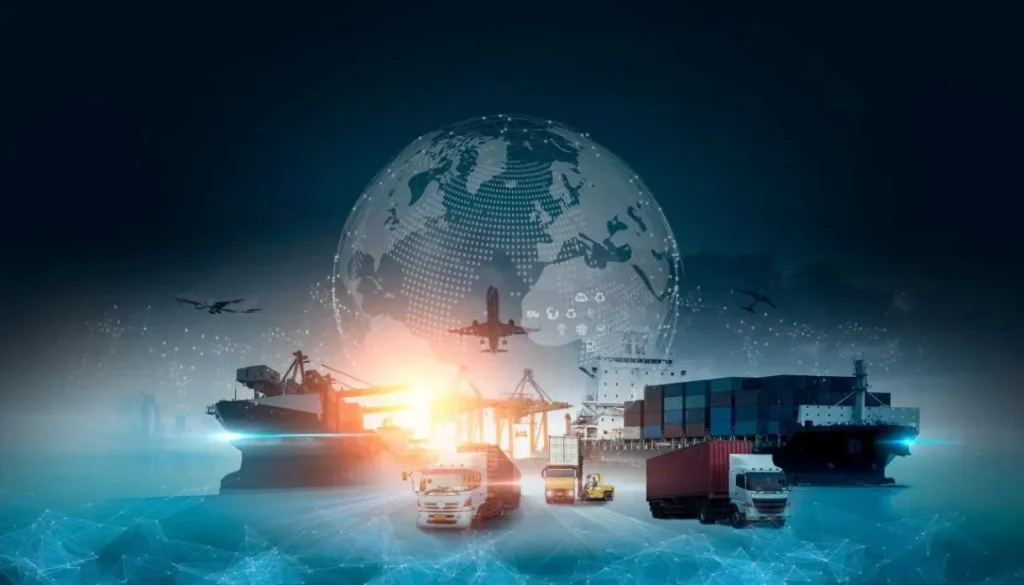



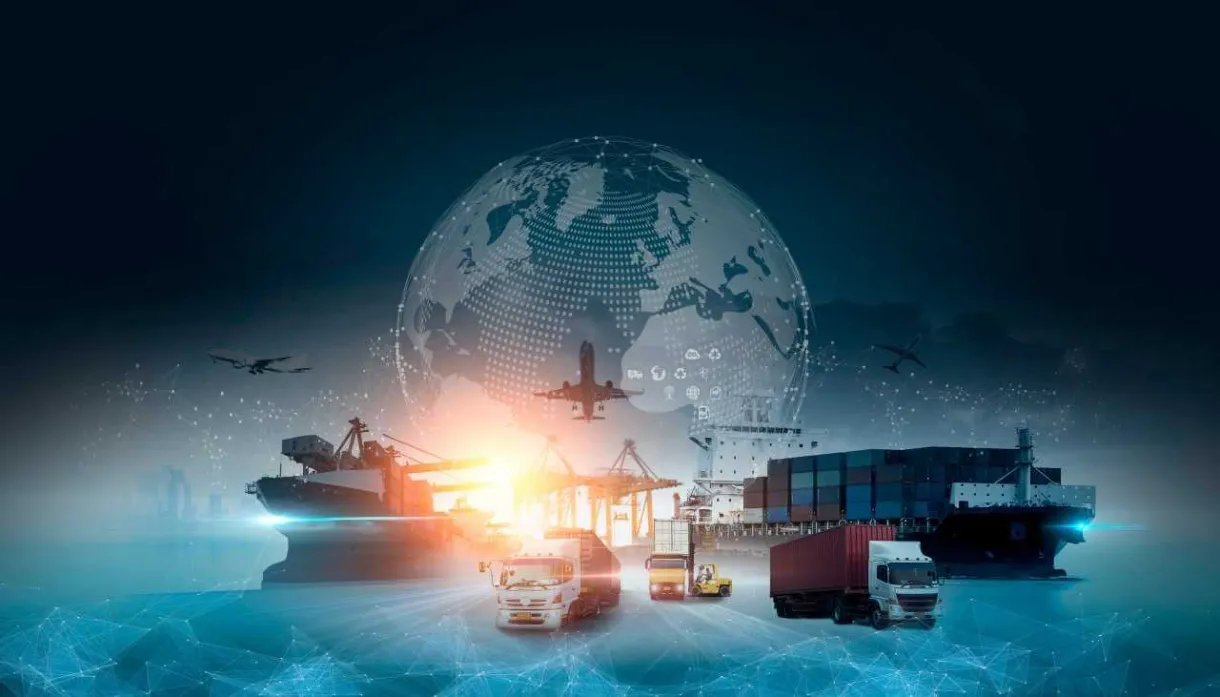
Global supply chain. Source: TechGaged/Shutterstock
Geopolitical Chaos Is Forcing Tokenization of Global Trade
In Brief
- • Geopolitical tensions are accelerating the adoption of tokenized real-world assets.
- • Tokenization enables faster, more secure transactions compared to traditional systems.
- • ="">="">="">="">="">="">="">="">start="90" data-end="178">Industrial commodities, energy, and financial assets are increasingly being digitized on-chain.
Ad
If it hadn’t already in theory, the market for tokenized real-world assets (RWAs) has officially transcended its experimental phase in March 2026 in numbers. Total value on-chain has surpassed the $26 billion threshold, which is a staggering four-time increase from the $6.5 billion recorded a mere year ago.
While tokenized US Treasuries (now a $10.9 billion sector) provided the initial proof of concept, the true expansion is taking place in industrial commodities and private credit. Together, they have expanded by nearly 300% year-on-year as institutions seek yield that isn’t tethered to traditional banking hours.
Make no mistake, the primary catalyst is not born out of sudden love for blockchain among CFOs and other decision-makers. It’s a result of a structural failure in the legacy financial system that the world has relied on for decades. The ongoing conflict in Iran has acted as a stress test for the global supply chain, exposing the fatal flaws of a ‘T+2’ settlement world.
In this new era, tokenization is no longer a fintech luxury but a sovereign and corporate survival mechanism.
Relic of the 20th century
To fully understand the RWA (r)evolution, we must first take a look at what has driven the status quo so far: T+2 settlement.
In traditional finance, ‘T’ represents the transaction date (or trade date), which is the moment you agree to buy something, like a shipment of oil. The ‘+2’ represents the delay of two business days required for a labyrinth of banks, clearinghouses, port authorities, and whatnot to manually reconcile their private data.
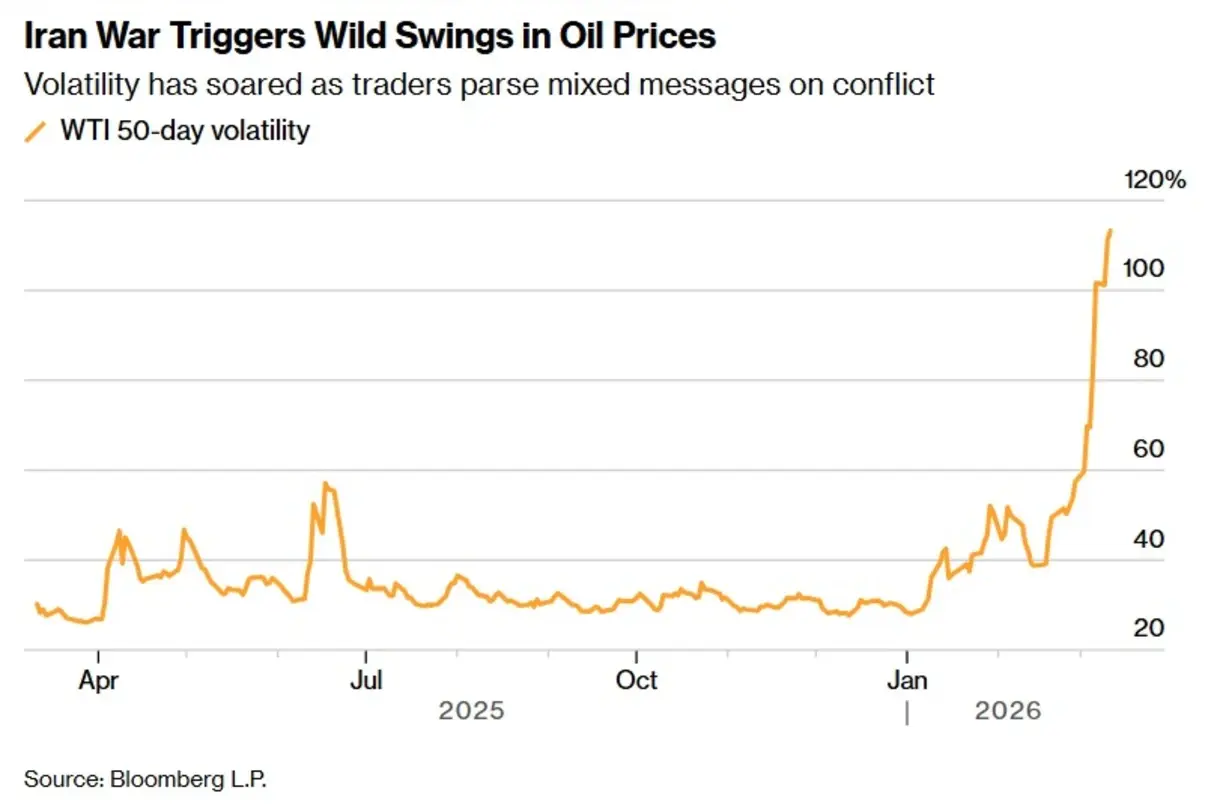
Now, in a stable, low-volatility environment, a 48-hour delay is a minor administrative cost. However, in the high-stakes environment where a drone strike in the Middle East can easily spike Brent Crude prices by double digits in a single afternoon, T+2 is a liability.
The issue is if the market moves violently during that two-day window, one party may no longer have the collateral to finalize the deal. This leads to trade fails, where the contract is abandoned, leaving the other party exposed to massive price swings without protection.
Even large corporations are not immune to this scenario, as they currently maintain billions in cash that is effectively trapped in transit between accounts. In a high-interest-rate environment, this trapped capital represents a huge opportunity cost.
So why is tokenization the solution?
Because it introduces the atomic settlement, which is a transaction mechanism where the transfer of a purchased asset and its corresponding payment happen at the same time. As such, all transaction operations are bundled together and executed as a single, inseparable event.
This all-or-nothing approach means that if the buyer doesn’t have the requisite funds, the trade doesn’t execute. If they do, the title and the money swap hands in seconds. There is no lag or settlement risk, and certainly no need for an army of back-office reconcilers.
Examples of successful RWA tokenization
The joint US-Israeli operations in Iran, which escalated at the very end of February 2026, have exposed all the gaps in the system. With the Strait of Hormuz facing closure and insurance premiums for oil tankers spiking by over 50%, the paperwork part of the oil market is currently disconnected from the physical reality of the barrel.
The good news is that the technology and use cases behind it are already live in the real world. Upon a more detailed inspection, several distinct developments are taking place as a direct result of RWA tokenization.
No more uncertainty premium
Traditionally, oil majors bake an “uncertainty premium” into every barrel to account for the risk of a trade failing during the T+2 window. By utilizing tokenized oil products (such as the JSOY_OIL tokens), refineries in Europe and Asia are now locking in prices and titles at the speed of the news cycle.
So, when news of a refinery strike hits the wire, an atomic trade allows a buyer to secure a verified cargo instantly, bypassing the banking latency that is currently driving Brent Crude toward the $150 mark that many call the volatility tax.
If you need further proof, there is also the success of deals like the $75 million Feniix Energy acquisition in late 2025.
The company acquired an operating oil and gas facility in Latin America using a GSX Protocol to tokenize the entire debt and equity. The deal was settled in minutes using stablecoins, showing it’s possible to remove the middleman and save millions by executing end-to-end M&A and commodity trades.
Introduction of digital passports
These days, “knowing your barrel” is about quality as much as it is about legal survival. With the US and EU imposing aggressive sanctions on Iranian crude, any business professional accidentally touching a sanctioned barrel faces potentially devastating fines.
ADNOC (Abu Dhabi National Oil Company), in partnership with IBM, has already implemented such a model in its production capacity. Its system is using blockchain to track 4.85 million barrels per day from the wellhead to the customer.
This is where sensors on tankers, refineries, and storage tanks come into play as part of a broader blockchain link. These feed real-time telemetry into immutable ledgers, which means that a tokenized barrel of crude now comes with a sort of digital passport that tracks its journey from a specific well to the refinery.
The end result is an audit-ready, tamper-proof proof of origin that traditional paper, such as bills of lading, simply can’t match. Along the way, tokenization shifted from a tech-centric feature to a legal shield against regulatory penalties.
Hedge against physical bottlenecks
While the physical flow of oil was constricted, the flow of capital needed to stay liquid. As tankers sat idle in the Gulf of Oman, the oil inside them was effectively capital stuck in place.
However, through RWA platforms like HQLAᵡ (backed by J.P. Morgan, Goldman Sachs, and BNY Mellon), these idle cargoes can be tokenized into on-water collateral. J.P. Morgan used the platform to execute intraday collateral swaps, locking an asset in one location and creating a digital twin to be used as collateral elsewhere instantly.
This allowed a Dutch pension fund PGGM to mobilize collateral that was previously trapped due to settlement delays.
Tokenization of industrial hard assets
While energy markets and most of the world focus on the barrel, another profound shift is happening with the industrial hard assets, specifically steel, aluminum, and lumber. The Iran conflict has disrupted the just-in-time (JIT) manufacturing model that aligns raw material orders from suppliers directly with production schedules, thus once again turning physical inventory into a strategic liability.
Traditionally, a ton of rebar sitting in a warehouse is a static asset. It costs money to store and provides zero liquidity until it is used. In 2026, we are seeing the rise of fractional ownership. Instead of buying delivery contracts, large construction firms buy verified, on-chain claims to physical stockpiles sitting in neutral, audited warehouses.
For instance, a contractor needing 100,000 board-feet of spruce can purchase a tokenized claim on a batch verified by Chainlink’s Proof of Reserve. If the project suffers a delay, they don’t have to sell the wood at a loss. They can simply deposit those tokens into an institutional lending protocol to borrow stablecoins, using the physical wood as high-quality collateral to fund payroll.
The global trade finance gap, which is the difference between the demand for credit and its availability, has long plagued smaller industrial players. Tokenization solves the issue by providing verifiable asset data.
Take steel as an example. Because its provenance, grade, and location are immutably recorded, a bank can offer a loan against that steel in minutes rather than weeks. This democratizes access to capital, allowing mid-tier manufacturers to bid on immense infrastructure projects that were previously reserved for big players with seemingly inexhaustible credit lines.
Navigating the regulatory frontier
So, the blueprints for the solutions are there. Yet, with the technology undoubtedly ready for deployment, the legal framework is the final hurdle across the globe.
EU and MiCA 2.0
The EU leads via MiCA 2.0, which allows a firm authorized in one member state to passport tokenized commodity services across all 27 EU nations. It mandates strict reserve requirements, making sure that every digital barrel is backed by verifiable physical stock.
US and Project Crypto, CLARITY Act
In February 2026, the SEC and CFTC launched ‘Project Crypto’ as a joint initiative to provide a single rulebook for how the country polices digital asset markets. This signaled that industrial RWAs like tokenized crude or lumber are digital commodities, not securities. As a shared framework, it will cover on-chain trading, clearing, settlement, and custody across both regulators.
There is also the Digital Asset Market Clarity Act currently in the Senate. Among many other things, it aims to officially recognize a T+0 blockchain transaction as a legally binding transfer of title.
UK and Singapore sandboxes
The UK Digital Securities Sandbox (DSS) allows firms like HSBC to test live tokenized bond and commodity trading outside legacy T+2 regulations. Meanwhile, Singapore’s Project Guardian has successfully created the open-source standards needed to ensure different bank subnets don’t become liquidity silos.
All of the above leads to legal interoperability as the ultimate obstacle to overcome for 2027 and beyond. If a barrel of oil is tokenized under Singaporean law, will a court in New York or London recognize the token as a legal claim if the shipping company goes bankrupt?
Looking ahead: rise of the commodity-backed reserve
The 2026 Iran conflict has served as a catalyst for a permanent shift in how sovereign nations perceive their safety in an economic sense. We are slowly stepping away from the monetary hegemony of the US dollar and stepping into a world of resource-backed autonomy.
And if anyone has learned a harsh lesson, it should be the BRICS+ nations. It’s likely why, at the upcoming BRICS+ summit in New Delhi, the bloc will adopt a new currency 40% backed by physical gold and 60% by a basket of BRICS national currencies.
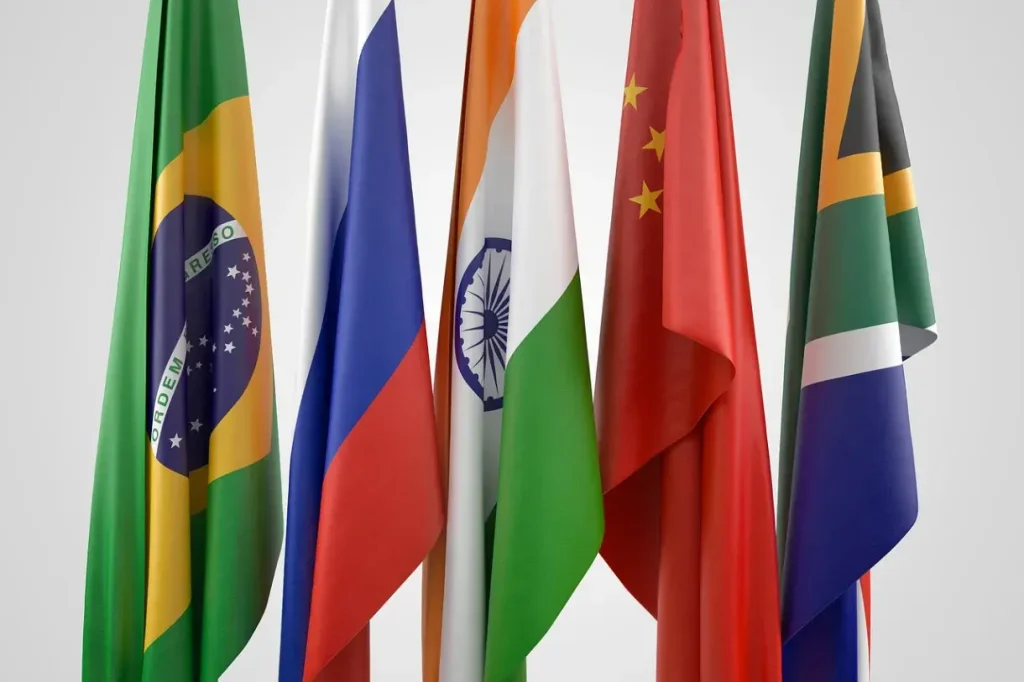
Unimaginatively called Unit, it will link official digital currencies of member nations to make cross-border trade and tourism payments easier.
So, in the event of a banking freeze or a T+2 settlement halt, a nation like India can settle a debt with Russia or China using these Units. The payment is atomic, with the ownership of the underlying gold and oil tokens swapping hands instantly, bypassing the Western correspondent banking system entirely.
With all that in mind, it’s not unreasonable to expect institutional treasuries to consist of a diversified RWA index by 2030. These would be:
- 30% sovereign debt, consisting of tokenized US and EU Treasuries for core stability
- 30% energy and industrial tokens, such as tokenized crude and aluminum, that act as a direct operational hedge against inflation.
- 40% digital liquidity, like programmable stablecoins that can be deployed instantly into 24/7 global markets
The long-term implication of this shift is the potential decline of the petrodollar and the rise of resource-backed autonomy. Because these assets are liquid on-chain, the distinction between a commodity and a currency greatly disappears.
Conclusion
The Iran conflict of 2026 has permanently rewritten the rules of the game. In the 20th century, safety was the US dollar. Nowadays, not so much.
There is a point to be made that the safe haven of the next decade won’t be a currency, but a verifiable, programmable claim on physical reality. The financial ecosystem is moving away from a system centered on paper-based promises to one built on resource-backed transparency.
And if it wasn’t clear by now, the tokenization of RWA is far from a tech trend for crypto bros and enthusiasts. With its practical use and yet unrealized potential, it’s the new backend architecture for global power.
Those who control the digital rails for commodities like crude and steel will be in the best position to dictate the terms of global trade.
More Must-Reads:
How do you rate this article?
Subscribe to our YouTube channel for crypto market insights and educational videos.






Join our Socials
Briefly, clearly and without noise – get the most important crypto news and market insights first.
Most Read Today
1
148 Public Companies Now Hold Bitcoin, With Strategy Accounting for 63% of All Corporate BTC
2Should You Sell Bitcoin at $100K? Here’s What ChatGPT Says
3TechGaged Launches a Live Bitcoin Millionaires Tracker
4Exclusive: Crypto Trader Josh Rager Says Bitcoin’s 4-Year Cycle “Isn’t What It Used To Be”
5Another Public Company Buys More Bitcoin; Nears $1B in BTC
Latest


8
Also read
Similar stories you might like.
Industry
SEC And CFTC Sign Historic Agreement To Coordinate Regulation
Ana | 2026-03-12

Bitcoin
Research: How the COVID-19 Crisis Changed Bitcoin Market Behavior
Ana | 2026-03-11
Regulation
U.S. Regulators Clarify Capital Rules for Tokenized Securities — Institutional Adoption Looms?
Rokas | 2026-03-07
Altcoins
U.S. Midterms Could Drive Crypto Cycle, Analyst Says
Ana | 2026-02-25

Bitcoin
‘Rich Dad’ Robert Kiyosaki Adds Another Bitcoin During Crash, Explains Why
Ana | 2026-02-23
Altcoins
Vitalik Buterin Calls Current Prediction Markets Unhealthy – This Is Why
Ana | 2026-02-16
Blockchain
OTC Crypto Trading Explained: How Large Bitcoin Deals Move the Market
Rokas | 2026-02-19
Crypto News
This Crypto Platform is Opening New York’s First Free Grocery Store
Patrick | 2026-02-03
Altcoins
Ripple Tokenizes $280 Million of this Physical Commodity
Patrick | 2026-02-03
Bitcoin
UK Investors Get Bitcoin & Gold Exposure in One Regulated Product
Patrick | 2026-01-29