





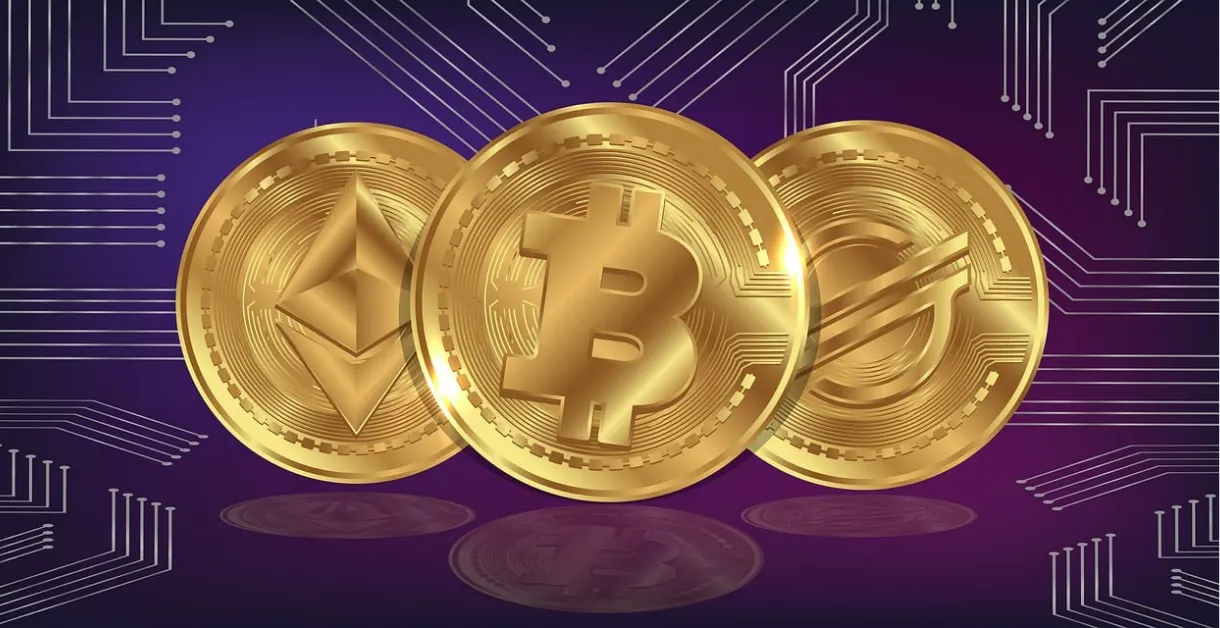
Image showing Bitcoin and Ethereum together symbolizing balance.
Building a Balanced Crypto Portfolio: Risk vs Reward
In Brief
- • A balanced crypto portfolio reduces volatility by spreading exposure across Bitcoin, Ethereum, stablecoins, and a controlled portion of higher-risk altcoins.
- • Managing risk comes from smart allocation and rebalancing, not from chasing hype or timing the market.
- • Using stablecoins, staking, and diversification helps investors stay disciplined and protect capital during market swings.
Ad
Cryptocurrency investing is thrilling, but it is also risky. Prices swing wildly, projects rise and fall overnight, and hype can easily cloud judgment. For investors who want to grow wealth without gambling it all, portfolio balance is the key.
Why Balance Matters
Balance doesn’t mean avoiding risk altogether. Instead, it means structuring your portfolio so that the risks you take are intentional, measured, and offset by safer positions.
A balanced portfolio allows you to participate in the upside of crypto innovation while protecting yourself against the inevitable downturns. Moreover, balance stands as a discipline that separates long-term investors from short-term speculators.
Understanding Risk vs Reward in Crypto
Every investment carries risk, but crypto amplifies it. Unlike traditional markets, crypto assets can rise or fall by double-digit percentages in a single day. This is why understanding the spectrum of risk is essential for a healthy trading journey.
- High Risk: Small-cap altcoins, meme tokens, and speculative projects. These can deliver massive gains but are prone to collapse.
- Medium Risk: Established altcoins like Ethereum, Solana, and Cardano. They have strong communities and proven use cases, but still face volatility.
- Low Risk: Bitcoin, stablecoins, and staking strategies. These are considered safer bets, though they are not immune to market swings.
Recognizing where each asset falls on this spectrum helps investors allocate wisely and avoid overexposure to any single risk category. A balanced portfolio blends these categories to capture growth while limiting downside.
It’s also important to remember that risk tolerance varies by individual. Younger investors may lean toward higher-risk allocations, while those looking for stability often prefer conservative strategies.
Understanding your personal goals and time horizon is just as critical as understanding the assets themselves.
Core Components of a Balanced Portfolio
A balanced crypto portfolio typically includes several key components that make its structure. Each component plays a role in balancing risk and reward, ensuring that the portfolio its not dependent on one type of asset.
By combining these components, you can create a diversified foundation that can withstand market turbulence. These include:
- Bitcoin (BTC): The anchor, often referred to as digital gold. Bitcoin provides stability and long-term value.
- Ethereum (ETH): The leader in smart contracts and decentralized applications. Ethereum offers growth potential through its ecosystem.
- Stablecoins: A safety net and liquidity tool. Stablecoins provide stability and can be used for yield generation.
- Various Altcoins: Growth opportunities, but higher risk. Altcoins allow exposure to innovation but should be managed carefully.
- Staking/Lending Positions: Passive yield strategies that turn long-term holdings into assets that generate income.

Strategies for Managing Risk
Building a balanced portfolio is not just about allocation. It also requires active risk management strategies.
First, it’s important to diversify across categories. Indeed, diversification is your shield against sudden crashes. By spreading investments across Bitcoin, Ethereum, stablecoins, and altcoins, you reduce the impact of any single asset’s decline.
Then, use stablecoins as a buffer. Stablecoins provide liquidity and act as a safety net when markets swing. Also, they allow you to move quickly into opportunities without selling long-term holdings at a loss.
Moreover, explore using staking mechanisms that allow you to earn yield while holding assets. Staking turns your patience into profits. And finally, rebalance regularly to ensure that your allocations remain aligned with your goals.
For example, if altcoins surge and grow to 40% of your portfolio, rebalancing might involve selling some altcoins and reallocating to Bitcoin or stablecoins.
Common Mistakes to Avoid
Even experienced investors make mistakes. Avoiding these mistakes is as important as choosing the right assets. Discipline and security are the invisible pillars of a successful portfolio:
- Overexposure to Altcoins: Too much risk concentrated in speculative assets.
- Ignoring Security: weak passwords, funds left on exchanges, or failure to use hardware wallets for your long-term holdings.
- Chasing Hype: Buying coins based on social media trends without research.
- Neglecting Taxes: Depending on your location, you could get in legal trouble from unreported gains. Most jurisdictions tax crypto profits, so make sure you stay compliant.
More Advanced Tactics
As investors gain experience and navigate the markets, they can also explore other strategies that more seasoned investors implement to balance their portfolios and their earnings over time.
One of the most common examples is dollar-cost averaging (DCA). Which is the process of investing a fixed amount of capital regularly to reduce the impact of volatility. DCA allows investors to accumulate assets over time without trying to time the market.
On the other hand, cross-chain diversification allows investing across multiple blockchains to reduce exposure to risks specific to one ecosystem. Furthermore, advanced investors may use futures or options to hedge against downside risk. While complex, these tools can provide protection in volatile markets.
However, it’s important to note that these tactics are not recommended for novice investors. Indeed, these tactics require a level of psychological and technical experience within the markets. If you’re just starting your trading journey, it’s better to stick to the basics while you learn and study the market as a whole.
Psychological Aspects of Balance
Investing is not just about numbers, it’s also about mindset. A balanced portfolio helps reduce emotional decision-making. When markets crash, investors with balanced portfolios are less likely to panic sell.
On the other hand, when markets surge, they are less likely to chase hype. Balance provides psychological stability as well as financial stability.
Patience, discipline, and emotional control are often overlooked but are crucial for long-term success. A balanced portfolio isn’t just a financial strategy, it’s also a psychological safety net.
Balance is the Edge in Crypto Investing
Building a balanced crypto portfolio is about managing risk while pursuing rewards. By mixing Bitcoin, Ethereum, stablecoins, and altcoins, and using strategies like staking and rebalancing, investors can grow steadily without being overwhelmed by volatility.
Moreover, balance in any kind of financial venture stands as the foundation of sustainable success. A balanced portfolio allows investors to participate in the excitement of crypto innovation while protecting themselves against its dangers.
And the bottom line is that this applies to beginners and advanced investors alike. Balance is the key to sustainable growth that keeps risks at a minimum in the world of digital finance.
How do you rate this article?
Subscribe to our YouTube channel for crypto market insights and educational videos.






Join our Socials
Briefly, clearly and without noise – get the most important crypto news and market insights first.

Most Read Today
1
Chainlink’s 499% Social Volume Spike: Why Attention is Outpacing Price
2Mantle’s $1B Milestone: Why MNT is the Next Layer 2 Powerhouse to Watch
3Cardano (ADA) Price Analysis: Quiet Accumulation as Technical Signals Begin to Strengthen
4Digital Silver’s Silent Strength: Litecoin (LTC) Fundamental and Technical Dive
5The Pi Day Pivot: Can Polkadot’s Massive Supply Cut Fuel a DOT Breakout?
Latest






8
Also read
Similar stories you might like.
Altcoins
Chainlink’s 499% Social Volume Spike: Why Attention is Outpacing Price
Azeez | 2026-03-15

Altcoins
The Institutional Push: Why the Aptos & Mastercard Alliance is a High-Stakes Bet for 2026
Azeez | 2026-03-14

Altcoins
The Institutional Green Light: Analyzing AVAX as Grayscale’s Staking ETF Hits Nasdaq
Azeez | 2026-03-14

Altcoins
The Pi Day Pivot: Can Polkadot’s Massive Supply Cut Fuel a DOT Breakout?
Azeez | 2026-03-14

Altcoins
Ethereum Foundation Drops New Manifesto For The Network; What’s New?
Ana | 2026-03-13
Altcoins
XRP Triangle Pattern Points To Major Upside Target
Ana | 2026-03-13

Altcoins
Whales Quietly Scoop Up Millions Of TRUMP Tokens; What’s Happening?
Rokas | 2026-03-13
Bitcoin
Supply Shock: 204K BTC Leave Exchanges As Whales Stay Dormant
Rokas | 2026-03-13
Bitcoin
Record Strategy Bitcoin Purchase Raises Supply Pressure Questions
Rokas | 2026-03-13

Bitcoin
Should You Sell Bitcoin at $100K? Here’s What ChatGPT Says
Rokas | 2026-03-12