











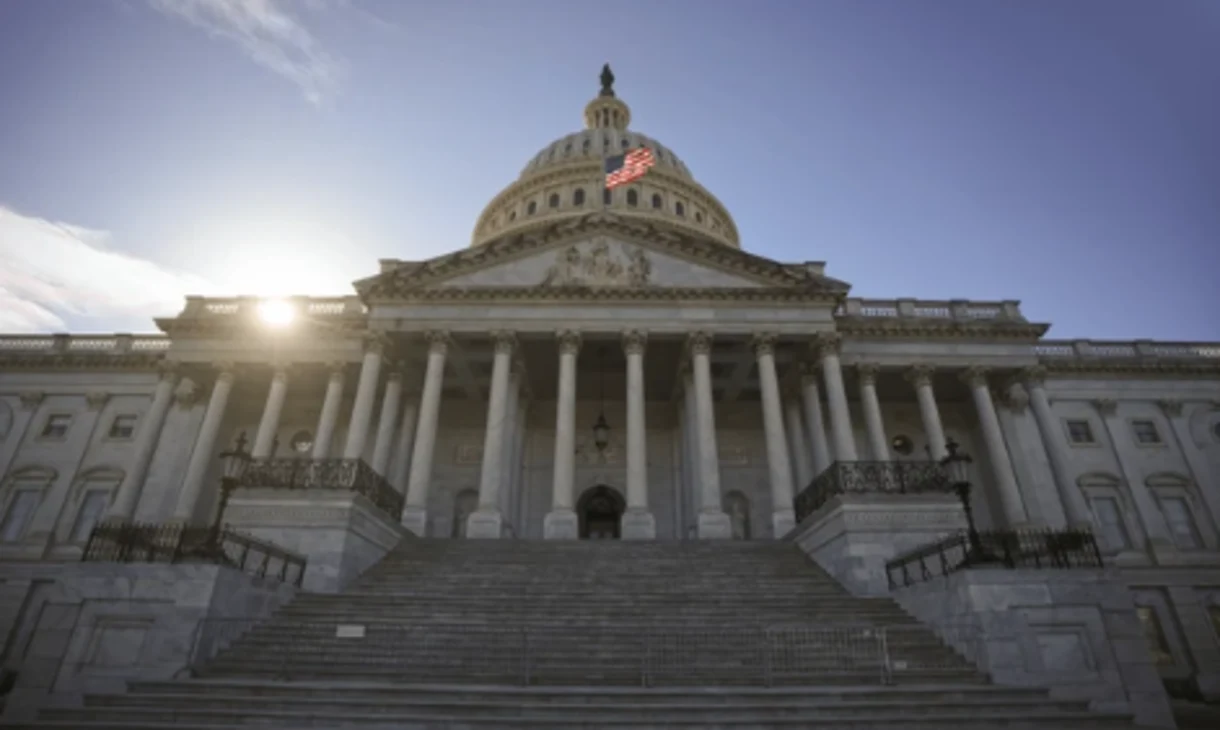
Washington resumes talks about CLARITY Act.
Ad
The Trump administration has reopened direct talks between regulators, banks, and crypto companies. CLARITY discussions have resumed after months of regulatory stagnation and institutional hesitation.
This meeting matters because it signals coordination, not ideology. Officials want practical alignment between traditional finance and digital asset markets.
Moreover, Washington now faces pressure from capital markets demanding consistency. Banks want certainty before expanding crypto custody, settlement, and tokenization services.
Crypto firms want predictable rules to scale inside the United States. Therefore, CLARITY talks now act as a structural reset. These discussions do not promise deregulation, instead, they focus on defining boundaries regulators can actually enforce.
Why Banks Are Back at the Table
Banks did not reenter crypto discussions for experimentation. They returned because client demand no longer stays theoretical.
Moreover, large institutions already interact with crypto through ETFs, stablecoins, and tokenized assets. However, fragmented oversight keeps compliance teams cautious.
CLARITY aims to reduce that friction. Officials want banks to understand exactly where activities fall under federal supervision. Additionally, regulators recognize that excluding banks created unintended consequences. Crypto activity simply migrated offshore or into less transparent structures.
That outcome increased systemic risk rather than reducing it. Therefore, policymakers now prefer supervised integration over isolation. Banks also seek clarity on custody responsibilities. They need consistent standards for asset segregation, capital treatment, and risk controls.
Without those answers, scaling remains impossible. CLARITY discussions attempt to standardize those expectations.

What Crypto Firms Actually Want From CLARITY
Crypto companies entered these talks with specific goals. They want jurisdictional clarity, not regulatory favors.
Moreover, firms want a clear split between securities oversight and commodities supervision. That distinction affects product launches, listings, and market access.
Additionally, companies want federal frameworks to preempt conflicting state actions. State-by-state enforcement slows innovation and increases legal exposure.
CLARITY discussions directly address that concern. Officials now acknowledge the inefficiency of fragmented authority. However, crypto firms also face uncomfortable tradeoffs. Clear rules mean tighter reporting, surveillance, and compliance obligations.
Some business models may not survive federal scrutiny. Therefore, this process favors mature firms over experimental ones. Still, participation signals long-term commitment to U.S. markets. That commitment matters as global capital evaluates regulatory stability.
Talks will not end regulatory tension. They will define the terrain where that tension plays out. If alignment holds, crypto moves closer to financial infrastructure. If talks stall, uncertainty returns faster than capital.
More Must-Reads:
How do you rate this article?
Subscribe to our YouTube channel for crypto market insights and educational videos.






Join our Socials
Briefly, clearly and without noise – get the most important crypto news and market insights first.

Most Read Today
1
Chainlink’s 499% Social Volume Spike: Why Attention is Outpacing Price
2Cardano (ADA) Price Analysis: Quiet Accumulation as Technical Signals Begin to Strengthen
3Digital Silver’s Silent Strength: Litecoin (LTC) Fundamental and Technical Dive
4Mantle’s $1B Milestone: Why MNT is the Next Layer 2 Powerhouse to Watch
5The Pi Day Pivot: Can Polkadot’s Massive Supply Cut Fuel a DOT Breakout?
Latest






8
Also read
Similar stories you might like.
Blockchain
Trump Pushes Crypto Bills, Says Banks Are Undermining Progress
Ana | 2026-03-04
Industry
Morgan Stanley Moves to Launch a Crypto Trust Bank
Patrick | 2026-03-01

Altcoins
Crypto Whale Transfers Spike Ahead of Clarity Act Decision; Here’s Why
Ana | 2026-02-27

Bitcoin
Charles Schwab Raises Strategy (MSTR) Stake in Latest 13F Filing
Patrick | 2026-02-17

Industry
Circle Says Stablecoin Regulation Has Reached an Inflection Point
Patrick | 2026-02-17

Industry
Major Bank Joins Swift’s Initiative for Cross-Border and Tokenised Payments
Patrick | 2026-02-17

Industry
Crypto.com Becomes First Crypto Platform to Achieve This Certification
Patrick | 2026-02-16
Blockchain
Banks Are Helping SWIFT Build a Blockchain Coordination Layer
Patrick | 2026-02-13
Industry
A Wall Street Asset Manager Just Crossed a New Line on Binance
Patrick | 2026-02-11

Crypto News
Global Banking Giant Expands Crypto Access Through Strategic Liquidity Deal
Patrick | 2026-02-11