











Bitcoin coins in a wallet. Source: TechGaged / Shutterstock
Analyst Says Bitcoin Could Replace Private Credit – This Is How
In Brief
- • Analyst claims Bitcoin-backed credit could rival private credit.
- • Thesis: real-time transparency vs opaque private lending.
- • Narrative reflects BTC evolving into financial collateral.
Bitcoin-backed credit is emerging as a new narrative after an analysis claiming it could disrupt the private credit industry. The thesis argues that digital, exchange-traded credit backed by Bitcoin (BTC) treasuries offers real-time transparency that traditional private lending lacks. The idea is gaining traction as investors reassess opaque yield products.
Bitcoin-Backed Credit Enters The Conversation
An X post by analyst Adam Livingston, shared on February 22, contrasts two parts of the credit market. On one side is private credit, a sector estimated at around $3 trillion globally and projected to grow further. On the other is a newer model of exchange-traded credit instruments tied to large Bitcoin treasuries like Strategy’s.
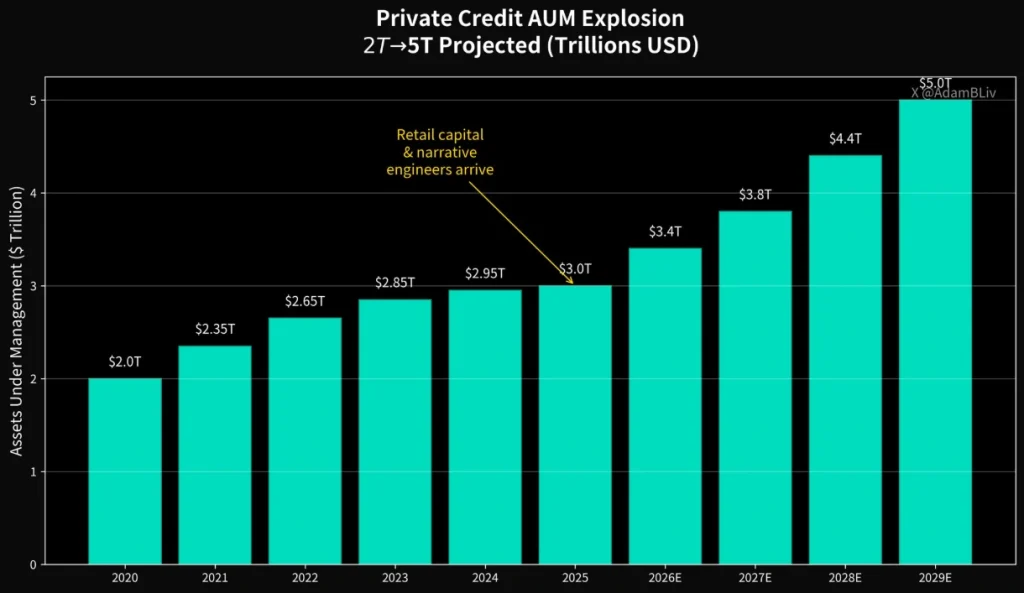
The argument centers on structure rather than yield. Private credit funds typically rely on infrequent pricing, illiquid loans, and redemption limits. That structure has historically helped smooth volatility but can obscure risk during downturns.
In contrast, Bitcoin-linked credit vehicles operate in public markets with continuous pricing. Livingston argues that this real-time price discovery changes how investors evaluate credit risk, especially when backed by visible on-chain reserves.
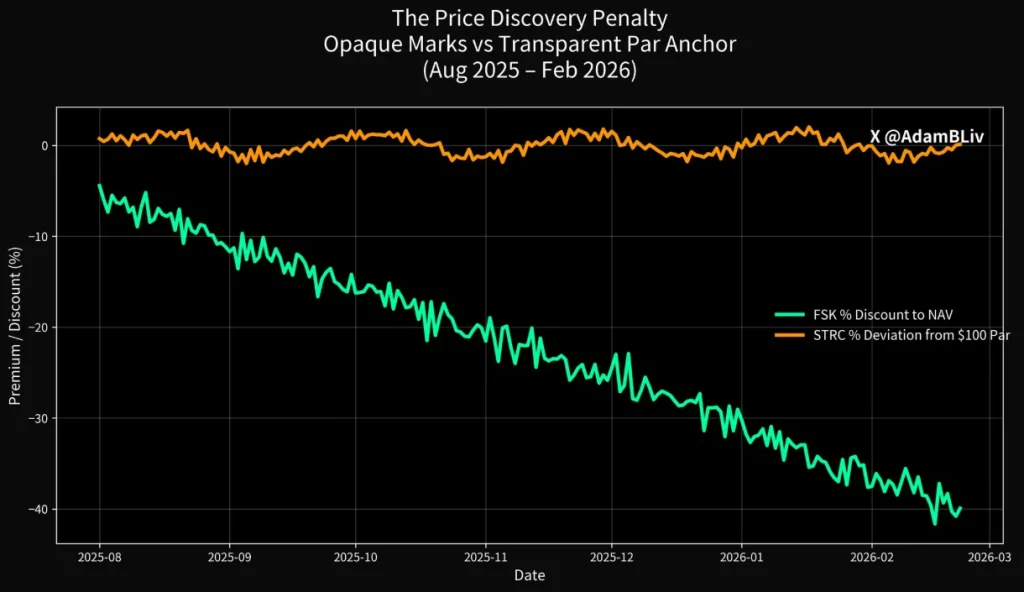
Transparency vs Opacity Narrative Grows
The analysis highlights how public crypto treasuries are reshaping investor expectations. Large Bitcoin reserves held by corporate issuers can act as a visible balance sheet buffer, unlike private credit portfolios that rely on periodic valuation models.
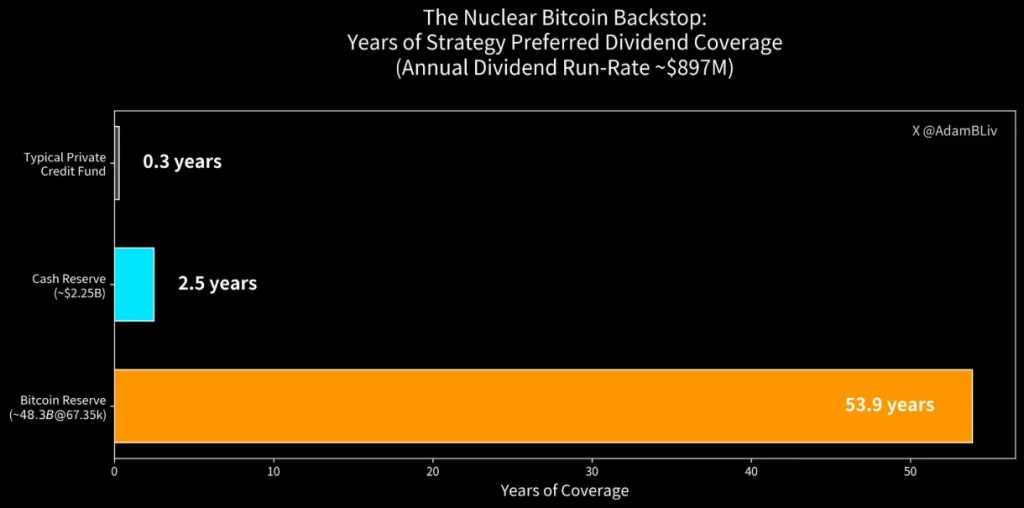
That difference, according to the thesis, could shift sentiment over time. If investors begin prioritizing liquidity and transparency, capital may gradually migrate toward digital credit structures that trade openly rather than through gated funds.
Still, the claim remains controversial. Private credit continues to attract institutional inflows, and many funds argue their long-term lending model remains resilient across cycles.
For now, the discussion reflects a broader shift inside crypto markets. Bitcoin is no longer framed solely as a store of value but increasingly as collateral for financial products that aim to compete with traditional yield markets.
More Must-Reads:
How do you rate this article?
Subscribe to our YouTube channel for crypto market insights and educational videos.






Join our Socials
Briefly, clearly and without noise – get the most important crypto news and market insights first.

Most Read Today
1
3 Cryptocurrencies to Avoid in April
2Arthur Hayes’ $1.1M HYPE Bet: Is ETF Buzz Igniting a Surge?
3April 12 Token Unlock: What it Could Mean for Aptos Price
4Oil Loses $100 Grip — Will Bitcoin Benefit From the Shift?
5Exclusive: Dr. Persichetti Challenges Key Claims in Cointelegraph’s Quantum Crypto Analysis
Latest





8
Also read
Similar stories you might like.

Altcoins
Post-Ceasefire Crypto Outlook: Hangover or Buying Opportunity Ahead?
Azeez | 2026-04-12

Bitcoin
Oil Loses $100 Grip — Will Bitcoin Benefit From the Shift?
Azeez | 2026-04-12

Altcoins
Arthur Hayes’ $1.1M HYPE Bet: Is ETF Buzz Igniting a Surge?
Azeez | 2026-04-12

Altcoins
April 12 Token Unlock: What it Could Mean for Aptos Price
Azeez | 2026-04-12
Altcoins
3 Cryptocurrencies to Avoid in April
Azeez | 2026-04-11

Altcoins
Solana Price Outlook as SOL Hits 167M Users in April
Azeez | 2026-04-11

Altcoins
2 Cryptocurrencies to Buy in April
Azeez | 2026-04-11

Altcoins
CME Group To Launch Sui Futures and Institutions Are Betting Big On It
Azeez | 2026-04-11

Bitcoin
Bitcoin Holds Ground as Oil and War Headlines Clash
Ana | 2026-04-10

Altcoins
Will BNB Chain’s Annual Percentage Yield Surge Push Prices Higher or Be a Trap?
Azeez | 2026-04-10