










Homegrown power: U.S. LFP supply could spark cheap EVs
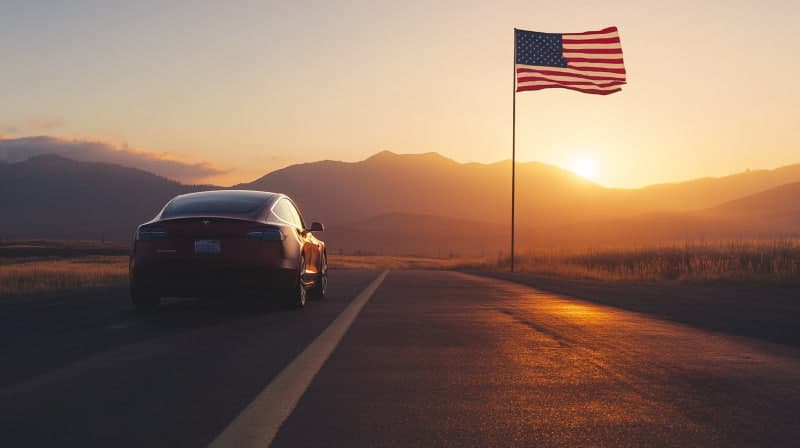
In line with President Donald Trump’s protectionist policies, as well as his predecessor Joe Biden’s affinity for strengthening U.S. manufacturing and local supply, companies are making efforts to establish a domestic electric vehicle (EV) supply chain.
Ad
As it happens, the U.S. is trying to position itself as a significant competitor to China in various aspects of EV production, to which end powder metals supplier GKN Hoeganaes and mineral development company First Phosphate signed a strategic partnership, according to a report by Automotive World on February 27.
Benefits of the U.S. LFP supply
Indeed, the partnership, established in November 2024, aims to deliver a world-first North American supply for lithium-iron-phosphate (LFP) batteries in a push to challenge China’s dominance and bring cheaper EVs to market. They have opted for LFP for a number of reasons.
The first is the affordability of their constituent raw materials, followed by high cycle life and low risk of overheating. However, much of the raw materials supply for LFP is in Asia and is controlled mainly by China, stressing the need for a sustainable and domestic LFP supply chain.
Ad
Meanwhile, iron phosphate comprises more than 80% of the cathode in an LFP battery, making onshoring its supply a strategic priority. In the words of Matthias Voss, Senior Vice President of GKN Hoeganaes, there is “no capacity in North America right now, and it is much the same in Europe. The supply chain for this compound really needs to be built from scratch.”
Additionally, China itself may not necessarily be able to meet international demand much longer and might soon hit capacity due to its exponential domestic sales growth, forcing it to turn to other regions to secure the material for its own manufacturing.
Innovations in LFP supply
As Voss explained, “We developed a means of using the magnetite that helps First Phosphate avoid large amounts of waste material in its own process.” As he added, while other global players can generate iron powder, the “devil is in the details,” and the biggest challenge is purity, which can have a tangible impact on battery performance.
Notably, prior to this partnership, GKN, an established player in the field of iron powder, carried out a successful integration of First Phosphate’s magnetite (FP being the same in the phosphoric rock sector) into its melting process, leading to the development of a high-purity iron powder for implementation in EV batteries.
The companies are also looking to recover used iron from batteries at the end of their useful life, which Voss characterizes as “the second stage of the journey” thus possibly solving most procurement issues. For the time being, however, this process is more expensive and inefficient than mining.
At the same time, the potential innovations with huge implications for the EV industry keep stacking up, including the discovery of sodium-ion cathodes to replace lithium, and automotive giants BMW and Volvo introducing the super-powerful 800V batteries to cut down charging times and increase range.
How do you rate this article?
Subscribe to our YouTube channel for crypto market insights and educational videos.






Join our Socials
Briefly, clearly and without noise – get the most important crypto news and market insights first.
Most Read Today
1
Samsung crushes Apple with over 700 million more smartphones shipped in a decade
2Peter Schiff Warns of a U.S. Dollar Collapse Far Worse Than 2008
3Dubai Insurance Launches Crypto Wallet for Premium Payments & Claims
4XRP Whales Buy The Dip While Price Goes Nowhere
5Luxury Meets Hash Power: This $40K Watch Actually Mines Bitcoin
Latest





8
Also read
Similar stories you might like.
Automotive
Solid-state magic: Mercedes-Benz’s EQS covers 1,205 km on single charge
Shedrach | 2025-09-10
Automotive
Cybertruck’s little brother? Tesla teases Cyber SUV design
Ana | 2025-09-02
Automotive
Tesla confirms new Sentry Mode feature for Cybertruck – security goes next-level
Ana | 2025-08-15
Automotive
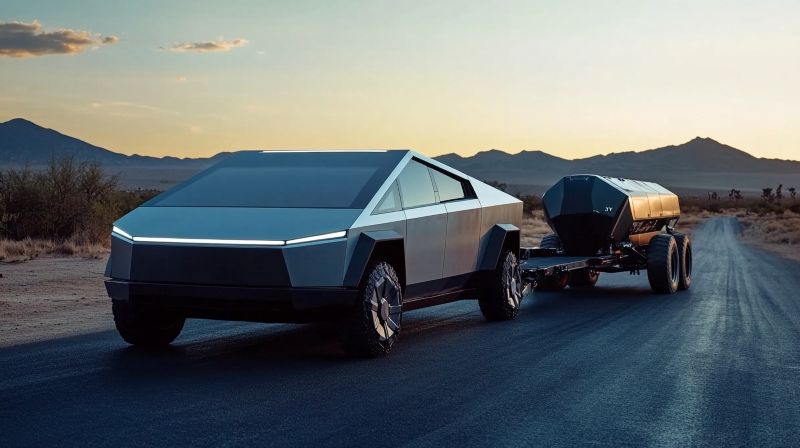
Clever new Cybertruck feature stops towing mistakes before they happen
Ana | 2025-08-07
Artificial Intelligence
Elon Musk teases wild new Tesla FSD model – launch window revealed
Ana | 2025-08-07
Artificial Intelligence
Tesla’s latest Robotaxi map tweak is a message to competitors
Ana | 2025-08-05
Automotive
Tesla hints at new compact pickup truck in the works
Ana | 2025-07-29
Automotive
Tesla exec finally confirms Roadster timeline rumor
Ana | 2025-07-28
Automotive
Elon Musk confirms wild features for Tesla Diner Supercharger
Ana | 2025-07-21
Automotive
Macan EV surges to 60% of Porsche’s electrified sales
Ana | 2025-07-09