










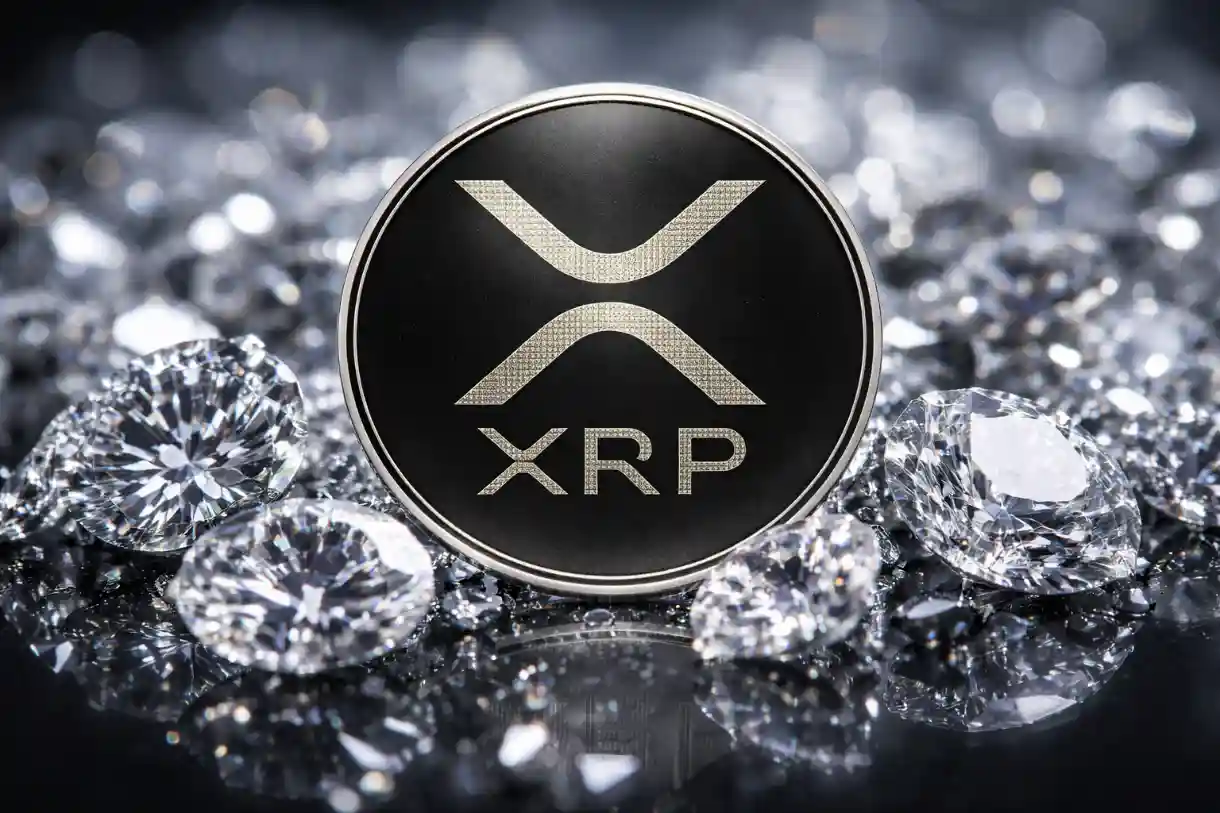
XRP coin diamonds. Source: TechGaged / Shutterstock
XRP Ownership Patterns Are Changing — And It May Signal Something Bigger
In Brief
- • XRP wallet growth is led by smaller holders.
- • Retail participation is increasing across the network.
- • Large-holder activity remains relatively stable.
Ad
XRP wallets holding less than 100 tokens have reached a record 5.66 million addresses, according to new on-chain data. At the same time, mid-tier wallets climbed to 2.01 million, whereas large holders remained relatively stable. The shift points to growing retail participation even as price action remains under pressure.
What the latest wallet data shows
According to an analysis by the blockchain monitoring platform Santiment, shared in an X post on March 21, the XRP Ledger is seeing steady expansion across different wallet tiers, with the strongest growth coming from smaller holders.
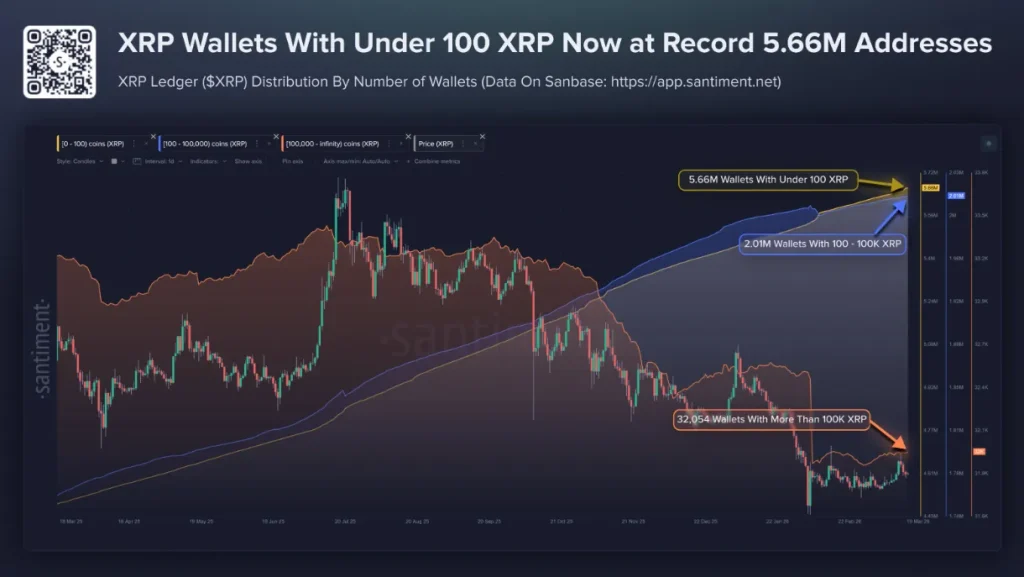
Addresses holding under 100 XRP now account for the largest share of new growth, suggesting increased onboarding or accumulation at the lower end of the spectrum. This trend has been building over time and recently pushed to a new high.
Mid-sized wallets, those holding between 100 and 100,000 XRP, have also grown, reaching just over 2 million addresses. This tier often reflects more engaged users or early-stage accumulation beyond casual exposure.
Meanwhile, large wallets holding more than 100,000 XRP remain relatively limited in number, with just over 32,000 addresses. That segment has not expanded at the same pace, indicating that the current growth cycle is being driven more by smaller participants.
Why this matters for the market
Wallet distribution gives insight into how a network is evolving beneath the surface.
Growth in smaller wallets usually signals rising interest or adoption at the retail level. That can support long-term network activity, even if price performance does not immediately reflect it.
At the same time, the slower growth among large holders suggests that major capital is not expanding exposure at the same rate. That creates a mixed picture between grassroots adoption and institutional-scale liquidity.
There is also a structural angle. A broader base of smaller holders can increase network resilience and usage, but it does not automatically translate into stronger price support without deeper liquidity.
All things considered, XRP’s network is growing, but the type of growth matters. Right now, it is being led from the bottom up.
How do you rate this article?
Subscribe to our YouTube channel for crypto market insights and educational videos.






Join our Socials
Briefly, clearly and without noise – get the most important crypto news and market insights first.
Most Read Today
1
Crypto Trading Volume Collapse: March on Track for Worst Month Since 2020
2SEC Move Opens New Phase For Bitcoin And Ethereum ETFs
3Bitcoin Crash Fears Return as Market Pressure Builds
4A Healthy Pullback Or Something More — What Drove Crypto Markets This Week
5New Threat to Prediction Markets as U.S. Crackdown Expands
Latest







8
Also read
Similar stories you might like.

Altcoins
XRP May Be Entering a Key Phase as Market Stress Signals Are Building
Ana | 2026-03-24

Altcoins
Ethereum Supply Concentration Is Rising — A Quiet Shift Is Underway
Rokas | 2026-03-24

Market
A Healthy Pullback Or Something More — What Drove Crypto Markets This Week
Sead | 2026-03-23

Bitcoin
Bitcoin Supply Shift Raises New Questions Across Market
Ana | 2026-03-23

Bitcoin
Bitcoin Crash Fears Return as Market Pressure Builds
Ana | 2026-03-23
Altcoins
Goldman Sachs Is XRP’s Biggest ETF Buyer — What the Pros See That Retail Might Be Missing
Azeez | 2026-03-22

Altcoins
The Real Bitcoin Story Isn’t Just the Fed — A 2012 Whale Reshuffled $146M: What It Means
Azeez | 2026-03-22

Altcoins
After GTC 2026, Which AI Token Stands to Win? The Case for Bittensor
Azeez | 2026-03-21

Altcoins
Is Dogecoin About to Move? X Payments Narrative Gains Momentum
Azeez | 2026-03-20
Altcoins
XRP Needs This One Catalyst to Explode – Analyst Explains Why
Ana | 2026-03-19