





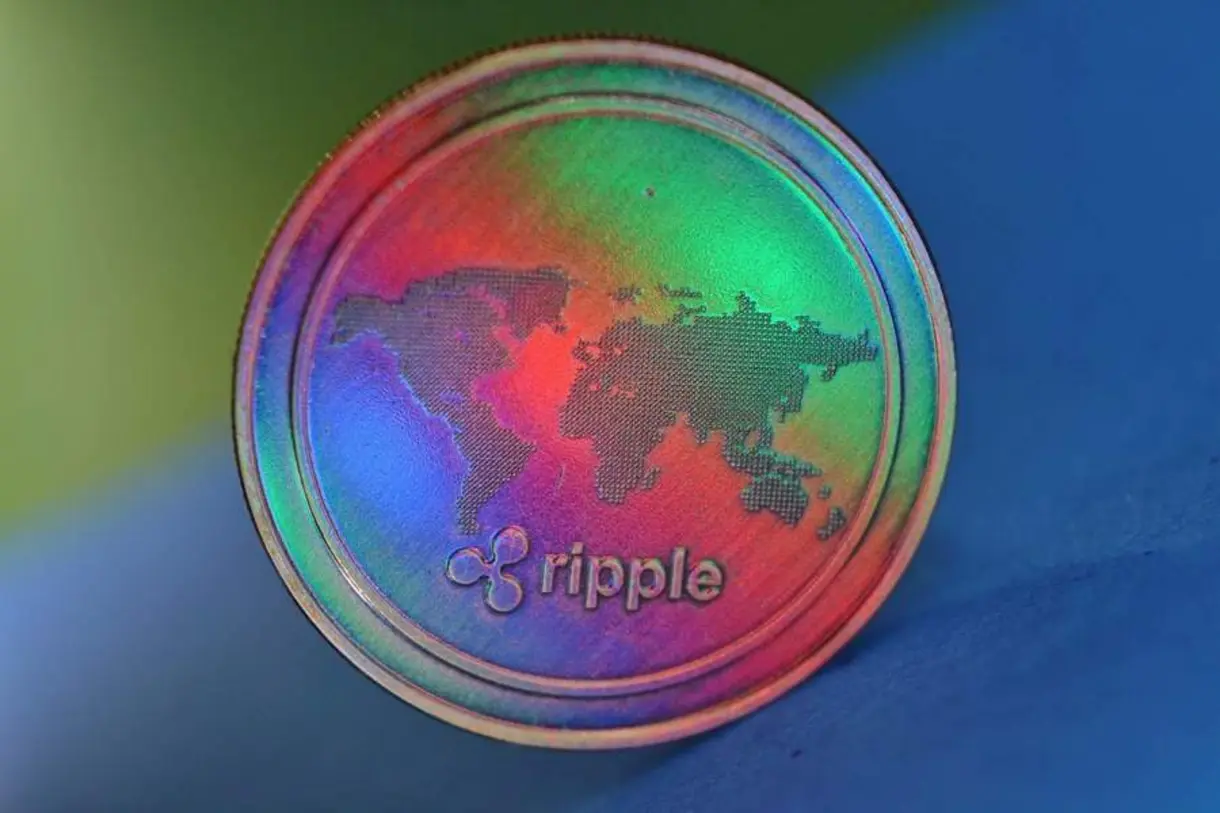
Debate over XRP’s real-world utility flares up again after old emails resurface.
XRP Utility Debate Reignites as Old Emails Resurface
In Brief
- • Old emails revived debate over XRP’s role as infrastructure versus investment.
- • Developers say XRPL prioritizes liquidity efficiency, not price narratives.
- • Analysts argue XRP’s design doesn’t rule out long-term price appreciation.
Ad
A decade-old email just reignited one of the cryptocurrency industry’s longest-running arguments. As XRP price expectations clash with the XRP Ledger’s original design, developers and analysts are stepping in to clarify what actually matters and to whom.
The result is less about price targets and more about how global payment rails really work. Hence, the community is trying to make it clear whether XRP is supposed to be an investment or invisible infrastructure.
Where the XRP vs XRPL Argument Comes From
The latest debate traces back to a 2013 email from Arthur Britto, where he described XRP as “hidden plumbing,” a bridge asset users wouldn’t need to think about if better routes existed.
It was Panos Mekras, the co-founder and CEO of Anodos Finance, a fintech company building a “financial super app” and on-chain neobank on the XRPL, who started it all by sharing the letter in an X post on January 29.
The point wasn’t price dismissal, but design intent. The XRP Ledger was built as a currency market plus payment network, where assets compete on liquidity and spreads, not hype. In that model, XRP is optional, used only when it offers the most efficient bridge.
That distinction resurfaced when commentators argued that such statements imply XRP can’t rise in value. Others pushed back, saying that the interpretation confuses transaction mechanics with long-term market dynamics.
David Schwartz Clarifies the Liquidity Question
Ripple CTO David Schwartz stepped in to clarify what “price is less important than spread” actually means.
For users converting, say, dollars to euros, the decision to route through XRP depends far more on liquidity depth and spreads than on XRP’s nominal price. A higher price doesn’t automatically help payments, and a very low price can actually make XRP more expensive to use due to slippage and capital inefficiency.
Crucially, Schwartz avoided making absolute price claims. He noted that he once believed XRP hitting $0.25 was unlikely, just as Bitcoin (BTC) at $100 once seemed impossible. Markets, he argued, don’t move on certainty, but on structure and adoption over time.
Why Analysts Say the Chart Still Matters
That’s where prominent crypto trading expert EGRAG CRYPTO entered the discussion. Responding to claims that XRP “can’t” reach higher valuations, he reframed the debate around math and capital expansion.
As he explained, from a pure percentage standpoint, XRP moving from $2 to $100 is mathematically far less extreme than its early move from fractions of a cent to $1. Lower prices feel heavier emotionally, but the math doesn’t care.
More importantly, EGRAG CRYPTO separates utility design from market outcomes. XRPL can function as hidden infrastructure, and XRP can appreciate if liquidity, usage, and structure align. One doesn’t cancel the other.
In short, the argument is about confusing how a system is meant to work with how markets sometimes behave. And history suggests those two rarely move in straight lines.
XRP Price Today
More Must-Reads:
How do you rate this article?
Subscribe to our YouTube channel for crypto market insights and educational videos.






Join our Socials
Briefly, clearly and without noise – get the most important crypto news and market insights first.
Most Read Today
1
Robert Kiyosaki Reveals 4 Assets He’s Buying Amid Geopolitical Carnage
2Institutional XRP Demand Under Pressure as ETFs See Outflows
3Tether CEO Teases Industry With “True Breakthrough This Coming Week”
4Chainlink’s 499% Social Volume Spike: Why Attention is Outpacing Price
5Beware: Ethereum Address-Poisoning Scams Accelerate; How to Stay Safe?
Latest




8
Also read
Similar stories you might like.
Bitcoin
Less Than 800 Days Until Next Bitcoin Halving – Why It Matters Now
Rokas | 2026-03-17

Altcoins
Tether CEO Teases Industry With “True Breakthrough This Coming Week”
Rokas | 2026-03-16

Altcoins
Ethereum Foundation Drops New Manifesto For The Network; What’s New?
Ana | 2026-03-13
Blockchain
Wells Fargo Files ‘WFUSD’ Trademark for Crypto and Payment Services
Ana | 2026-03-11
Bitcoin
Bitcoin Hashrate Surges 50% In One-Month Recovery – What It Means
Rokas | 2026-03-05

Blockchain
This Crypto Exchange Has Blocked 3 Million User Account Hijacks
Ana | 2026-03-03

Altcoins
Ethereum Eyes BitTorrent-Style Block Building; Here’s What It Brings
Ana | 2026-03-03
Industry
Morgan Stanley Moves to Launch a Crypto Trust Bank
Patrick | 2026-03-01
Bitcoin
TD Cowen Analyst Makes Bullish Bitcoin Case: ‘Stronger, Cheaper Than Ever’
Ana | 2026-02-25

Blockchain
Vitalik Buterin Explains Why Crypto Can Never Be Fully Secure
Ana | 2026-02-23