













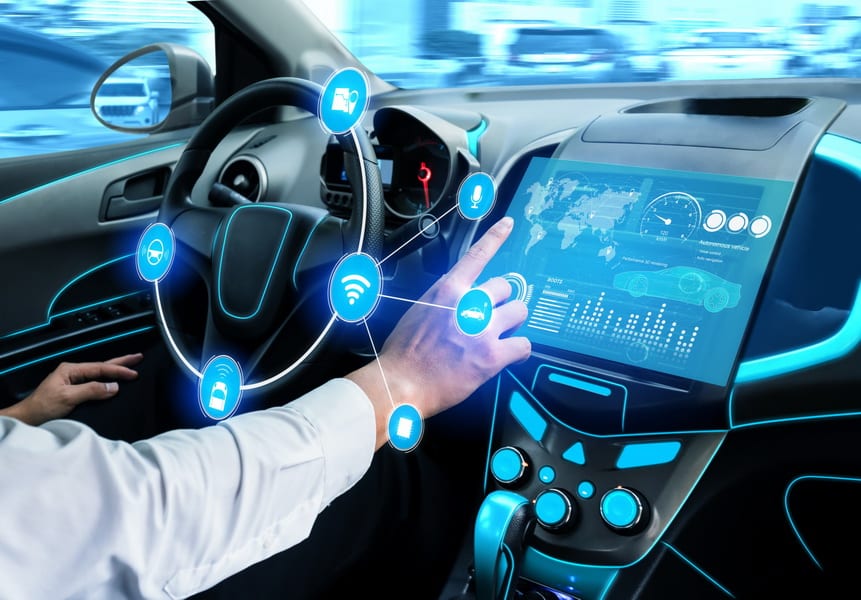
AI in vehicles-TechGaged.com
Western drivers are 5x more concerned about using AI in vehicles than Chinese or Indian drivers
The automotive industry has transformed dramatically over the years, with carmakers embracing cutting-edge technologies to meet drivers’ evolving expectations. As a cornerstone of innovation in the tech industry, artificial intelligence has become the center of that shift. And while AI sparks excitement, it also fuels fear and skepticism, revealing a huge East-West divide in how drivers see its role in vehicles.
According to data presented by TechGaged.com, Western drivers are five times more concerned about AI in vehicles than their Chinese or Indian counterparts.
Over 60% of Western drivers are skeptical or indifferent about AI in driving assistance
Seven years after AI became mainstream, its vehicle use still causes mixed feelings. While some drivers welcome its potential to enable autonomous driving and improve safety and fuel efficiency, many remain cautious of losing control behind the wheel. Fears of accidents due to technical failures and insufficient regulations only fuel their skepticism. According to Deloitte’s 2025 Global Automotive Consumer Study, most AI skeptics among drivers are in Western countries.
Many Western drivers worry about AI’s reliability in critical situations, fearing malfunctions or misjudgments that could cause accidents. Privacy is also a big issue, as connected vehicles collect vast amounts of data, raising fears of misuse or surveillance.
According to Deloitte, around 60% of Western drivers are either against or feel indifferent about using AI in vehicles. For example, for around 25% of drivers in the United States, the United Kingdom, and Germany, AI offers no clear benefits, while over 30% are neutral. On the other hand, only 40% of drivers in these countries think AI in vehicles is beneficial, much less than in Asian markets.
Chinese and Indian drivers are generally more enthusiastic about AI, and there are several reasons for that. In China, government-backed initiatives promoting smart cities and autonomous driving have created a culture of optimism around AI, including traffic. Meanwhile, India’s growing middle class and worsening traffic conditions make AI-powered vehicles highly appealing.
Statistics show that only 5% of drivers in China, India, and Southeast Asia find AI in vehicles unhelpful, five times less than in Western countries. At the same time, 82% of Indians and 77% of Chinese are willing to embrace AI solutions for safer and smarter transportation systems.
Anti-theft tracking, emergency assistance, and automated detection of traffic are the top use cases of AI in vehicles
Deloitte’s survey also revealed the most popular AI-powered features among drivers. Emergency assistance topped the list, with 86% of Indian drivers, 78% of Chinese drivers, 62% of US drivers, and 58% of UK drivers willing to pay extra for this service.
Anti-theft tracking was the second most preferred service, with an 88% share in India, 77% in China, 60% in the US, and 65% in the UK. Automatic detection of other vehicles and pedestrians was another key feature, embraced by 81% of Chinese and 75% of Indian drivers, but only 60% of the US and 50% of UK drivers.
The survey also showed that 87% of Indian and 80% of Chinese drivers believe their next vehicle should be able to connect with a smartphone, roughly 20% more than their US and UK counterparts and nearly twice more than in Germany or Japan.
How do you rate this article?
Subscribe to our YouTube channel for crypto market insights and educational videos.






Join our Socials
Briefly, clearly and without noise – get the most important crypto news and market insights first.

Most Read Today
1
Peter Schiff Warns of a U.S. Dollar Collapse Far Worse Than 2008
2Samsung crushes Apple with over 700 million more smartphones shipped in a decade
3Dubai Insurance Launches Crypto Wallet for Premium Payments & Claims
4XRP Whales Buy The Dip While Price Goes Nowhere
5Luxury Meets Hash Power: This $40K Watch Actually Mines Bitcoin
Latest





8
Also read
Similar stories you might like.

Industry
Google Searches for “How to Buy Gold” Explode Globally, Hitting a Two-Decade High
Rokas | 2026-01-26

Industry
Businesses now use crypto as operational capital, CoinGate data reveals a structural shift
Rokas | 2026-01-21

Bitcoin
$455 Billion in Bitcoin Exposed to Quantum Attack Risk via Address Reuse, Up 16% Since 2020
Jastra | 2026-01-20

Altcoins
Iran’s Crypto Activity Surges During Protests; Here’s Why
Ana | 2026-01-16

Industry
Stablecoin Market Share Hits an All-Time High of 10.19%
Jastra | 2026-01-14
No image

Bitcoin
Only Three Governments Increased Bitcoin Holdings in 2025 – U.S. Leads Following 130,000 BTC Seizure
Jastra | 2026-01-05

Industry
Solana Tokens Lose $157B in 2025, The Largest Dollar-Value Drop in the Chain’s History
Jastra | 2025-12-30

Artificial Intelligence
Robert Kiyosaki Warns AI Bubble May Be Bigger Than Dot-Com
Ana | 2025-12-24

Artificial Intelligence
New Epstein Disclosures Collide With an AI Project Built Months Earlier
Ana | 2025-12-22