











Treasury Secretary Bessent Commits Seized Bitcoin To National Strategic Reserve
Treasury Secretary Bessent Commits Seized Bitcoin To National Strategic Reserve
Ad
The United States government has officially ended its long-standing practice of selling confiscated Bitcoin (BTC), and is now treating it as a permanent sovereign asset.
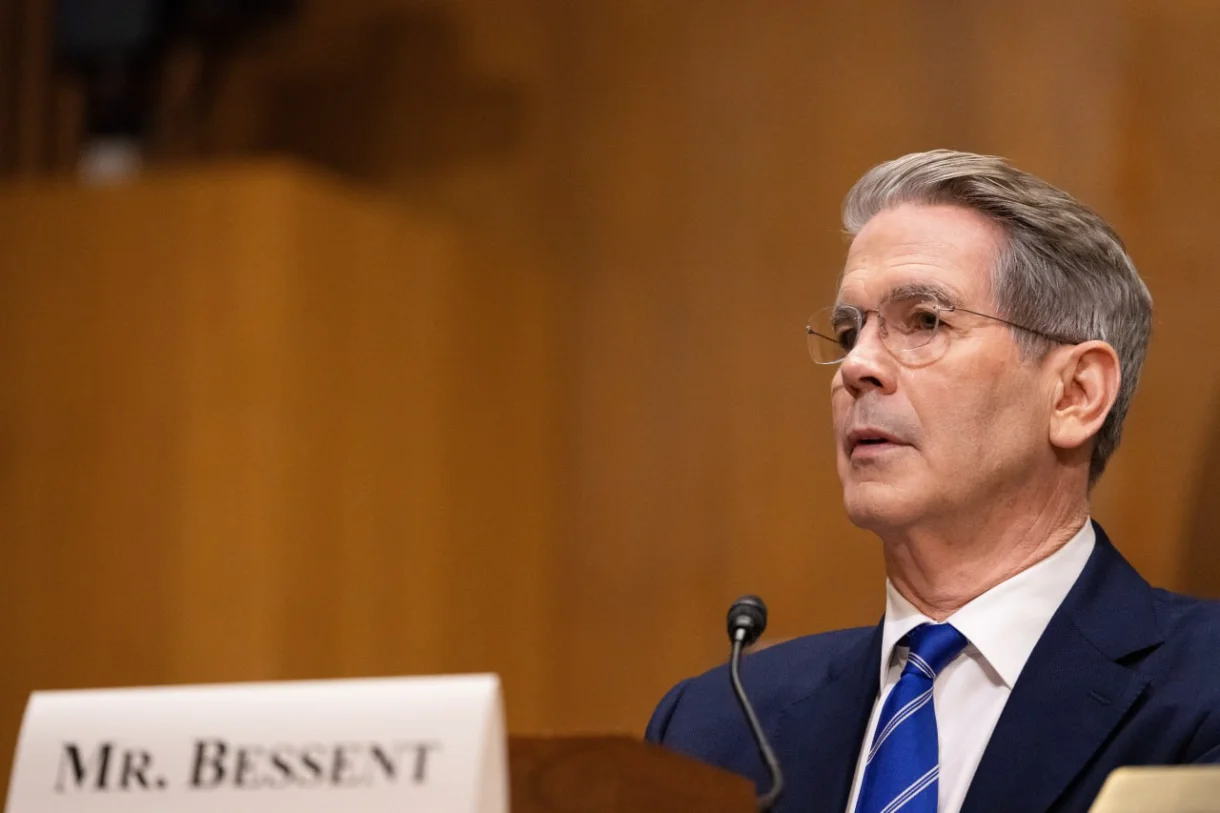
In a landmark announcement at the World Economic Forum (WEF) in Davos on January 20, 2026, Treasury Secretary Scott Bessent confirmed that all Bitcoin seized by U.S. law enforcement will be redirected into a newly formalized U.S. Strategic Bitcoin Reserve, marking a decisive shift in how Washington views digital assets.
For more than a decade, the U.S. Marshals Service routinely auctioned out confiscated Bitcoin, often adding supply pressure to the market. Under the new policy directive, those liquidations will cease permanently, according to a report published on January 21.
Instead, the Treasury will treat its estimated 200,000+ BTC holdings as a long-term store of value on the national balance sheet.
A New “Hard Fork” In U.S. Fiscal Policy
Bessent framed the move as a necessary evolution in national financial strategy, saying the administration’s goal is to “stop the selling, which we have done, and then we can add the assets in asset forfeitures,” and instead preserve seized Bitcoin as a permanent reserve asset.
Rather than buying Bitcoin on the open market, the Treasury will use what Bessent called a “budget-neutral accumulation strategy,” capitalizing the reserve entirely through criminal and civil asset forfeiture.
Any Bitcoin seized through ransomware cases, cybercrime investigations, sanctions violations, or civil penalties will now be deposited directly into the reserve.
That approach allows the government to expand its holdings without raising debt, increasing taxes, or triggering political backlash over direct cryptocurrency purchases.
To safeguard the reserve, the Treasury has established strict custody rules through the Federal Reserve. Assets held in the reserve can’t be sold or transferred, except in the event of an extreme national economic emergency or full-scale debt restructuring.
Global Shockwaves From America’s Bitcoin Pivot
The announcement immediately sparked discussions among G7 and G20 nations about whether they should follow suit with their oversized crypto holdings.
By framing Bitcoin as a strategic reserve asset, comparable to gold or petroleum, the U.S. has effectively elevated BTC into the highest tier of sovereign financial infrastructure.
Institutional analysts say the removal of routine government sell pressure represents one of the most powerful structural tailwinds Bitcoin has seen since the launch of spot exchange-traded funds (ETFs).
With the Treasury preparing its first full audit of the Strategic Bitcoin Reserve later this quarter, attention now turns to upcoming crypto legislation, including the GENIUS Act and CLARITY Act, which aim to provide long-term regulatory certainty for the digital sector.
Indeed, from a forced Bitcoin seller, the United States has turned into a long-term holder, and this single shift may reshape Bitcoin’s global role for decades to come.
Meanwhile, Bitcoin is changing hands at the price of $89,180.90, down 2.3% in the last 24 hours, declining 5.9% across the previous seven days, and recording a 0.8% loss over the past month, according to the most recent charts.
Bitcoin Price Today
More Must-Reads:
How do you rate this article?
Subscribe to our YouTube channel for crypto market insights and educational videos.






Join our Socials
Briefly, clearly and without noise – get the most important crypto news and market insights first.

Most Read Today
1
Chainlink’s 499% Social Volume Spike: Why Attention is Outpacing Price
2Cardano (ADA) Price Analysis: Quiet Accumulation as Technical Signals Begin to Strengthen
3Mantle’s $1B Milestone: Why MNT is the Next Layer 2 Powerhouse to Watch
4Digital Silver’s Silent Strength: Litecoin (LTC) Fundamental and Technical Dive
5Zcash: The VC-Backed Rebirth of Private Finance
Latest







8
Also read
Similar stories you might like.

Altcoins
Chainlink’s 499% Social Volume Spike: Why Attention is Outpacing Price
Azeez | 2026-03-15

Altcoins
The Institutional Push: Why the Aptos & Mastercard Alliance is a High-Stakes Bet for 2026
Azeez | 2026-03-14

Altcoins
The Institutional Green Light: Analyzing AVAX as Grayscale’s Staking ETF Hits Nasdaq
Azeez | 2026-03-14

Altcoins
The Pi Day Pivot: Can Polkadot’s Massive Supply Cut Fuel a DOT Breakout?
Azeez | 2026-03-14

Altcoins
Ethereum Foundation Drops New Manifesto For The Network; What’s New?
Ana | 2026-03-13
Altcoins
XRP Triangle Pattern Points To Major Upside Target
Ana | 2026-03-13

Altcoins
Whales Quietly Scoop Up Millions Of TRUMP Tokens; What’s Happening?
Rokas | 2026-03-13
Bitcoin
Supply Shock: 204K BTC Leave Exchanges As Whales Stay Dormant
Rokas | 2026-03-13
Bitcoin
Record Strategy Bitcoin Purchase Raises Supply Pressure Questions
Rokas | 2026-03-13

Bitcoin
Should You Sell Bitcoin at $100K? Here’s What ChatGPT Says
Rokas | 2026-03-12