












Scientists Shocked: Moss Lives Nearly a Year in Space
Scientists Stunned: Moss Survives Nearly a Year in Space
In Brief
- • Moss spores survived nine months in open space and still grew normally afterward.
- • Their protective casing shields them from radiation, vacuum, and extreme temperatures.
- • The findings suggest hardy plants could endure long-term space exposure and aid future off-world ecosystems.
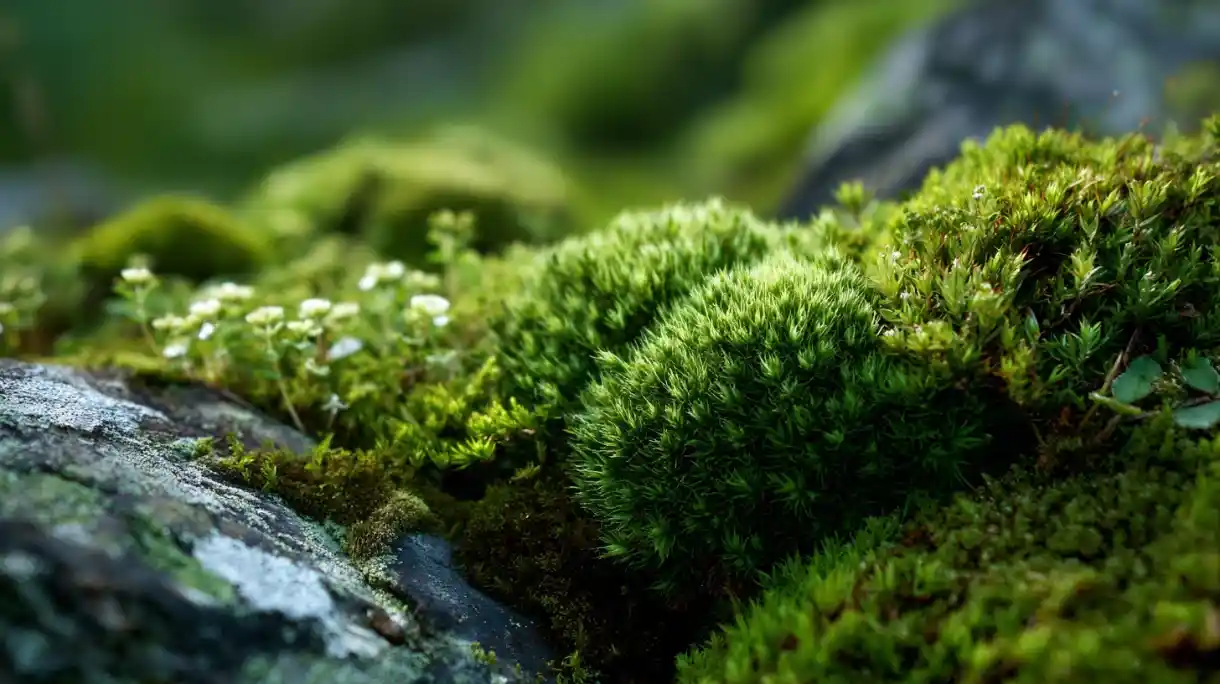
Scientists have just confirmed that one of Earth’s tiniest and oldest land plants can survive something that kills almost every known organism instantly: direct exposure to the vacuum of space. Not only did it endure the radiation, cosmic rays, and total vacuum, it kept growing as if nothing happened.
Ad
A groundbreaking new study has revealed that moss spores exposed directly to outer space for nearly nine months not only survived, they returned to Earth with the ability to reproduce normally. Researchers expected almost total death, making the results one of the most shocking biological discoveries in recent space research.
The experiment centered on the moss species Physcomitrium patens, a a moss species already known for surviving volcanic ash fields, polar climates, and extreme terrestrial environments. But the space environment outside the International Space Station (ISS), in unfiltered ultraviolet radiation, cosmic rays, wild temperature swings, and a complete vacuum, represents one of the harshest conditions life can experience.
When the spores were brought back to the lab, the results were nothing short of astonishing. More than 80% had survived the ordeal.
Even more surprising, nearly 90% of those survivors went on to germinate normally, forming healthy new moss. Chlorophyll levels showed only minor damage, and the plants resumed growth as if they had not spent almost a year in the harshest known environment.
Ad
How Moss Pulled Off One of Biology’s Most Extreme Survival Feats
Researchers attribute this resilience to the protective casing around each spore. This natural shell absorbs and scatters UV radiation, shields the spore’s genetic material, and stabilizes its internal chemistry during violent temperature shifts.
The protection is so effective that juvenile moss cells and brood cells – two less-protected stages – died quickly in similar tests, while encapsulated spores remained almost untouched.

What These Findings Mean to the Future of Humanity
To understand how long moss could potentially survive in space, the team built a mathematical model using the actual survival data. The estimate was startling: these spores could last as long as 15 years under similar open-space exposure, far longer than expected and long enough to reshape scientific assumptions about how life disperses and persists beyond Earth.
The findings carry major implications for future off-world agriculture and ecosystem construction.
Moss’s ability to withstand radiation, temperature extremes, and vacuum suggests that robust primitive plants could support early biosystems on the Moon and Mars. The research also provides new clues about how early land plants survived mass extinction events and adapted to harsh prehistoric climates.
For the scientists behind the project, these results reveal something profound: life that evolved on Earth may carry ancient, built-in mechanisms for surviving conditions far beyond our planet.
More Must-Reads:
How do you rate this article?
Subscribe to our YouTube channel for crypto market insights and educational videos.






Join our Socials
Briefly, clearly and without noise – get the most important crypto news and market insights first.
Most Read Today
1
Peter Schiff Warns of a U.S. Dollar Collapse Far Worse Than 2008
2Dubai Insurance Launches Crypto Wallet for Premium Payments & Claims
3XRP Whales Buy The Dip While Price Goes Nowhere
4Samsung crushes Apple with over 700 million more smartphones shipped in a decade
5Luxury Meets Hash Power: This $40K Watch Actually Mines Bitcoin
Latest




8
Also read
Similar stories you might like.

Industry
Google Searches for “How to Buy Gold” Explode Globally, Hitting a Two-Decade High
Rokas | 2026-01-26

Industry
Businesses now use crypto as operational capital, CoinGate data reveals a structural shift
Rokas | 2026-01-21

Bitcoin
$455 Billion in Bitcoin Exposed to Quantum Attack Risk via Address Reuse, Up 16% Since 2020
Jastra | 2026-01-20

Altcoins
Iran’s Crypto Activity Surges During Protests; Here’s Why
Ana | 2026-01-16
Industry
Stablecoin Market Share Hits an All-Time High of 10.19%
Jastra | 2026-01-14
No image

Bitcoin
Only Three Governments Increased Bitcoin Holdings in 2025 – U.S. Leads Following 130,000 BTC Seizure
Jastra | 2026-01-05
Industry
Solana Tokens Lose $157B in 2025, The Largest Dollar-Value Drop in the Chain’s History
Jastra | 2025-12-30
Artificial Intelligence
New Epstein Disclosures Collide With an AI Project Built Months Earlier
Ana | 2025-12-22

Science
Scientists Reconstruct Skull of 1.6-Million-Year-Old Ethiopian Homo Erectus
Shedrach | 2025-12-19