












Scientists create lithium battery that bends, heals, and keeps powering devices
Scientists create lithium battery that bends, heals, and keeps powering devices
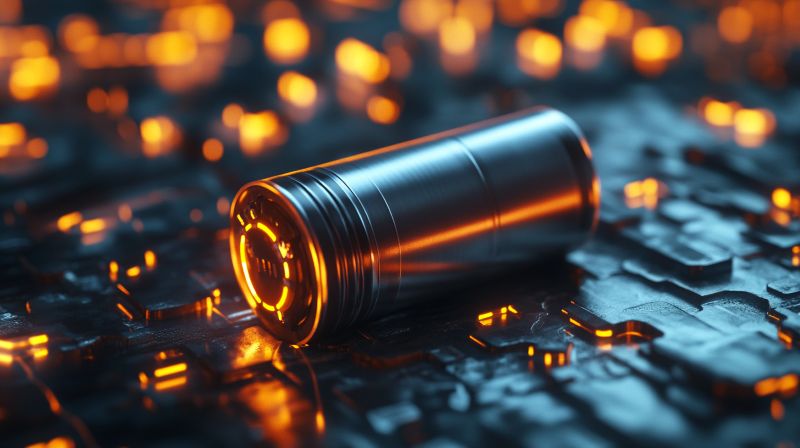
As scientists keep inventing new and fascinating things that make all our lives better, their newest breakthrough – a self-healing lithium battery that also bends while providing power – might change the way we charge our gadgets.
Ad
Indeed, a multidisciplinary team at the University of California, Berkeley, the Georgia Institute of Technology, and the Hong Kong University of Science and Technology has created a stretchable, healable lithium battery that stays stable after 500 charge and discharge cycles, per a TechXplore report on April 15.
Developing the self-healing lithium battery
The team’s work builds upon the efforts from the past few years that saw the development of a stretchable battery with potential use in wearable electronics, as well as a fluid battery that can take any shape. And now, the UC Berkeley researchers have created a stretchable battery that also heals itself.
Specifically, the researchers used a zwitterionic polymer with both a positive and negative charge, where water molecules bond with the charged parts while the negative parts of plastic attract the lithium ions. Such a setup enables water to be tightly bound in the battery, decreasing the risk of it splitting when voltage is applied, while still allowing lithium ions to be released when needed.
Ad
In the following step, they added an acrylic acid to function as a cross-linker and a fluorine-free lithium salt-based hydrogel electrolyte with a stability window of up to 3.11 volts. The arrangement facilitated it to pull water from the air, further minimizing the chance of water molecules splitting during the introduction of electricity.
As a result, they arrived at a battery that was just 19% water and could maintain stability in rooms with 50% humidity, performing well for over a month, with a minimum amount of water splitting, when the scientists tested it in a circuit board running LED lights. It also self-healed and continued working even when stretched, folded, punctured by needles, and cut by razors.

Elsewhere, lithium batteries in electric vehicles (EVs) might not be around for much longer, as researchers at Princeton University in New Jersey have earlier this year discovered a high-energy sodium-ion cathode that could outperform the traditional lithium-ion ones and become a safer, more sustainable, and cost-effective alternative.
How do you rate this article?
Subscribe to our YouTube channel for crypto market insights and educational videos.






Join our Socials
Briefly, clearly and without noise – get the most important crypto news and market insights first.
Most Read Today
1
Samsung crushes Apple with over 700 million more smartphones shipped in a decade
2Peter Schiff Warns of a U.S. Dollar Collapse Far Worse Than 2008
3Dubai Insurance Launches Crypto Wallet for Premium Payments & Claims
4XRP Whales Buy The Dip While Price Goes Nowhere
5Luxury Meets Hash Power: This $40K Watch Actually Mines Bitcoin
Latest





8
Also read
Similar stories you might like.

Industry
Google Searches for “How to Buy Gold” Explode Globally, Hitting a Two-Decade High
Rokas | 2026-01-26

Industry
Businesses now use crypto as operational capital, CoinGate data reveals a structural shift
Rokas | 2026-01-21

Bitcoin
$455 Billion in Bitcoin Exposed to Quantum Attack Risk via Address Reuse, Up 16% Since 2020
Jastra | 2026-01-20

Altcoins
Iran’s Crypto Activity Surges During Protests; Here’s Why
Ana | 2026-01-16

Industry
Stablecoin Market Share Hits an All-Time High of 10.19%
Jastra | 2026-01-14
No image

Bitcoin
Only Three Governments Increased Bitcoin Holdings in 2025 – U.S. Leads Following 130,000 BTC Seizure
Jastra | 2026-01-05
Industry
Solana Tokens Lose $157B in 2025, The Largest Dollar-Value Drop in the Chain’s History
Jastra | 2025-12-30

Artificial Intelligence
New Epstein Disclosures Collide With an AI Project Built Months Earlier
Ana | 2025-12-22

Science
Scientists Reconstruct Skull of 1.6-Million-Year-Old Ethiopian Homo Erectus
Shedrach | 2025-12-19