















Woman wearing mask holding Bitcoin coins. Source: TechGaged / Shutterstock
Research: How the COVID-19 Crisis Changed Bitcoin Market Behavior
In Brief
- • Study finds COVID increased Bitcoin volatility but not predictability.
- • Bitcoin returns continued to follow a random-walk pattern.
- • Shocks typically faded within about one trading week.
Ad
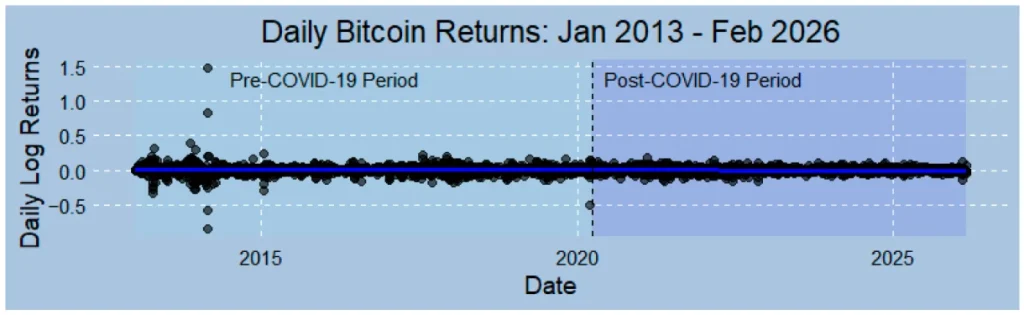
Bitcoin (BTC)’s price swings during COVID were violent, but a new academic study says the market itself didn’t break. An analysis of daily Bitcoin returns from January 2013 through February 2026 found that the pandemic raised volatility without creating persistent return predictability. That matters because it cuts against the idea that chaos automatically makes Bitcoin easier to trade using past price patterns.
Study says volatility did not mean inefficiency
The paper, published in Economies on March 11, tested whether Bitcoin remained weak-form efficient before and after the COVID-19 shock. In plain English, that means asking whether past price data could reliably help predict future returns.
The authors used a Variance Ratio test and found Bitcoin returns remained consistent with a random walk across multiple holding periods. They then ran an interrupted time series model around the March 2020 COVID break and reported no statistically significant change in either return level or return trend after the pandemic began.
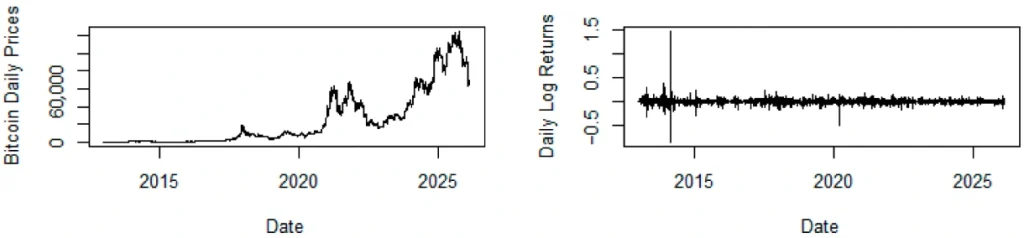
That result held up again in the ARIMAX model. Both the COVID dummy and its interaction term were statistically insignificant, meaning the pandemic did not materially change Bitcoin’s return-generating process once serial dependence was accounted for.
What the paper actually found
The study doesn’t say COVID had no effect on Bitcoin. It says the effect showed up in volatility, not in a lasting breakdown of market efficiency.
That distinction matters as Bitcoin still saw extreme moves, and the paper explicitly notes the pandemic period came with heightened uncertainty and larger price swings. But bigger swings are not the same thing as easier prediction.
One of the more useful findings is that shocks appeared to fade over approximately one trading week. The moving-average structure pointed to short-lived adjustment dynamics linked to weekly trading cycles and liquidity patterns, not to persistent inefficiencies traders could repeatedly exploit.
The bigger takeaway is simple. Even under one of the largest global shocks in recent market history, Bitcoin’s daily returns still behaved like a market absorbing information quickly rather than one offering obvious, repeatable signals from old price action.
That doesn’t end the efficiency debate. It does, however, give Bitcoin one more serious academic result in its favor.
More Must-Reads:
How do you rate this article?
Subscribe to our YouTube channel for crypto market insights and educational videos.






Join our Socials
Briefly, clearly and without noise – get the most important crypto news and market insights first.
Most Read Today
1
148 Public Companies Now Hold Bitcoin, With Strategy Accounting for 63% of All Corporate BTC
2R. Kiyosaki Recommends These Two Assets For Another 2008-Style Crisis
3Analyst Sparks Debate: XRP “Conspiracy Theorists” Might Be Right
4Bitcoin Rebounds Despite War Tensions — What Drove Crypto Markets This Week
5BTC Dominance Death Cross Likely Within Months; Here’s What It Means
Latest





8
Also read
Similar stories you might like.

Altcoins
Pro-Crypto Senator Meets Fed Chair Pick to Discuss Digital Assets
Rokas | 2026-03-11

Altcoins
Wall Street Enters XRP ETFs as Inflows Hit $1.4B, Goldman Sachs Becomes Top Holder
Rokas | 2026-03-11

Market
Exclusive: Crypto Trader Josh Rager Says Bitcoin’s 4-Year Cycle “Isn’t What It Used To Be”
Sead | 2026-03-11

Altcoins
Analyst Says XRP Ready For Massive Run; Here’s When
Ana | 2026-03-10

Altcoins
Ethereum Whale Accumulation Goes Parabolic; What’s Happening?
Ana | 2026-03-10

Altcoins
R. Kiyosaki Recommends These Two Assets For Another 2008-Style Crisis
Ana | 2026-03-11

Bitcoin
148 Public Companies Now Hold Bitcoin, With Strategy Accounting for 63% of All Corporate BTC
Rokas | 2026-03-10

Altcoins
BTC Dominance Death Cross Likely Within Months; Here’s What It Means
Rokas | 2026-03-10

Altcoins
Analyst Sparks Debate: XRP “Conspiracy Theorists” Might Be Right
Rokas | 2026-03-10

Market
Bitcoin Rebounds Despite War Tensions — What Drove Crypto Markets This Week
Sead | 2026-03-09