












Outdated tech puts lives at risk from weather, storms, tornadoes
Outdated tech puts lives at risk from weather, storms, tornadoes
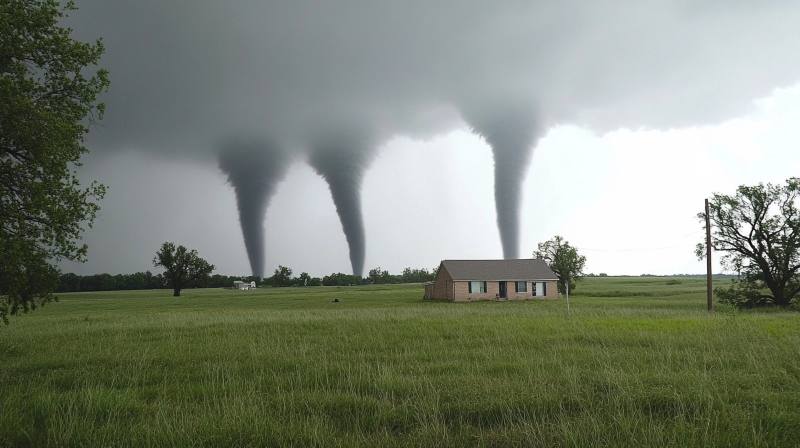
With the public increasingly on edge, keeping an eye out on the weather, storms, tornadoes, and other hazards, technology in the form of the aging NEXRAD radar network reaching the end of its lifespan should make everyone a bit more concerned.
Ad
Specifically, the US National Oceanic and Atmospheric Administration (NOAA) said that NEXRAD would soon become obsolete, prompting it to develop a plan for the deployment of the Phased Array Radar (PAR) system, but which could stall due to proposed budget cuts, as FOX Weather reported earlier.
Indeed, if the budget cuts to NOAA pass, they would slash essential research funding and slow down tech advancements that would otherwise assist in the deployment of next-generation radar systems that meteorologists say could dramatically improve severe weather forecasting and save lives.
Notably, the Trump administration has proposed to reduce NOAA’s budget well below its current level at more than $6 billion, and it could hit the organization’s National Severe Storms Laboratory (NSSL), which has introduced the PAR system to replace the old NEXRAD that’s been around since the 1990s.
Ad
Weather, storms, tornadoes require real-time data
The current system can miss rapidly evolving events due to its scan rate of four to six minutes, whereas PAR systems can scan the atmosphere in under a minute, providing near-real-time updates on storm developments, and allowing NOAA to issue more timely warnings with fewer errors.
As it happens, the organization has already launched a PAR prototype back in 2021 and has collected hundreds of hours of atmospheric data, including from over a dozen tornadic supercells. Per Ryan Bunker, a meteorologist with the National Weather Service in Norman Oklahoma:
“It was definitely a huge plus, not only for the location of warnings but just overall, lead time as well. Using PAR data definitely can give you the confidence to issue warnings quicker – and to extend that lead time to protect life and property.”
Meanwhile, scientists have warned that stalling PAR could jeopardize public safety, considering that the current NEXRAD system is about to become completely obsolete, ending its intended lifespan. According to Dr. Dana Carlis, NSSL’s Director:
“The next 10 years are critical for the future of weather radar in the United States. (…) PAR is ready to be part of Radar Next and will serve as a critical infrastructure investment that advances our understanding of severe weather.”
Elsewhere, lives could be endangered by another weather-altering threat – the Yellowstone supervolcano that has seen a bit more seismic and thermal activity in March, when a new volcanic vent opened in the Roadside Springs region, reigniting fears of a possibly devastating 1,000-year eruption.
How do you rate this article?
Subscribe to our YouTube channel for crypto market insights and educational videos.






Join our Socials
Briefly, clearly and without noise – get the most important crypto news and market insights first.
Most Read Today
1
Peter Schiff Warns of a U.S. Dollar Collapse Far Worse Than 2008
2Samsung crushes Apple with over 700 million more smartphones shipped in a decade
3Dubai Insurance Launches Crypto Wallet for Premium Payments & Claims
4XRP Whales Buy The Dip While Price Goes Nowhere
5Luxury Meets Hash Power: This $40K Watch Actually Mines Bitcoin
Latest






8
Also read
Similar stories you might like.

Artificial Intelligence
Musk Predicts The Year Robots Will Replace Our Jobs
Ana | 2025-12-01

Research
Mars Has Lightning, and Scientists Are Freaking Out
Ana | 2025-11-27

Business &Amp; Technology
Sweat-Powered Tech Turns Any Cup Into a Health Sensor
Ana | 2025-11-14

Business &Amp; Technology
Lawsuit says Roblox became ‘a school shooter’s playground’ under a16z
Ana | 2025-10-29
Cybersecurity
Government officials’ home info leaked in mass dox dump
Ana | 2025-10-17

Business &Amp; Technology
How China became the ‘world’s factory’: The hidden history
Shedrach | 2025-10-13
Artificial Intelligence
Tesla deploys first-ever Unsupervised FSD in Europe – but there’s a catch
Ana | 2025-09-05

Artificial Intelligence
40% of Coinbase code now written by AI, CEO reveals
Ana | 2025-09-04

Business &Amp; Technology
Samsung TV meltdown: Streaming apps suddenly unusable
Ana | 2025-08-01

Business &Amp; Technology
Apple billboard sparks controversy with phallic design
Ana | 2025-07-31