













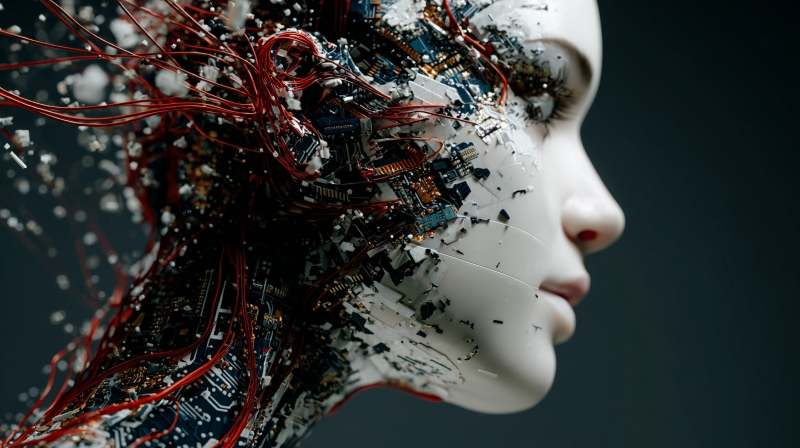
Microsoft AI boss raises alarm: Studying AI consciousness is ‘dangerous’
Microsoft AI boss raises alarm: Studying AI consciousness is ‘dangerous’
As the artificial intelligence (AI) sector continues to evolve and companies keep trying to best each other in new advancements, some insiders are concerned about the concept of consciousness in AI and warn against exploring it.
Ad
Indeed, Microsoft’s CEO of AI, Mustafa Suleyman, has argued that the study of AI models potentially developing consciousness and subjective experiences similar to living beings, as well as the rights they should have, could mean entering a “dangerous” territory, as he said in a blog post on August 19.
Suleyman: AI isn’t people and we shouldn’t treat it as such
Specifically, in his post titled ‘We must build AI for people; not to be a person,’ Suleyman noted that, aside from considering the impending emergence of superintelligence and its impact on jobs, alignment, and the like, there were even more pressing issues to think about.
One of them is the developments in the lead-up towards superintelligence, as these technologies “already have the potential to fundamentally change our sense of personhood and society,” when his life’s mission “has been to create safe and beneficial AI that will make the world a better place [and] empower people.”
Ad
As Suleyman further pointed out, he was increasingly worrying about the so-called ‘psychosis risk’ (when chatbots fuel delusional beliefs through sycophancy and hallucinations) and unhealthy attachments to AI chatbots, not just by people already vulnerable to mental health issues.
“Simply put, my central worry is that many people will start to believe in the illusion of AIs as conscious entities so strongly that they’ll soon advocate for AI rights, model welfare, and even AI citizenship. This development will be a dangerous turn in AI progress and deserves our immediate attention.”
Therefore, he believes, the study of AI welfare is “both premature, and frankly dangerous,” as it could worsen delusions that AI systems are conscious entities, lead to more dependence-related problems, disconnect individuals from reality, distort moral priorities, bring about new dimensions of societal division, “and create a huge new category error for society.”
Finally, Microsoft’s AI chief concluded his thoughts by arguing that “we should build AI for people; not to be a person,” as the “arrival of Seemingly Conscious AI is inevitable and unwelcome,” so “we need a vision for AI that can fulfill its potential as a helpful companion without falling prey to its illusions.”
How do you rate this article?
Subscribe to our YouTube channel for crypto market insights and educational videos.





Join our Socials
Briefly, clearly and without noise – get the most important crypto news and market insights first.
Most Read Today
1
Peter Schiff Warns of a U.S. Dollar Collapse Far Worse Than 2008
2Samsung crushes Apple with over 700 million more smartphones shipped in a decade
3Dubai Insurance Launches Crypto Wallet for Premium Payments & Claims
4XRP Whales Buy The Dip While Price Goes Nowhere
5Luxury Meets Hash Power: This $40K Watch Actually Mines Bitcoin
Latest






8
Also read
Similar stories you might like.
Artificial Intelligence
Robert Kiyosaki Warns AI Bubble May Be Bigger Than Dot-Com
Ana | 2025-12-24

Artificial Intelligence
New Epstein Disclosures Collide With an AI Project Built Months Earlier
Ana | 2025-12-22
Artificial Intelligence
Gemini Can Now Detect AI-Generated Files
Shedrach | 2025-12-19

Artificial Intelligence
Fetch.ai Launches Autonomous AI-to-AI USDC Settlement
Shedrach | 2025-12-19

Artificial Intelligence
Tesla Semi Tease Hints At Big Changes Under The Hood
Ana | 2025-12-19
Artificial Intelligence
Scientists Use AI to Crack Nature’s Hidden Laws
Ana | 2025-12-18
Artificial Intelligence
Can AI Ever Be Proven Conscious? A Philosopher Says No
Ana | 2025-12-18
Artificial Intelligence
Researchers Uncover Hidden Bias in Cancer Diagnosis AI
Ana | 2025-12-17

Artificial Intelligence
AI Learns Math Better by Arguing With Itself
Ana | 2025-12-15
Artificial Intelligence
Breakthrough AI Enables Seamless Control of Prosthetic Hands
Shedrach | 2025-12-12