








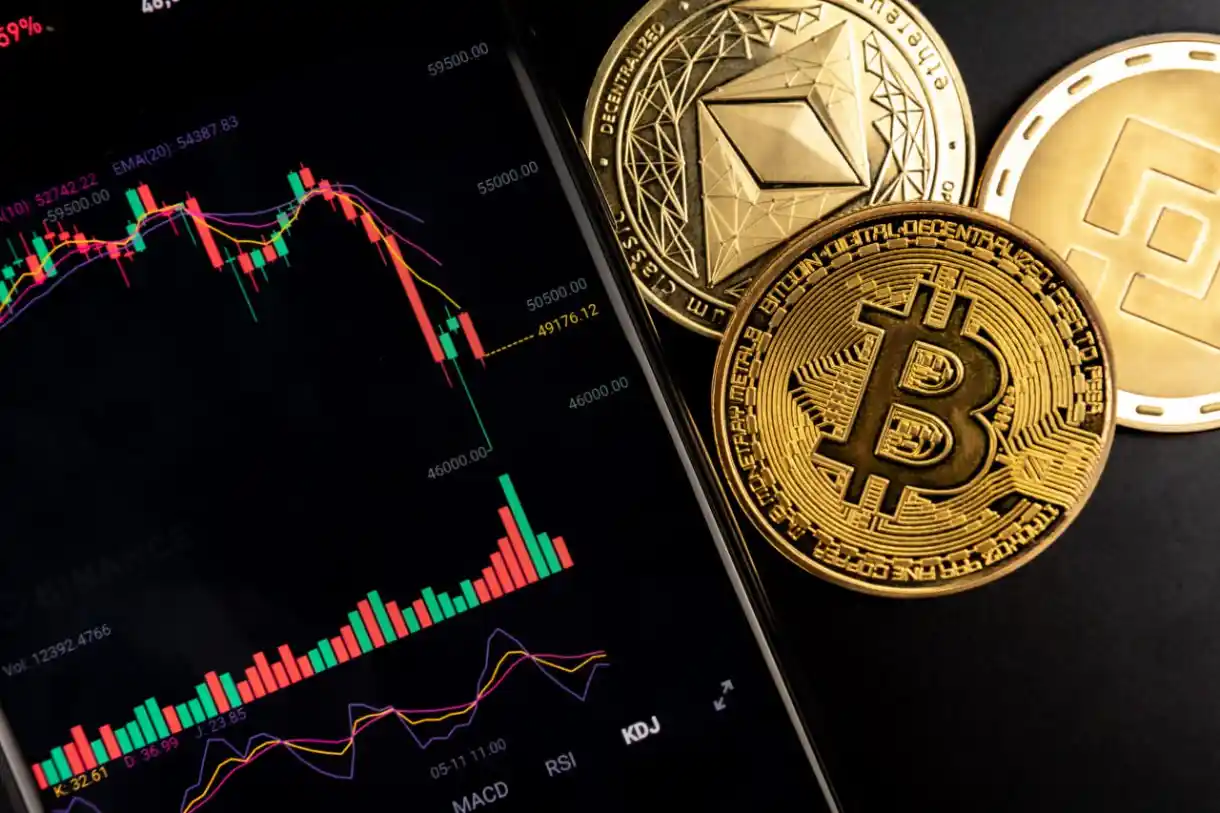
Bitcoin, Binance, and Ethereum coins lie together on top of a screen showing a chart.
Ad
Kansas has formally entered the growing conversation around state-level digital asset strategy. On January 22, lawmakers introduced Senate Bill No. 352, a proposal that would authorize the creation of a Bitcoin and digital asset strategic reserve held by the state treasury.
The bill positions Kansas among a small but expanding group of U.S. states exploring crypto. Not as a payment experiment or regulatory test, but as a long-term balance-sheet asset.
Kansas Moves to Formalize a Digital Asset Reserve
According to the official filing from the Kansas Legislature, Senate Bill 352 outlines a framework that allows the state to acquire, hold, and manage Bitcoin and other qualifying digital assets as part of a strategic reserve program.
The legislation defines digital assets broadly while emphasizing assets secured by decentralized networks and cryptographic verification. Additionally, it assigns oversight responsibilities to the state treasury over custody, accounting, and authorization for transactions.
Notably, the bill does not frame crypto as a speculative trading tool. Instead, it treats digital assets as strategic property, placing them alongside other long-term reserve instruments.
The proposal also reflects a growing recognition among state governments that digital assets may play a role in future financial infrastructure. Moreover, the bill attempts to address governance and operational risk at the legislative level by codifying how assets are acquired and stored.
What it Could Signal for the Industry
It’s important to mention that this development matters less for immediate price action and more for institutional signaling. When a state legislature considers holding Bitcoin on its balance sheet, the conversation shifts from adoption theory to implementation.
A strategic reserve framework implies long-duration holding, formal custody standards, and integration with public accounting systems. Indeed, aligning closely with how large institutions already interact with crypto through regulated custodians.
For the broader industry, state-level initiatives like this reinforce the idea that Bitcoin is increasingly viewed as a sovereign-grade asset, not merely a retail instrument or speculative hedge.
Therefore, even if adoption is slow, the legal and operational groundwork creates a pathway for other states to follow with clearer precedents and less uncertainty.
Kansas’ proposal doesn’t represent an overnight transformation of public finance. However, it does mark a meaningful step in crypto’s institutional evolution and its role in the future.
More Must-Reads:
How do you rate this article?
Subscribe to our YouTube channel for crypto market insights and educational videos.






Join our Socials
Briefly, clearly and without noise – get the most important crypto news and market insights first.

Most Read Today
1
Chainlink’s 499% Social Volume Spike: Why Attention is Outpacing Price
2Cardano (ADA) Price Analysis: Quiet Accumulation as Technical Signals Begin to Strengthen
3Mantle’s $1B Milestone: Why MNT is the Next Layer 2 Powerhouse to Watch
4Digital Silver’s Silent Strength: Litecoin (LTC) Fundamental and Technical Dive
5The Pi Day Pivot: Can Polkadot’s Massive Supply Cut Fuel a DOT Breakout?
Latest







8
Also read
Similar stories you might like.
Industry
Morgan Stanley Moves to Launch a Crypto Trust Bank
Patrick | 2026-03-01

Industry
Missouri Bitcoin Reserve Bill Advances as Crypto Strategy Gains Ground
Patrick | 2026-02-20
Bitcoin
Charles Schwab Raises Strategy (MSTR) Stake in Latest 13F Filing
Patrick | 2026-02-17
Industry
Circle Says Stablecoin Regulation Has Reached an Inflection Point
Patrick | 2026-02-17
Blockchain
Banks Are Helping SWIFT Build a Blockchain Coordination Layer
Patrick | 2026-02-13
Industry
A Wall Street Asset Manager Just Crossed a New Line on Binance
Patrick | 2026-02-11

Altcoins
Ripple Expands Institutional Custody With Staking and Security Integrations
Patrick | 2026-02-10
Uncategorized
This Altcoin Got Selected for the Bank of England’s Synchronisation Lab
Patrick | 2026-02-10

Crypto News
This Crypto Platform is Opening New York’s First Free Grocery Store
Patrick | 2026-02-03
Blockchain
This Crypto Wallet Just Integrated US Stocks, ETFs and Commodities
Patrick | 2026-02-03