




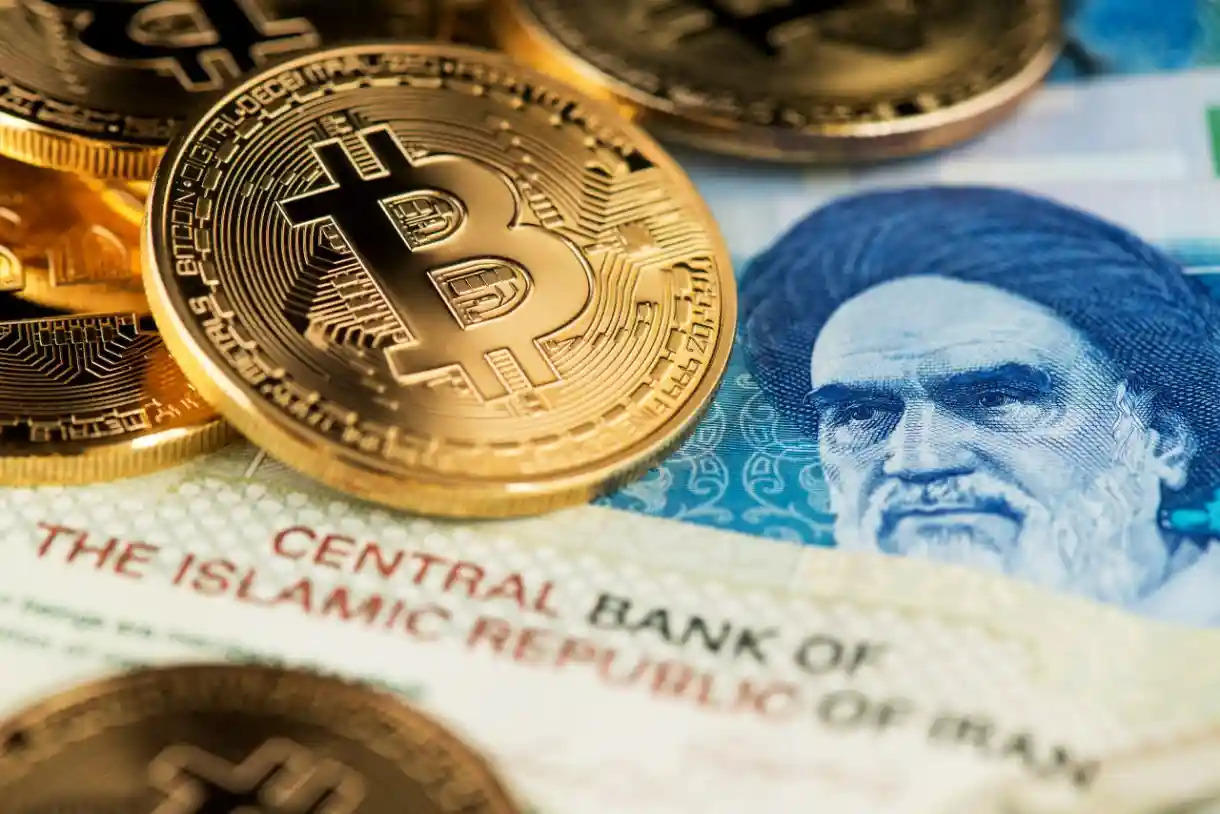
Iran’s Crypto Activity Surges During Protests; Here’s Why
Ad
Iran’s cryptocurrency ecosystem has quietly grown into a multi-billion-dollar market, and it’s now closely tied to the country’s worsening political and economic instability.
Specifically, new analysis from blockchain and cryptocurrency monitoring platform Chainalysis, published on January 15, reveals that Iran’s crypto economy surpassed $7.78 billion in 2025, with on-chain activity surging during periods of domestic unrest and geopolitical conflict.
The data shows crypto has become both a financial lifeline for ordinary citizens and a powerful tool for state-linked actors.
IRGC Now Controls Half Of Iran’s Crypto Market
One of the most striking findings is the growing dominance of the Islamic Revolutionary Guard Corps (IRGC) in Iran’s crypto economy.
Chainalysis estimates that IRGC-linked addresses accounted for roughly 50% of Iran’s total crypto activity in Q4 2025, reflecting the group’s expanding control over Iran’s broader economy. On-chain data shows IRGC-linked wallets received more than $3 billion in crypto during 2025, up sharply from 2024.

These wallets are tied to a global network used to move funds, launder money, transfer weapons, and bypass international sanctions, making cryptocurrency a critical pillar of Iran’s shadow financial system.
Bitcoin Becomes A Digital Flight To Safety
At the same time when the state-linked entities are expanding their crypto footprint, ordinary Iranians are turning to Bitcoin for survival.
Chainalysis observed a sharp rise in Bitcoin withdrawals to personal wallets during recent mass protests and nationwide internet blackouts. Between late December 2025 and early January 2026, on-chain data shows a significant jump in both transaction volumes and the number of BTC transfers to self-custodied wallets.

The behavior points to a growing trend of Iranians taking direct control of their savings as the Iranian rial continues its collapse. Since 2018, the rial has lost nearly 90% of its value, with inflation running between 40% and 50%.
For many citizens, Bitcoin now represents a censorship-resistant store of value that the state can’t freeze, seize, or devalue.

Blockchain Mirrors Iran’s Political Crisis
Chainalysis also found that Iran’s crypto activity spikes around major political and military events, including missile strikes, terror attacks, cyber operations, and mass protests.
From the Kerman bombings in 2024 to the 12-day war in 2025, each major escalation coincided with sharp increases in on-chain volume, effectively turning blockchain into a real-time barometer of geopolitical stress.
As Iran faces mounting sanctions and internal unrest, possibly even economic collapse, cryptocurrency is emerging as both a financial lifeline for citizens and a strategic tool for the regime, highlighting how digital assets are reshaping survival strategies in authoritarian economies.
More Must-Reads:
How do you rate this article?
Subscribe to our YouTube channel for crypto market insights and educational videos.






Join our Socials
Briefly, clearly and without noise – get the most important crypto news and market insights first.

Most Read Today
1
Chainlink’s 499% Social Volume Spike: Why Attention is Outpacing Price
2Cardano (ADA) Price Analysis: Quiet Accumulation as Technical Signals Begin to Strengthen
3Mantle’s $1B Milestone: Why MNT is the Next Layer 2 Powerhouse to Watch
4Digital Silver’s Silent Strength: Litecoin (LTC) Fundamental and Technical Dive
5Zcash: The VC-Backed Rebirth of Private Finance
Latest






8
Also read
Similar stories you might like.

Altcoins
Chainlink’s 499% Social Volume Spike: Why Attention is Outpacing Price
Azeez | 2026-03-15
Altcoins
The Institutional Push: Why the Aptos & Mastercard Alliance is a High-Stakes Bet for 2026
Azeez | 2026-03-14

Altcoins
The Institutional Green Light: Analyzing AVAX as Grayscale’s Staking ETF Hits Nasdaq
Azeez | 2026-03-14

Altcoins
The Pi Day Pivot: Can Polkadot’s Massive Supply Cut Fuel a DOT Breakout?
Azeez | 2026-03-14

Altcoins
Ethereum Foundation Drops New Manifesto For The Network; What’s New?
Ana | 2026-03-13
Altcoins
XRP Triangle Pattern Points To Major Upside Target
Ana | 2026-03-13

Altcoins
Whales Quietly Scoop Up Millions Of TRUMP Tokens; What’s Happening?
Rokas | 2026-03-13

Bitcoin
Supply Shock: 204K BTC Leave Exchanges As Whales Stay Dormant
Rokas | 2026-03-13
Bitcoin
Record Strategy Bitcoin Purchase Raises Supply Pressure Questions
Rokas | 2026-03-13

Bitcoin
Should You Sell Bitcoin at $100K? Here’s What ChatGPT Says
Rokas | 2026-03-12