







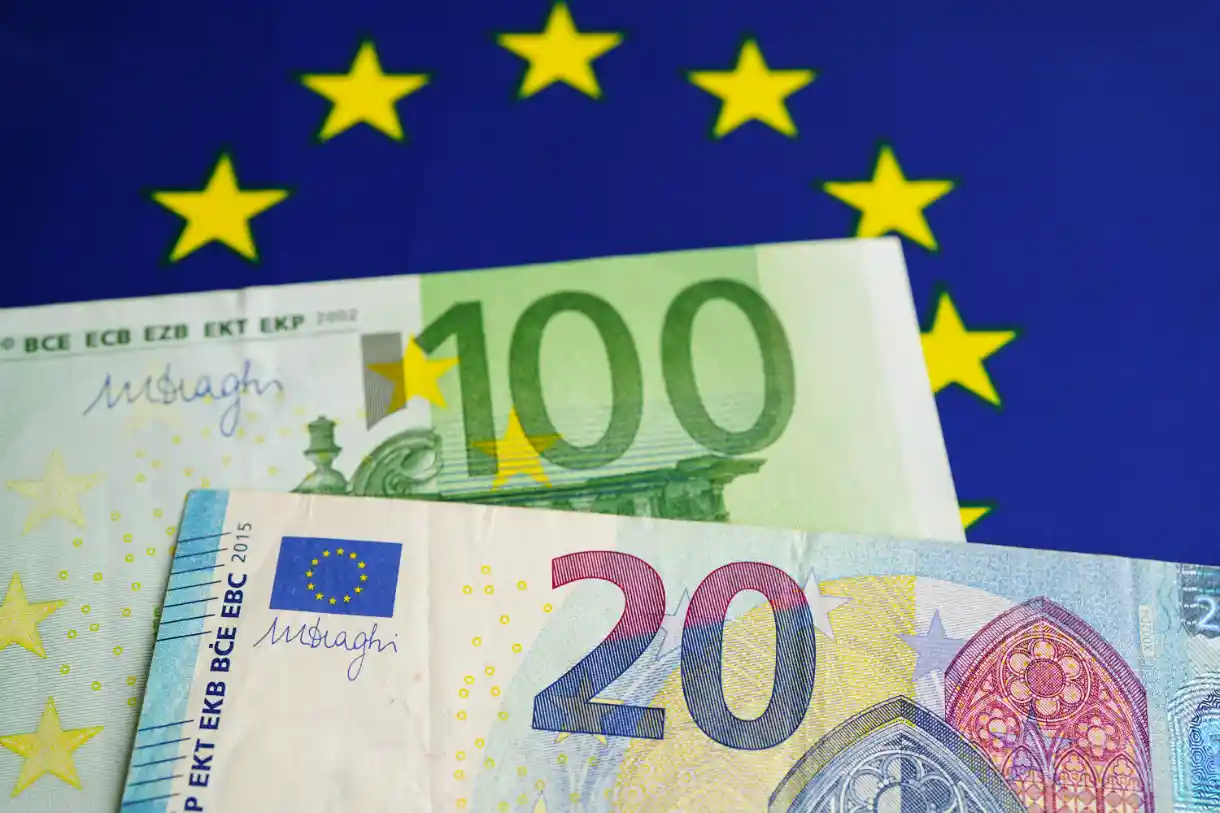
European banks launched a stablecoin.
Ad
A group of major European banks announced the launch of a euro-pegged stablecoin.
This new project, led by Qivalis, represents a significant move towards modernizing the region’s financial infrastructure. This shifts the conversation about stablecoins from speculation to practical, regulated financial tools.
The new stablecoin aims to compete with U.S. dollar-backed alternatives. Primarily targeting institutional settlement and cross-border payments.
This development is particularly important as MiCAR (Markets in Crypto-Assets Regulation) prepares for full implementation. Providing the necessary regulatory framework for digital asset issuance within the EU.
By aligning the new stablecoin with MiCAR. European banks seek to address compliance, security, and transparency concerns that have long plagued the digital asset space.
The Need for a European Digital Payment Solution
Currently, most of the world’s digital payments, including stablecoin transactions, are tied to the U.S. dollar.
This dominance creates a dependency on U.S. regulation and liquidity cycles. Which doesn’t align with the interests of European institutions or their clients.
European banks have long faced this challenge, and this euro-backed stablecoin offers a solution.
By launching a digital euro, Europe aims to reduce reliance on non-EU stablecoins while improving the efficiency of cross-border payments.
This shift isn’t just about offering an alternative. It’s about increasing Europe’s control over its financial infrastructure and integrating digital payments in a way that aligns with existing regulatory frameworks.
MiCAR guarantees that any crypto-based financial instruments, including stablecoins, are issued within a fully regulated environment. Something that many users expect from any new financial product.

Opportunities and Challenges
The Qivalis euro-pegged stablecoin is not an attempt to compete with the existing crypto ecosystem, but rather to integrate it into the traditional financial system.
European banks will use this stablecoin for settlement and treasury operations. Providing a regulated alternative to the volatile and fragmented systems currently in place.
The aim is not to replace existing payment rails, but to provide a more efficient, faster, and cost-effective alternative in specific use cases.
However, the stablecoin will face several hurdles.
While it offers greater regulatory clarity for businesses within the EU. It will need to gain adoption in a world still largely dominated by dollar-backed stablecoins. Particularly in decentralized finance (DeFi) markets and cross-border transactions outside Europe.
For the stablecoin to truly gain traction, European institutions must successfully demonstrate its utility in bridging gaps in the global digital economy.
Moreover, the stability of the euro-pegged stablecoin hinges on its ability to prove that it can maintain consistent value and usability. Especially during volatile market periods.
Adoption beyond the European banking sector will take time and effort. The euro-backed stablecoin does have the potential to shift the current dynamics within the global stablecoin market.
What This Means for the Future of Digital Finance
This initiative by European banks signals a broader shift toward regulated digital finance that is less about competing with existing assets and more about complementing traditional systems.
The move brings regulatory clarity to the blockchain space and sets a precedent for how established financial institutions can embrace blockchain technology without sacrificing oversight.
Ultimately, the euro-pegged stablecoin represents more than just a product. It signifies Europe’s strategy to create a controlled, compliant environment for the future of digital payments.
While it will take time for the stablecoin to gain widespread usage, the framework already in place is designed to support long-term adoption and integration.
As global regulators increasingly focus on bringing digital assets into the traditional financial system, Europe’s new stablecoin could play a pivotal role in shaping the future of cross-border payments and institutional settlement.
The growing demand for transparency and compliance will likely drive further shifts in the global market, but Europe has already set the groundwork for a more controlled and secure digital economy.
More Must Reads:
How do you rate this article?
Subscribe to our YouTube channel for crypto market insights and educational videos.






Join our Socials
Briefly, clearly and without noise – get the most important crypto news and market insights first.

Most Read Today
1
Chainlink’s 499% Social Volume Spike: Why Attention is Outpacing Price
2Cardano (ADA) Price Analysis: Quiet Accumulation as Technical Signals Begin to Strengthen
3Mantle’s $1B Milestone: Why MNT is the Next Layer 2 Powerhouse to Watch
4Digital Silver’s Silent Strength: Litecoin (LTC) Fundamental and Technical Dive
5Zcash: The VC-Backed Rebirth of Private Finance
Latest





8
Also read
Similar stories you might like.
Altcoins
Zcash: The VC-Backed Rebirth of Private Finance
Azeez | 2026-03-15
Altcoins
Mantle’s $1B Milestone: Why MNT is the Next Layer 2 Powerhouse to Watch
Azeez | 2026-03-15

Altcoins
Cardano (ADA) Price Analysis: Quiet Accumulation as Technical Signals Begin to Strengthen
Azeez | 2026-03-15

Altcoins
Chainlink’s 499% Social Volume Spike: Why Attention is Outpacing Price
Azeez | 2026-03-15

Altcoins
Digital Silver’s Silent Strength: Litecoin (LTC) Fundamental and Technical Dive
Azeez | 2026-03-14

Altcoins
The Institutional Push: Why the Aptos & Mastercard Alliance is a High-Stakes Bet for 2026
Azeez | 2026-03-14

Altcoins
The Institutional Green Light: Analyzing AVAX as Grayscale’s Staking ETF Hits Nasdaq
Azeez | 2026-03-14

Altcoins
The Pi Day Pivot: Can Polkadot’s Massive Supply Cut Fuel a DOT Breakout?
Azeez | 2026-03-14

Altcoins
Ethereum Foundation Drops New Manifesto For The Network; What’s New?
Ana | 2026-03-13

Industry
Geopolitical Chaos Is Forcing Tokenization of Global Trade
Sead | 2026-03-13