













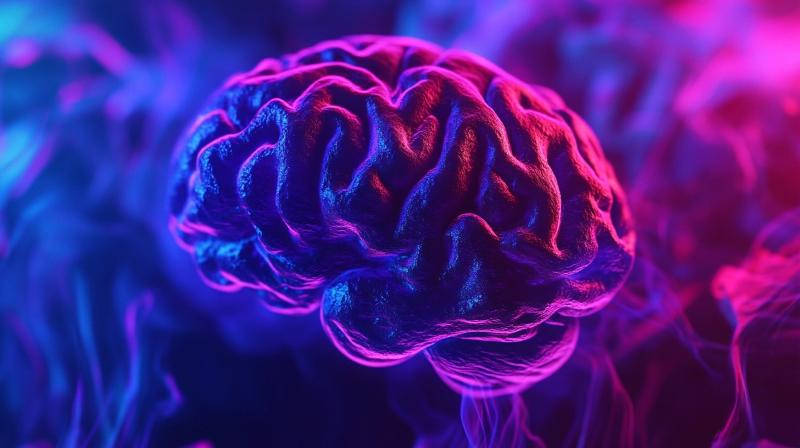
Brain science breakthrough: Single-dose psychedelic promotes weeks-long cognitive flexibility
Brain science breakthrough: Single-dose psychedelic promotes weeks-long cognitive flexibility
The impact of psychedelics on our consciousness and cognition has long been the subject of scientific analyses, and a recent study has discovered that a single dose can improve cognitive flexibility – an effect that can last for weeks – and has potentially massive implications.
Ad
Indeed, a team of researchers at the University of Michigan have deduced that a single dose of a psychedelic compound can enhance the brain’s ability to adapt to changing circumstances for weeks after administering it, according to a report by Medical Xpress published on April 22.

Results of single-dose psychedelic administration
Specifically, mice treated with a single dose of 25CM-NBOH, a selective serotonin 2A receptor agonist, showed substantially improved performance in reversal learning tasks compared to control groups when tested two to three weeks after treatment.
As it happens, the scientists deployed an innovative automated sequential learning paradigm, measuring how effectively the animals could adapt to rule reversals, which is a standard test for cognitive flexibility.
Ad
The results were astounding – the psychedelic-treated mice demonstrated superior adaptability compared to saline controls, with enhanced task efficiency, higher percentages of correct trials, and increased reward acquisition during the reversal phase.
As Professor Omar J. Ahmed, the study’s senior, corresponding author from the University of Michigan’s Department of Psychology, explained:
“What makes this discovery particularly significant is the sustained duration of cognitive benefits following just one psychedelic dose. (…) We observed enhanced learning adaptability that persisted for weeks, suggesting these compounds may induce lasting and behaviorally meaningful neuroplasticity changes in the prefrontal cortex.”
With the latest discovery, the findings complement existing cellular research that shows psychedelic-induced structural remodeling in the prefrontal cortex and themselves uniquely indicate sustained cognitive benefits long beyond the dissipation of the immediate effects of the drug – potentially applicable in treatments for depression, post-traumatic stress disorder (PTSD), and neurodegenerative diseases.
Meanwhile, the scientific community will have to carry out more experiments to determine what would happen with further administration of the psychedelic over several months, whether it would be increasingly beneficial, achieve a plateau effect, or even lead to negative consequences.
Elsewhere, a medicine for amyotrophic lateral sclerosis (ALS), the rare nerve disease that had triggered the viral ‘Ice Bucket Challenge’ some ten years ago, has shown promise in effectively treating another neurodegenerative condition – Alzheimer’s disease, based on improving neuron health in animal models.
How do you rate this article?
Subscribe to our YouTube channel for crypto market insights and educational videos.






Join our Socials
Briefly, clearly and without noise – get the most important crypto news and market insights first.
Most Read Today
1
Samsung crushes Apple with over 700 million more smartphones shipped in a decade
2Peter Schiff Warns of a U.S. Dollar Collapse Far Worse Than 2008
3Dubai Insurance Launches Crypto Wallet for Premium Payments & Claims
4XRP Whales Buy The Dip While Price Goes Nowhere
5Luxury Meets Hash Power: This $40K Watch Actually Mines Bitcoin
Latest






8
Also read
Similar stories you might like.

Industry
Google Searches for “How to Buy Gold” Explode Globally, Hitting a Two-Decade High
Rokas | 2026-01-26

Industry
Businesses now use crypto as operational capital, CoinGate data reveals a structural shift
Rokas | 2026-01-21

Bitcoin
$455 Billion in Bitcoin Exposed to Quantum Attack Risk via Address Reuse, Up 16% Since 2020
Jastra | 2026-01-20

Altcoins
Iran’s Crypto Activity Surges During Protests; Here’s Why
Ana | 2026-01-16
Industry
Stablecoin Market Share Hits an All-Time High of 10.19%
Jastra | 2026-01-14
No image

Bitcoin
Only Three Governments Increased Bitcoin Holdings in 2025 – U.S. Leads Following 130,000 BTC Seizure
Jastra | 2026-01-05

Industry
Solana Tokens Lose $157B in 2025, The Largest Dollar-Value Drop in the Chain’s History
Jastra | 2025-12-30

Artificial Intelligence
New Epstein Disclosures Collide With an AI Project Built Months Earlier
Ana | 2025-12-22

Science
Scientists Reconstruct Skull of 1.6-Million-Year-Old Ethiopian Homo Erectus
Shedrach | 2025-12-19