












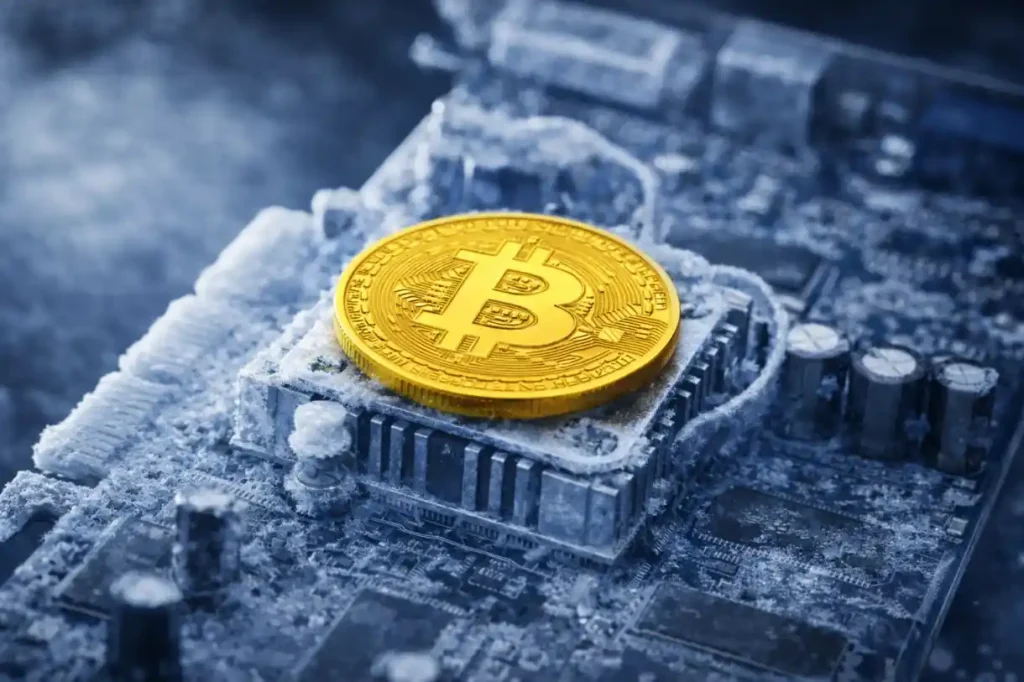
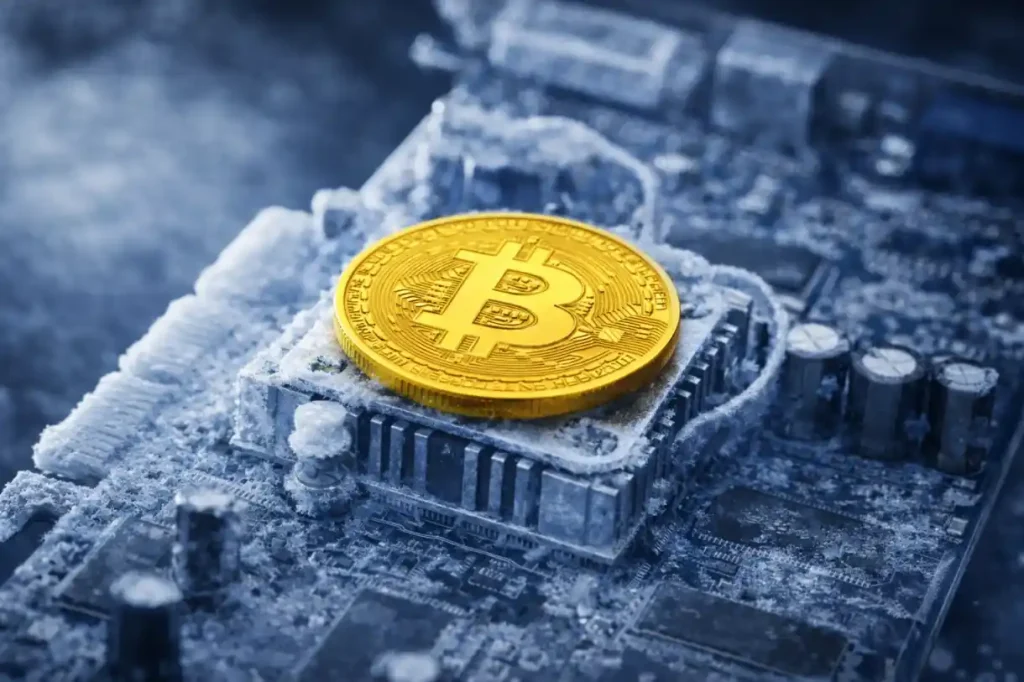
A Golden coin shines with symbols that represent Bitcoin and mining carved into its structure. It sits on top of multiple bitcoins
Ad
Large-scale miners are increasingly reallocating portions of their computing infrastructure toward high-performance AI and data-center workloads, where returns are currently more predictable than Bitcoin mining margins. While the move may appear alarming, the underlying driver is structural in nature.
Bitcoin’s network hashrate has fallen below 1 zettahash per second (ZH/s) for the first time in roughly four months, according to Hashrate Index network data.
This shift has been openly discussed in public earnings calls, investor presentations, and regulatory filings from several publicly listed mining companies over recent quarters.
Power Optimization Instead of Network Abandonment
Modern mining firms operate flexible infrastructure capable of switching between proof-of-work hashing and AI compute leasing. Moreover, as demand for AI training capacity continues to surge, miners are allocating energy to higher-margin uses during periods of compressed mining profitability.
It’s worth noting that this has not triggered any noticeable disruption to Bitcoin’s block production. Additionally, the protocol’s difficulty adjustment mechanism remains fully functional, ensuring network stability even as hashrate fluctuates.
In simpler terms, the dip reflects miners optimizing capital efficiency rather than leaving the Bitcoin ecosystem.
What This Means for Bitcoin’s Price
The hashrate decline itself hasn’t produced immediate bearish price pressure, suggesting the market views the shift as an operational development more than an existential threat.
Technically, Bitcoin continues to hold above its major higher-timeframe support zone near $90,000. Also, with resistance established between $97,000 and $100,000.
Until those levels are decisively reclaimed, price action is likely to remain choppy as leverage resets and spot demand reasserts itself. However, on the fundamental side, a lower hashrate during periods of miner optimization can actually reduce structural sell pressure.
Indeed, when miners earn revenue through AI compute contracts rather than block rewards alone, they are less reliant on selling BTC into the market to cover operating costs.
Looking ahead, the intersection of Bitcoin mining and AI infrastructure is becoming a defining theme for the industry. Keep in mind that as energy-efficient data centers serve dual purposes, mining firms gain resilience across market cycles.
This evolution could add strength to Bitcoin’s security model by ensuring miners remain profitable, capitalized, and operationally flexible.
More Must-Reads:
How do you rate this article?
Subscribe to our YouTube channel for crypto market insights and educational videos.






Join our Socials
Briefly, clearly and without noise – get the most important crypto news and market insights first.

Most Read Today
1
Chainlink’s 499% Social Volume Spike: Why Attention is Outpacing Price
2Cardano (ADA) Price Analysis: Quiet Accumulation as Technical Signals Begin to Strengthen
3Mantle’s $1B Milestone: Why MNT is the Next Layer 2 Powerhouse to Watch
4Zcash: The VC-Backed Rebirth of Private Finance
5Digital Silver’s Silent Strength: Litecoin (LTC) Fundamental and Technical Dive
Latest






8
Also read
Similar stories you might like.

Bitcoin
12 Countries Are Quietly Mining Bitcoin, VanEck Analyst Claims
Ana | 2026-03-12
Bitcoin
Bitcoin Miner Dumps Entire BTC Reserve To Fund AI Push
Ana | 2026-03-03
Bitcoin
Rare Solo Bitcoin Mining Win Happens Again: $200K on $75 Equipment
Ana | 2026-02-25

Blockchain
Big Mining Firm Liquidates Its Entire Bitcoin Treasury
Patrick | 2026-02-23

Bitcoin
Institutions Are Losing Patience, and Bitcoin Developers Just Got a Warning
Rokas | 2026-02-15
Bitcoin
Solo Miner Lands $213K Bitcoin Block
Ana | 2026-02-13

Bitcoin
The Bitcoin Quantum Narrative Just Faced a Reality Check
Patrick | 2026-02-09
Bitcoin
Bitcoin Hashrate Falls 12%, Forcing Miner Shutdowns
Rokas | 2026-02-11

Bitcoin
Heatbit Launches Maxi, a Home Heater That Mines Bitcoin
Patrick | 2026-01-29

Bitcoin
Bitcoin Hashrate Plunges as Arctic Blast Hits U.S. Grids
Ana | 2026-01-26